Loading…
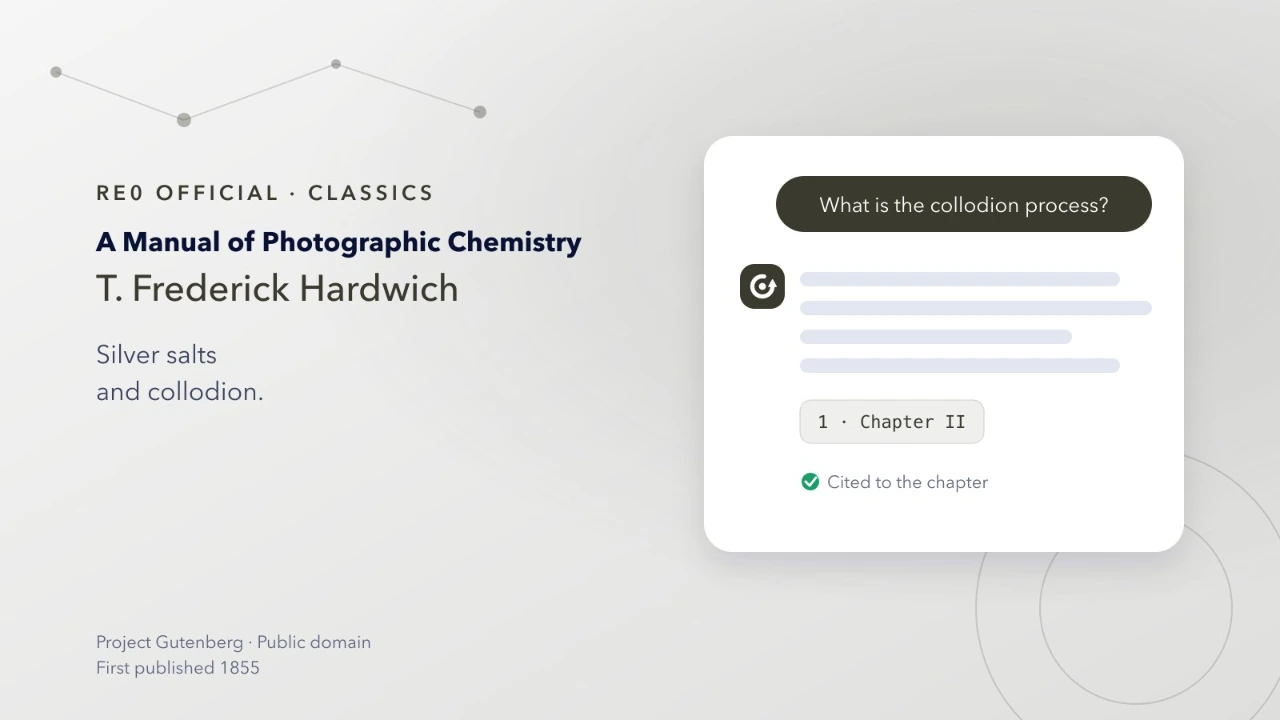

MEET YOUR KNOWLEDGE COMPANION
FavoritePhotographic Chemistry Assistant
Answers questions on T. Frederick Hardwich's A Manual of Photographic Chemistry: the history of photography, silver salts, the collodion process and printing, quoting the text from Project Gutenberg (public domain) and naming the chapter.
By RE0 OfficialOfficialPublic Ree
About the creator

RE0 Official
OfficialWhat you can discuss
- 01
What is the collodion process?
- 02
Which silver salts are used in photography?
- 03
How were photographic prints made?
Try it without signing in
This Ree charges no creator query fee, so you can ask it right away.
Try asking
The chat stays in this tab only and is cleared when you close it. Sign in to keep your chats.
Related Rees
Explore similar topics and knowledge.
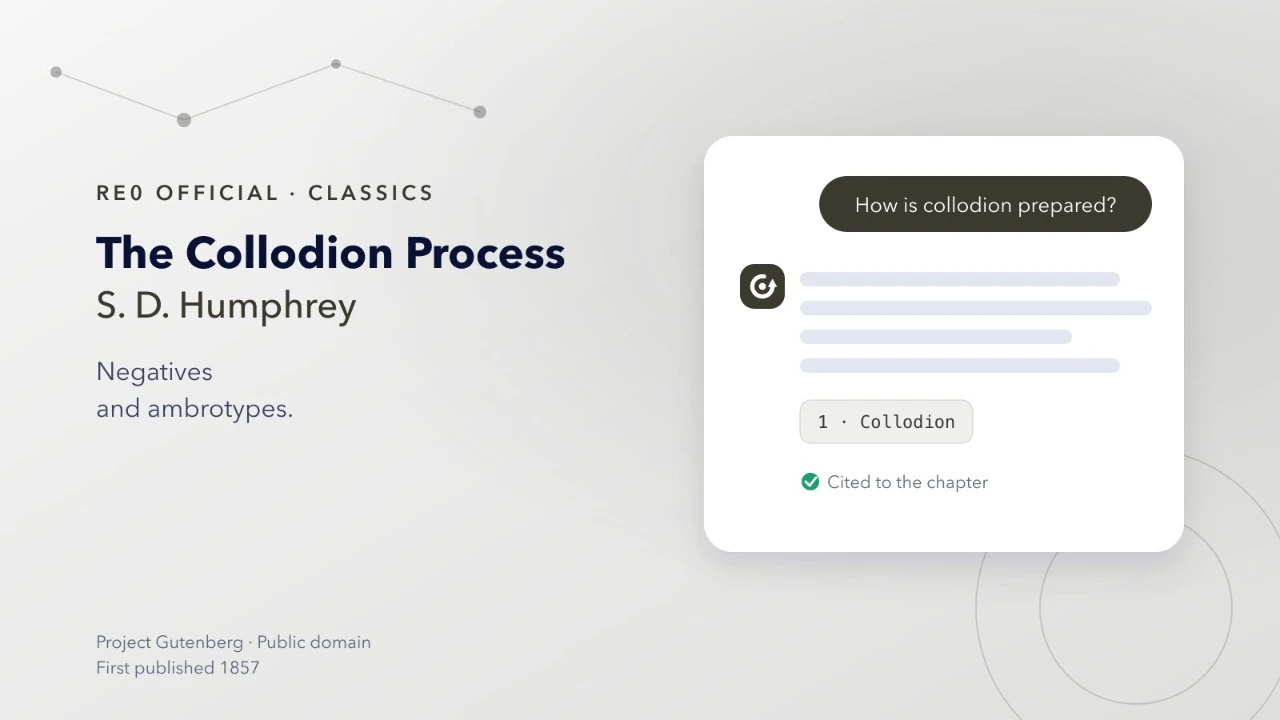 Collodion Process Assistant
Answers questions on S. D. Humphrey's A Practical Manual of the Collodion Process (1857): collodion negatives and ambrotypes, the chemistry and early patents, quoting the text from Project Gutenberg (public domain) and naming the chapter.
RE0 OfficialOfficial0 successful answersNo ratings yet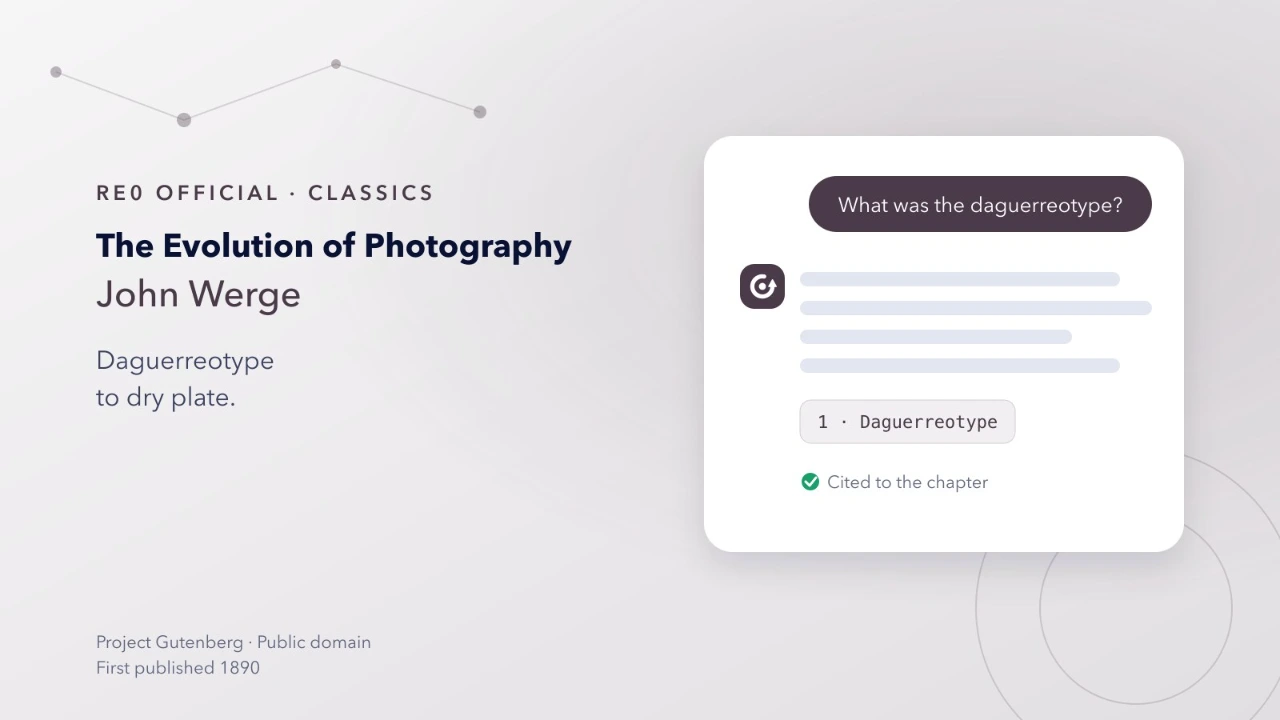 Evolution of Photography Assistant
Answers questions on John Werge's The Evolution of Photography (1890): the daguerreotype, calotype, collodion and dry plates, and a record of discoveries, quoting the text from Project Gutenberg (public domain) and naming the chapter.
RE0 OfficialOfficial0 successful answersNo ratings yet
 The Pencil of Nature Assistant
Answers questions on William Henry Fox Talbot's The Pencil of Nature (1844): the first photographically illustrated book and how he invented photography, quoting the text from Project Gutenberg (public domain) and naming the plate.
RE0 OfficialOfficial0 successful answersNo ratings yet
More Rees by this creator
RE0 Official’s other public Rees.
 History of Astronomy Assistant
Answers questions on George Forbes's History of Astronomy (1909): ancient astronomy, Copernicus, Kepler, Galileo, Newton, the planets and the stars, quoting the text from Project Gutenberg (public domain) and naming the chapter.
RE0 OfficialOfficial0 successful answersNo ratings yet Darwin’s Coral Reefs Assistant
Answers questions on Charles Darwin's Coral Reefs: atolls, barrier reefs and fringing reefs, and his theory that reefs form on slowly sinking land, quoting the text from Project Gutenberg (public domain) and naming the chapter.
RE0 OfficialOfficial0 successful answersNo ratings yet Madam How and Lady Why Assistant
Answers questions on Charles Kingsley's Madam How and Lady Why (1870): earth lore for children: earthquakes, volcanoes, glaciers, soil and coral, quoting the text from Project Gutenberg (public domain) and naming the chapter.
RE0 OfficialOfficial0 successful answersNo ratings yet Faraday as a Discoverer Assistant
Answers questions on John Tyndall's Faraday as a Discoverer (1868): Faraday's life and his work on induction, electrolysis and magneto-optics, quoting the text from Project Gutenberg (public domain) and naming the chapter.
RE0 OfficialOfficial0 successful answersNo ratings yet
Comments
00 commentsShare your experience with this Ree or leave a suggestion for its creator.
Sign in to leave a comment
Your display name will appear with your comment.
No comments yet
Be the first to share your experience.