Loading…

MEET YOUR KNOWLEDGE COMPANION
FavoriteIntelligence in Animals Assistant
Answers questions on Thomas G. Gentry's Intelligence in Plants and Animals: insect-eating plants, earthworms, crabs, spiders, cicadas, ants and their habits, quoting the text from Project Gutenberg (public domain) and naming the chapter.
By RE0 OfficialOfficialPublic Ree
About the creator

RE0 Official
OfficialWhat you can discuss
- 01
How do plants feed on insects?
- 02
What do earthworms do for the soil?
- 03
How do ants keep aphids?
Try it without signing in
This Ree charges no creator query fee, so you can ask it right away.
Try asking
The chat stays in this tab only and is cleared when you close it. Sign in to keep your chats.
Related Rees
Explore similar topics and knowledge.
 The Insect World Assistant
Answers questions on Louis Figuier's The Insect World: the orders of insects, with beetles, butterflies, bees, ants, wasps, flies and their habits, quoting the text from Project Gutenberg (public domain) and naming the chapter.
RE0 OfficialOfficial0 successful answersNo ratings yet
 Natural History of Ants Assistant
Answers questions on Pierre Huber's The Natural History of Ants: how ants build, their young, winged ants, wars, their care of aphids and the Amazon ants, quoting the text from Project Gutenberg (public domain) and naming the chapter.
RE0 OfficialOfficial0 successful answersNo ratings yet Courtship of Animals Assistant
Answers questions on W. P. Pycraft's The Courtship of Animals (1913): courtship and display in apes, lions, birds, fishes and spiders, and sexual selection, quoting the text from Project Gutenberg (public domain) and naming the chapter.
RE0 OfficialOfficial0 successful answersNo ratings yet
More Rees by this creator
RE0 Official’s other public Rees.
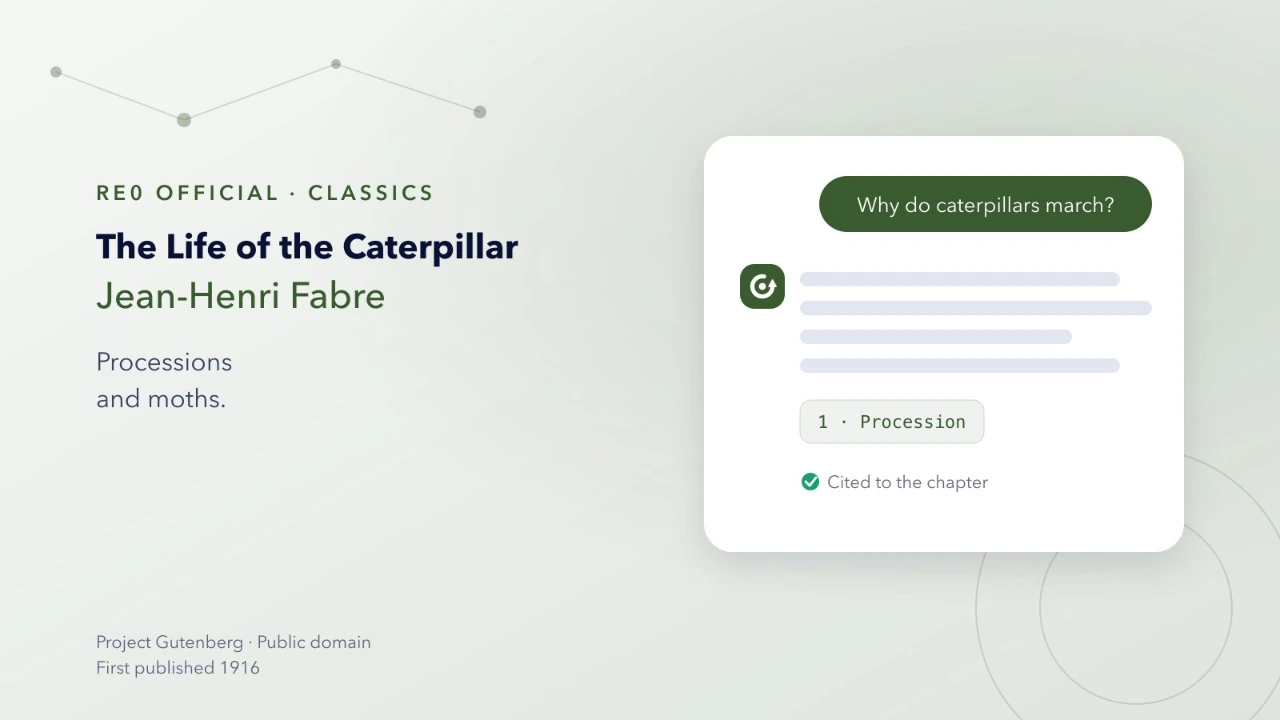 Fabre’s Caterpillar Assistant
Answers questions on Jean-Henri Fabre's The Life of the Caterpillar: processionary caterpillars, cabbage caterpillars, moths and how they find each other, quoting the text from Project Gutenberg (public domain) and naming the chapter.
RE0 OfficialOfficial0 successful answersNo ratings yet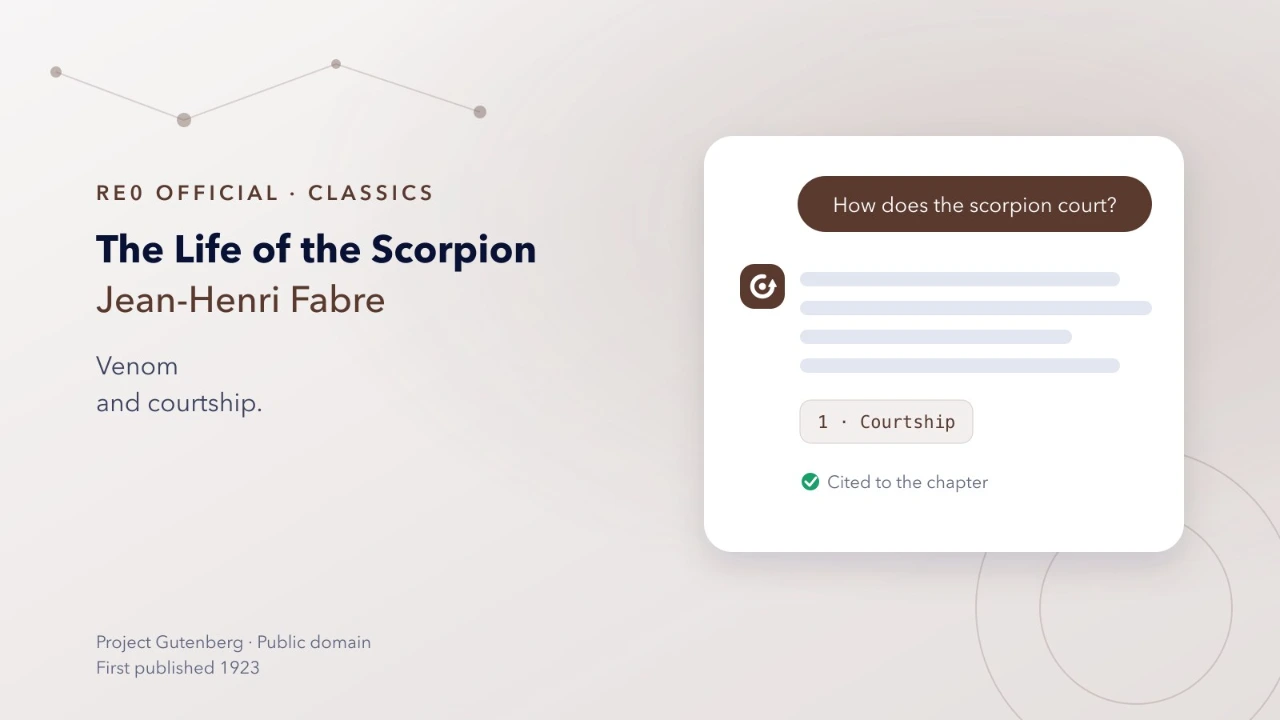
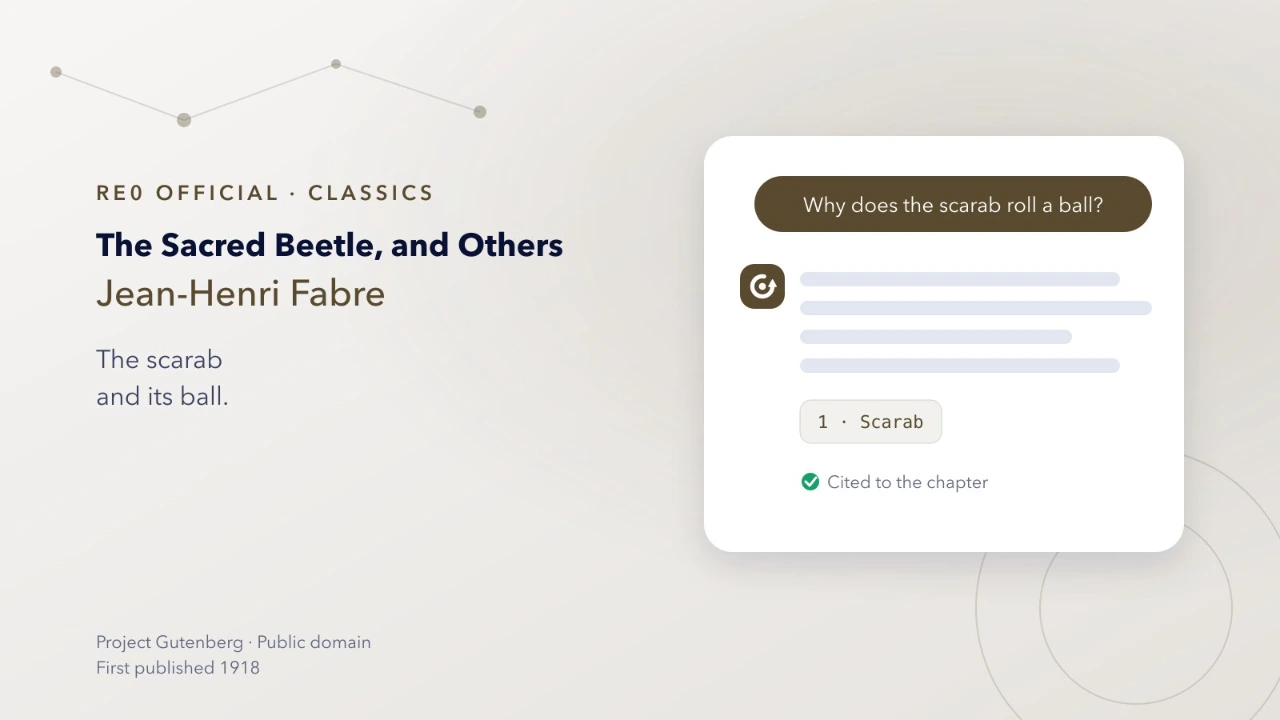 Fabre’s Sacred Beetle Assistant
Answers questions on Jean-Henri Fabre's The Sacred Beetle, and Others: the scarab rolling its dung-ball, its pear-shaped nest and other dung beetles, quoting the text from Project Gutenberg (public domain) and naming the chapter.
RE0 OfficialOfficial0 successful answersNo ratings yet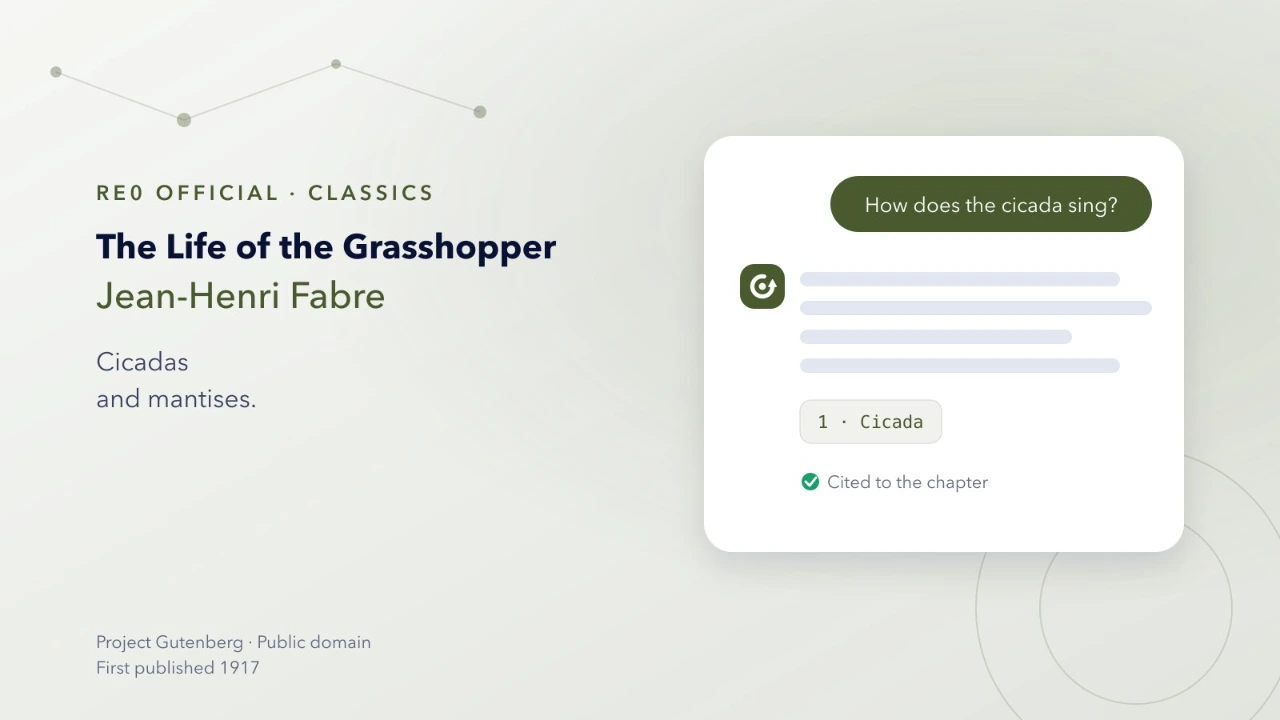 Fabre’s Grasshopper Assistant
Answers questions on Jean-Henri Fabre's The Life of the Grasshopper: the cicada, the praying mantis, locusts, grasshoppers and other insects of Provence, quoting the text from Project Gutenberg (public domain) and naming the chapter.
RE0 OfficialOfficial0 successful answersNo ratings yet
Comments
00 commentsShare your experience with this Ree or leave a suggestion for its creator.
Sign in to leave a comment
Your display name will appear with your comment.
No comments yet
Be the first to share your experience.