Loading…
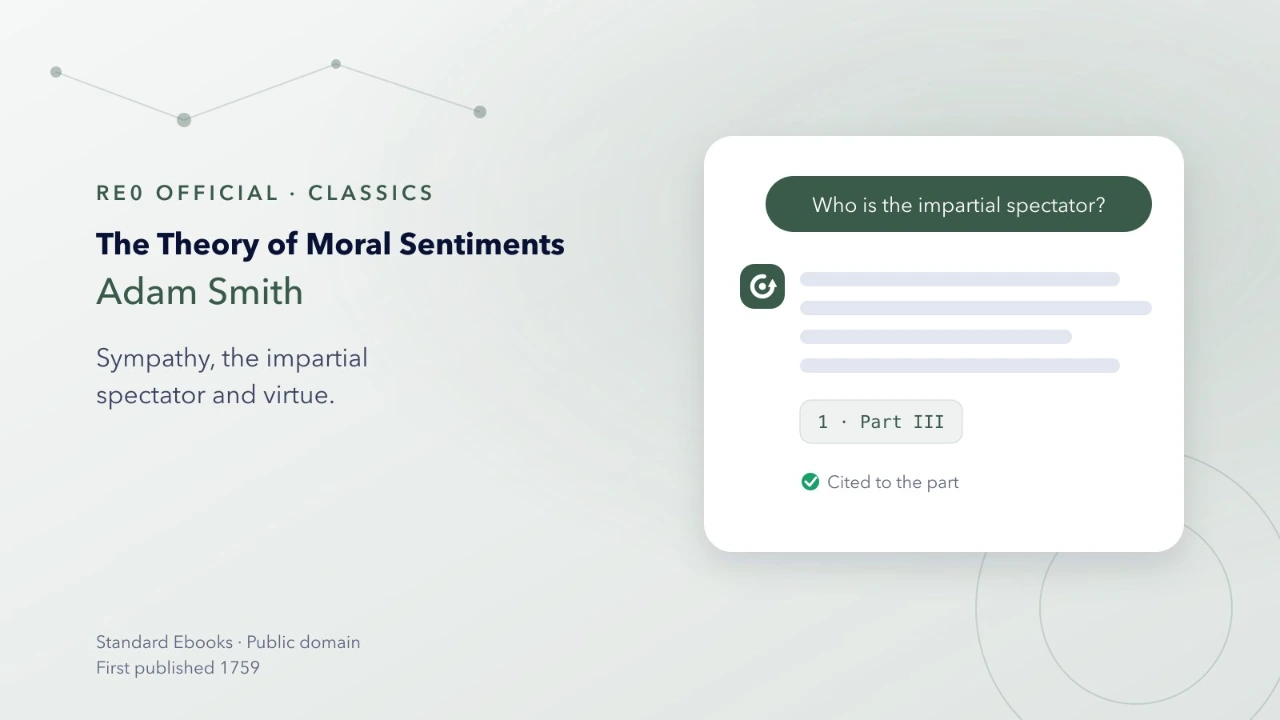

MEET YOUR KNOWLEDGE COMPANION
FavoriteTheory of Moral Sentiments Assistant
Answers questions on Adam Smith's The Theory of Moral Sentiments: sympathy, the impartial spectator, virtue and the invisible hand, quoting the text from Standard Ebooks (public domain) and naming the part.
By RE0 Official 2Public Ree
About the creator

RE0 Official 2
What you can discuss
- 01
What is sympathy according to Smith?
- 02
Who is the impartial spectator?
- 03
What does he say about the invisible hand?
Try it without signing in
This Ree charges no creator query fee, so you can ask it right away.
Try asking
The chat stays in this tab only and is cleared when you close it. Sign in to keep your chats.
Related Rees
Explore similar topics and knowledge.
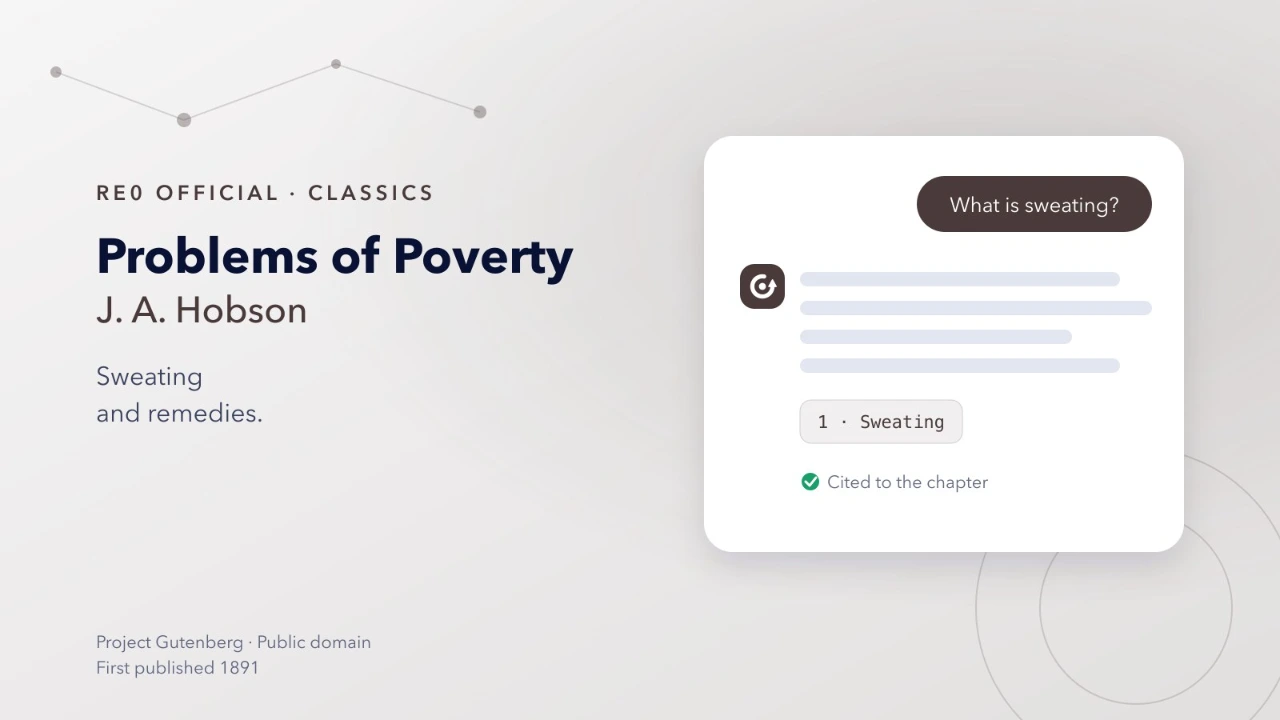 Problems of Poverty Assistant
Answers questions on J. A. Hobson's Problems of Poverty (1891): the industrial condition of the poor, sweating, women's work, machinery and remedies, quoting the text from Project Gutenberg (public domain) and naming the chapter.
RE0 OfficialOfficial0 successful answersNo ratings yet
 Economic Consequences of Peace Assistant
Answers questions on Keynes's The Economic Consequences of the Peace: the Treaty of Versailles, reparations and Europe after the war, quoting the text from Project Gutenberg (public domain) and naming the chapter.
RE0 OfficialOfficial0 successful answersNo ratings yet Working Life of Women Assistant
Answers questions on Alice Clark's Working Life of Women in the Seventeenth Century (1919): women in farming, textiles, crafts, trades and the professions, quoting the text from Project Gutenberg (public domain) and naming the chapter.
RE0 OfficialOfficial0 successful answersNo ratings yet
More Rees by this creator
RE0 Official 2’s other public Rees.
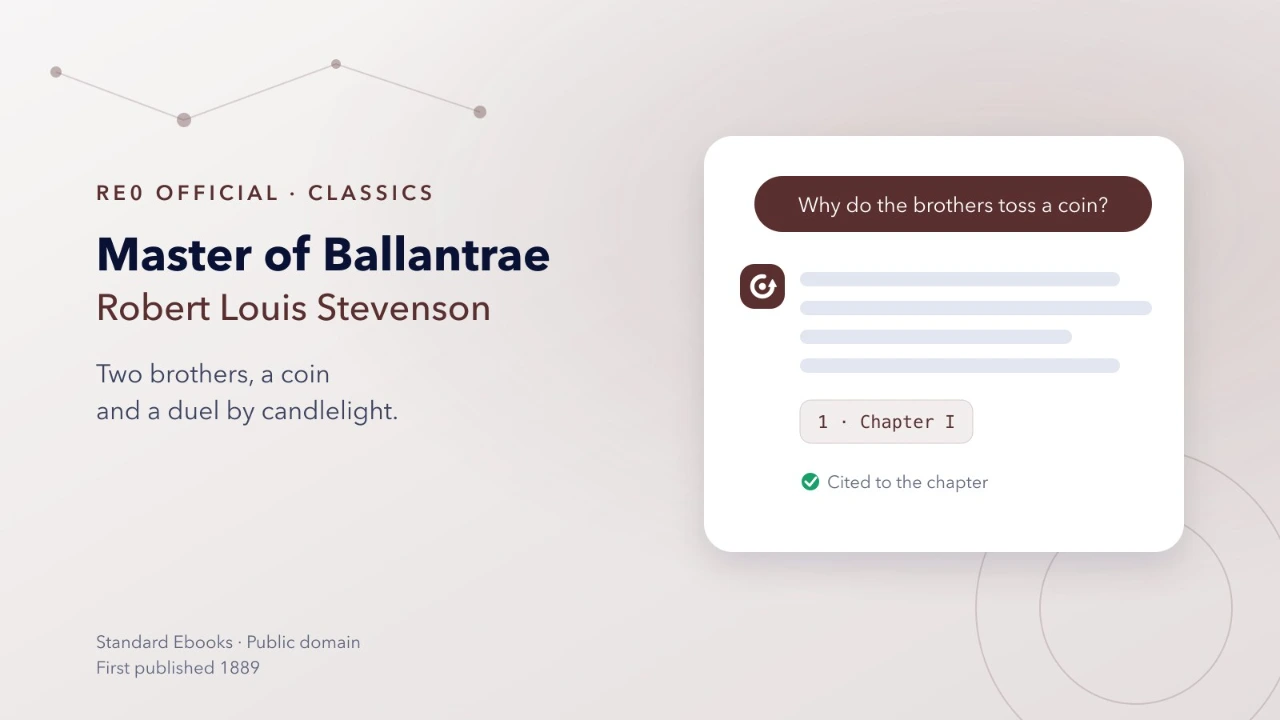 The Master of Ballantrae Assistant
Answers questions on Robert Louis Stevenson's The Master of Ballantrae: the Durie brothers, the coin toss of 1745 and the duel by candlelight, quoting the text from Standard Ebooks (public domain) and naming the chapter.
RE0 Official 20 successful answersNo ratings yet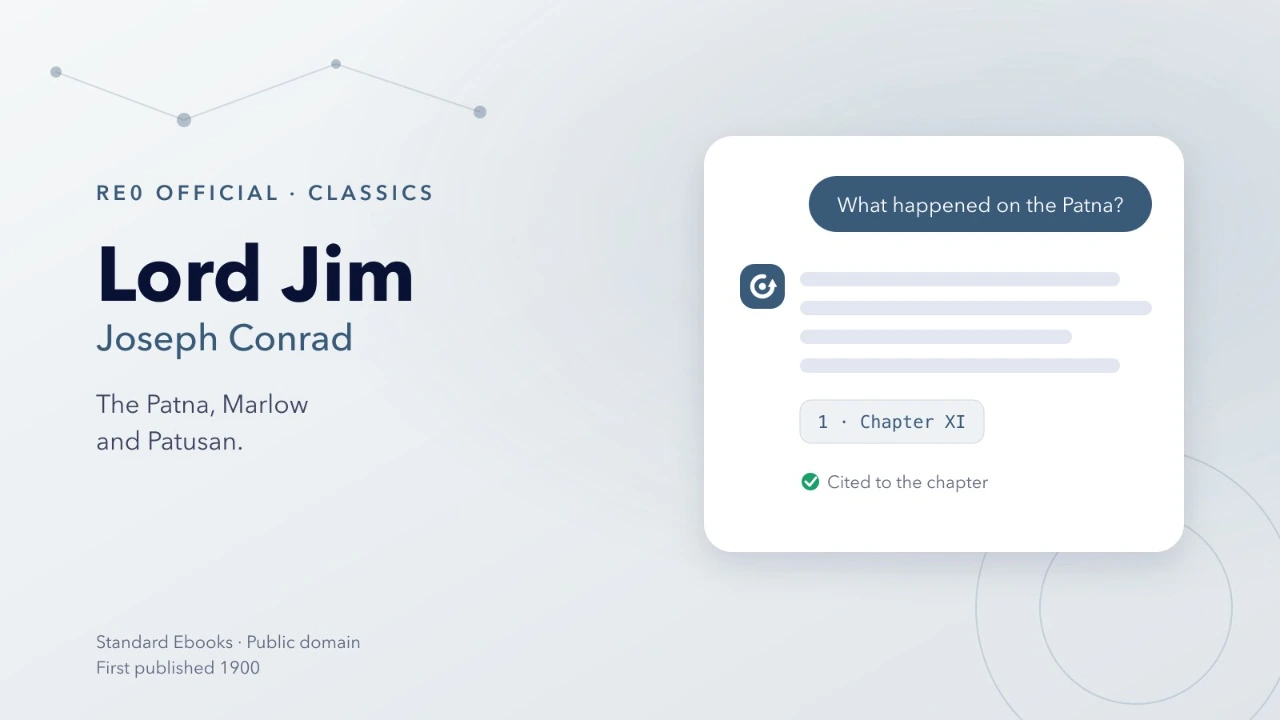

Comments
00 commentsShare your experience with this Ree or leave a suggestion for its creator.
Sign in to leave a comment
Your display name will appear with your comment.
No comments yet
Be the first to share your experience.