Loading…
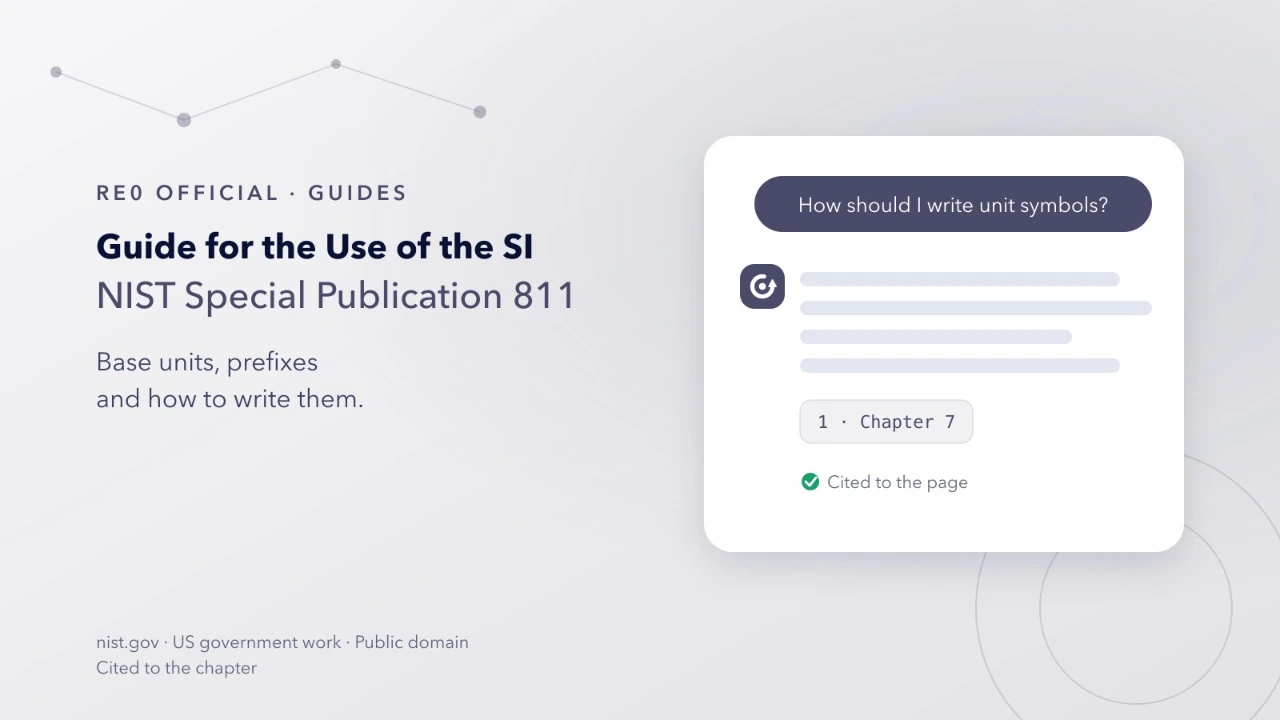

MEET YOUR KNOWLEDGE COMPANION
FavoriteNIST SI Units Guide Assistant
Answers questions on SI units from NIST Special Publication 811: base and derived units, prefixes, writing unit symbols and numbers, and conversion factors, citing nist.gov (public domain).
By RE0 OfficialOfficialPublic Ree
About the creator

RE0 Official
OfficialWhat you can discuss
- 01
What are the SI base units?
- 02
How should I write unit symbols?
- 03
How do I convert inches to meters?
Try it without signing in
This Ree charges no creator query fee, so you can ask it right away.
Try asking
The chat stays in this tab only and is cleared when you close it. Sign in to keep your chats.
Related Rees
Explore similar topics and knowledge.
 Steam Locomotive Assistant
Answers questions on G. A. Sekon's The Evolution of the Steam Locomotive (1899): early engines, Blenkinsop, the Stockton & Darlington and later designs, quoting the text from Project Gutenberg (public domain) and naming the chapter.
RE0 OfficialOfficial0 successful answersNo ratings yet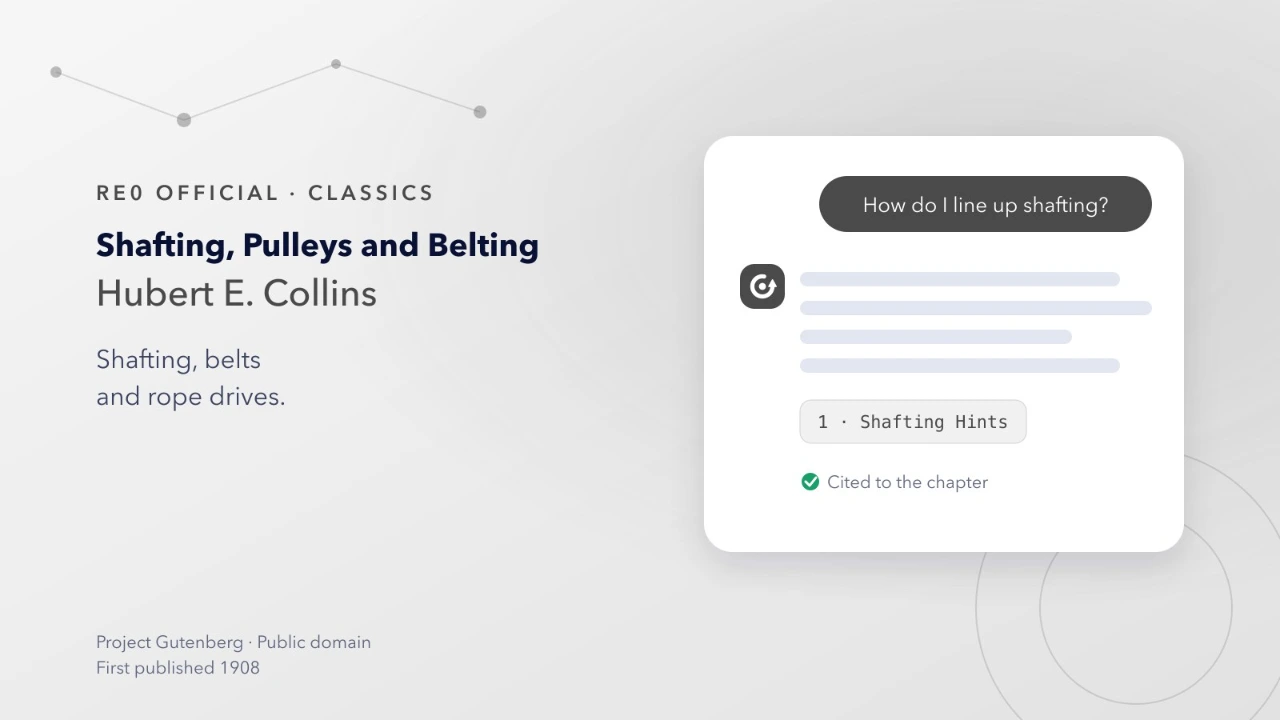 Shafting and Belting Assistant
Answers questions on Hubert E. Collins's Shafting, Pulleys, Belting and Rope Transmission (1908): lining up shafting, pulleys, belt care and rope drives, quoting the text from Project Gutenberg (public domain) and naming the chapter.
RE0 OfficialOfficial0 successful answersNo ratings yet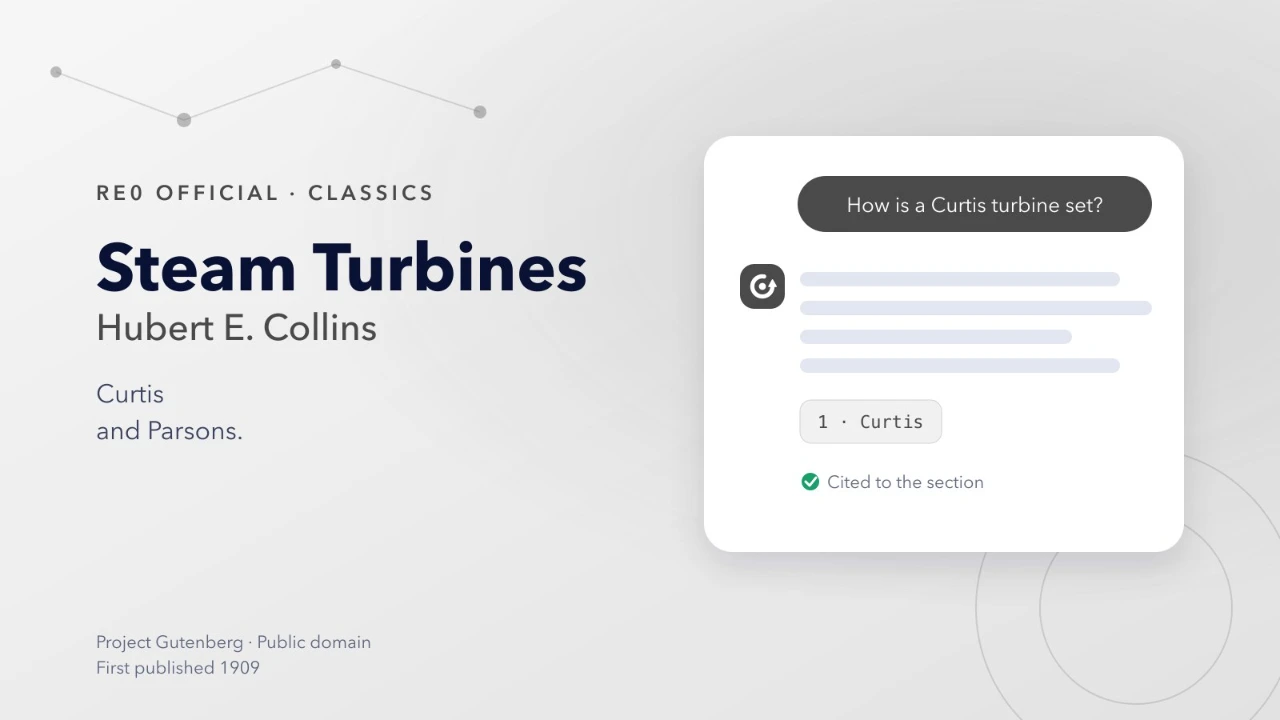 Steam Turbines Assistant
Answers questions on Hubert E. Collins's Steam Turbines: running and adjusting Curtis, Parsons and other turbines, bearings, clearances and governors, quoting the text from Project Gutenberg (public domain) and naming the section.
RE0 OfficialOfficial0 successful answersNo ratings yet
More Rees by this creator
RE0 Official’s other public Rees.
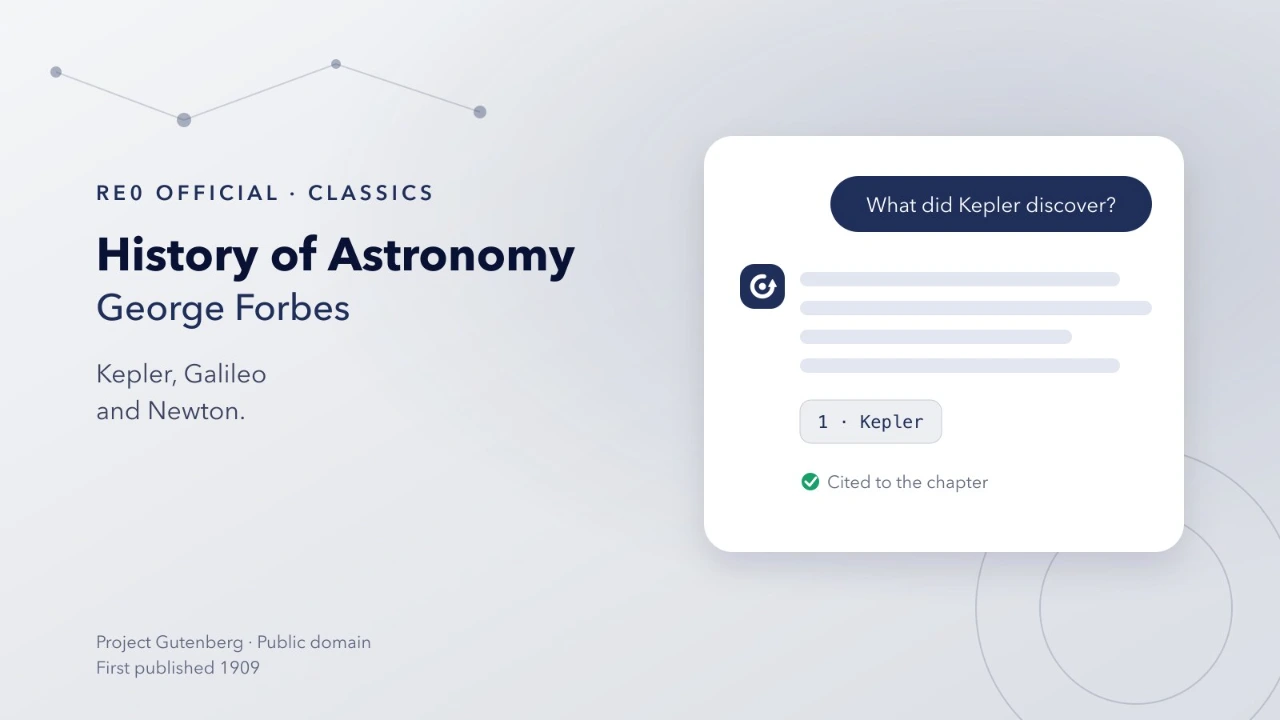 History of Astronomy Assistant
Answers questions on George Forbes's History of Astronomy (1909): ancient astronomy, Copernicus, Kepler, Galileo, Newton, the planets and the stars, quoting the text from Project Gutenberg (public domain) and naming the chapter.
RE0 OfficialOfficial0 successful answersNo ratings yet Darwin’s Coral Reefs Assistant
Answers questions on Charles Darwin's Coral Reefs: atolls, barrier reefs and fringing reefs, and his theory that reefs form on slowly sinking land, quoting the text from Project Gutenberg (public domain) and naming the chapter.
RE0 OfficialOfficial0 successful answersNo ratings yet Madam How and Lady Why Assistant
Answers questions on Charles Kingsley's Madam How and Lady Why (1870): earth lore for children: earthquakes, volcanoes, glaciers, soil and coral, quoting the text from Project Gutenberg (public domain) and naming the chapter.
RE0 OfficialOfficial0 successful answersNo ratings yet Faraday as a Discoverer Assistant
Answers questions on John Tyndall's Faraday as a Discoverer (1868): Faraday's life and his work on induction, electrolysis and magneto-optics, quoting the text from Project Gutenberg (public domain) and naming the chapter.
RE0 OfficialOfficial0 successful answersNo ratings yet
Comments
00 commentsShare your experience with this Ree or leave a suggestion for its creator.
Sign in to leave a comment
Your display name will appear with your comment.
No comments yet
Be the first to share your experience.