Loading…
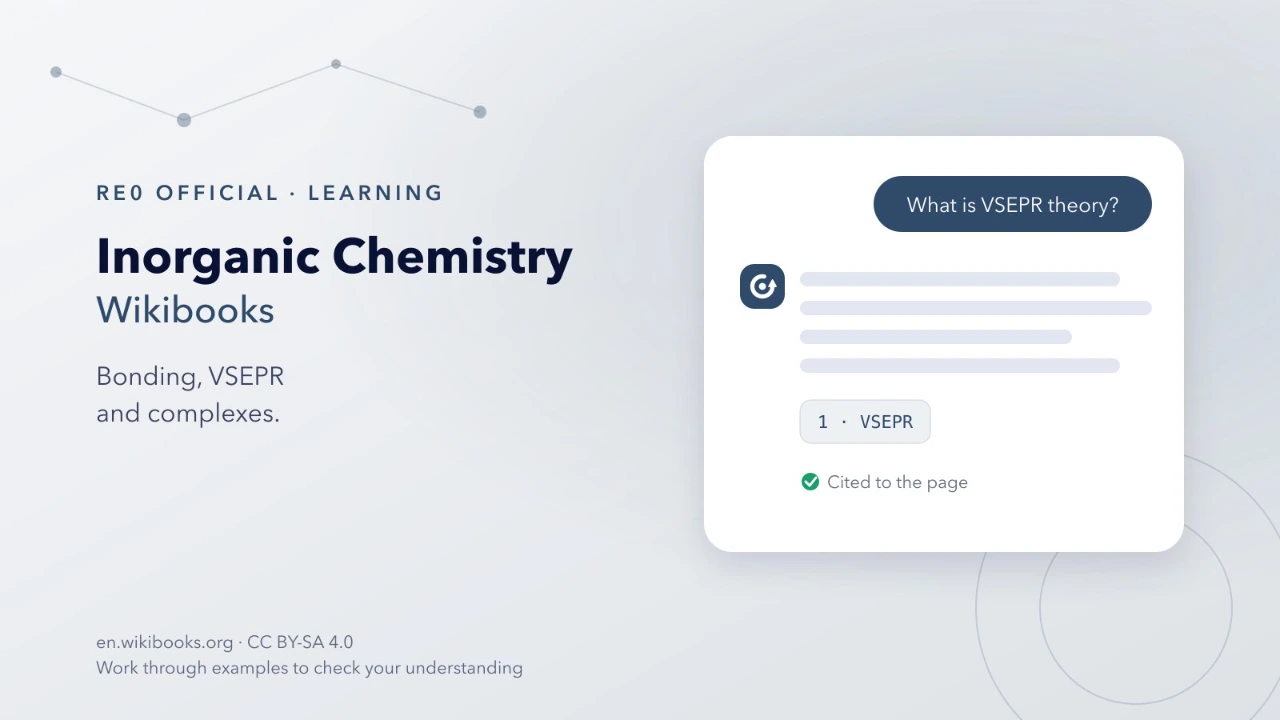

MEET YOUR KNOWLEDGE COMPANION
FavoriteInorganic Chemistry Wikibook Assistant
Answers questions on inorganic chemistry from Wikibooks: atoms and elements, chemical bonding, VSEPR, orbitals, coordination chemistry, qualitative analysis and transition metals, citing Wikibooks (CC BY-SA 4.0).
By RE0 OfficialOfficialPublic Ree
About the creator

RE0 Official
OfficialWhat you can discuss
- 01
What is VSEPR theory?
- 02
What is an ionic bond?
- 03
What is coordination chemistry?
Try it without signing in
This Ree charges no creator query fee, so you can ask it right away.
Try asking
The chat stays in this tab only and is cleared when you close it. Sign in to keep your chats.
Related Rees
Explore similar topics and knowledge.
- Creative Chemistry AssistantNo video introduction yetCreative Chemistry Assistant
Answers questions on Edwin E. Slosson's Creative Chemistry (1919): nitrogen fixation, coal-tar dyes, synthetic perfumes, plastics and explosives, quoting the text from Project Gutenberg (public domain) and naming the chapter.
RE0 OfficialOfficial0 successful answersNo ratings yet 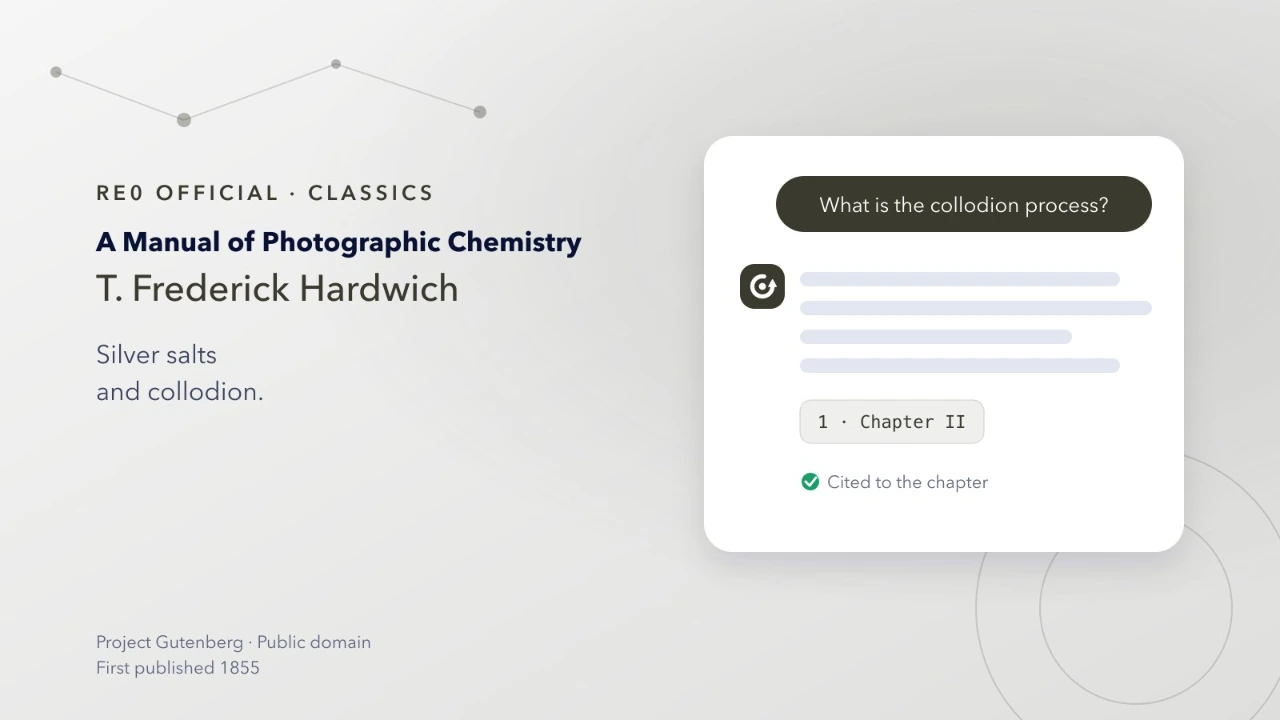 Photographic Chemistry Assistant
Answers questions on T. Frederick Hardwich's A Manual of Photographic Chemistry: the history of photography, silver salts, the collodion process and printing, quoting the text from Project Gutenberg (public domain) and naming the chapter.
RE0 OfficialOfficial0 successful answersNo ratings yet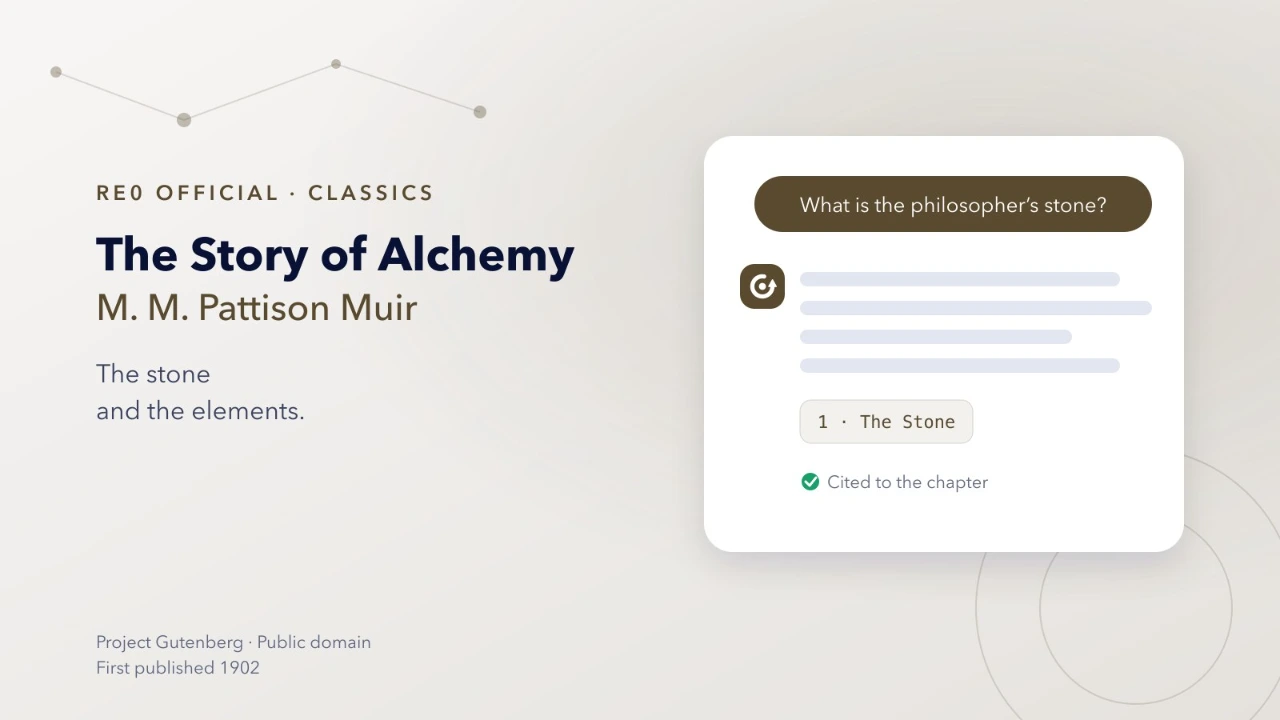 Story of Alchemy Assistant
Answers questions on M. M. Pattison Muir's The Story of Alchemy (1902): alchemists' ideas, the philosopher's stone and the rise of chemistry, quoting the text from Project Gutenberg (public domain) and naming the chapter.
RE0 OfficialOfficial0 successful answersNo ratings yet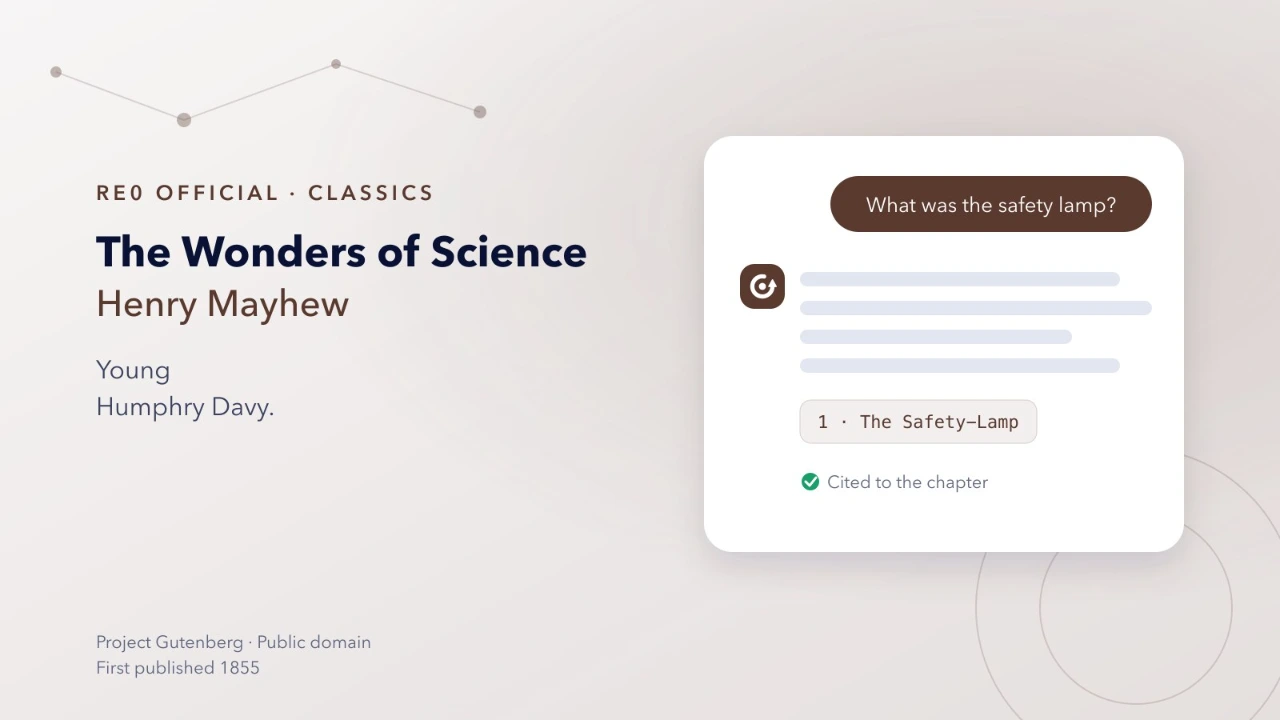 Wonders of Science Assistant
Answers questions on Henry Mayhew's The Wonders of Science (1855): the boyhood and experiments of Humphry Davy, heat, gases and the safety lamp, quoting the text from Project Gutenberg (public domain) and naming the chapter.
RE0 OfficialOfficial0 successful answersNo ratings yet
More Rees by this creator
RE0 Official’s other public Rees.
- Chats on Old Clocks AssistantNo video introduction yetChats on Old Clocks Assistant
Answers questions on Arthur Hayden's Chats on Old Clocks (1905): lantern clocks, long-case clocks, bracket clocks, makers and how to judge an old clock, quoting the text from Project Gutenberg (public domain) and naming the chapter.
RE0 OfficialOfficial0 successful answersNo ratings yet - Invention of Lithography AssistantNo video introduction yetInvention of Lithography Assistant
Answers questions on Alois Senefelder's The Invention of Lithography: how he discovered printing from stone, his experiments and the methods of lithography, quoting the text from Project Gutenberg (public domain) and naming the section.
RE0 OfficialOfficial0 successful answersNo ratings yet - Evolution of Photography AssistantNo video introduction yetEvolution of Photography Assistant
Answers questions on John Werge's The Evolution of Photography (1890): the daguerreotype, calotype, collodion and dry plates, and a record of discoveries, quoting the text from Project Gutenberg (public domain) and naming the chapter.
RE0 OfficialOfficial0 successful answersNo ratings yet - Essentials of Illustration AssistantNo video introduction yetEssentials of Illustration Assistant
Answers questions on T. G. Hill's The Essentials of Illustration (1915): drawing for reproduction, line and half-tone blocks and scientific illustration, quoting the text from Project Gutenberg (public domain) and naming the chapter.
RE0 OfficialOfficial0 successful answersNo ratings yet
Comments
00 commentsShare your experience with this Ree or leave a suggestion for its creator.
Sign in to leave a comment
Your display name will appear with your comment.
No comments yet
Be the first to share your experience.