Loading…

MEET YOUR KNOWLEDGE COMPANION
FavoriteFaraday as a Discoverer Assistant
Answers questions on John Tyndall's Faraday as a Discoverer (1868): Faraday's life and his work on induction, electrolysis and magneto-optics, quoting the text from Project Gutenberg (public domain) and naming the chapter.
By RE0 OfficialOfficialPublic Ree
About the creator

RE0 Official
OfficialWhat you can discuss
- 01
How did Faraday discover induction?
- 02
What were Faraday’s laws of electrolysis?
- 03
What was Faraday like as a man?
Try it without signing in
This Ree charges no creator query fee, so you can ask it right away.
Try asking
The chat stays in this tab only and is cleared when you close it. Sign in to keep your chats.
Related Rees
Explore similar topics and knowledge.
 Story of Electricity Assistant
Answers questions on John Munro's The Story of Electricity: early discoveries, the battery, magnetism, the telegraph, the telephone and electric light, quoting the text from Project Gutenberg (public domain) and naming the chapter.
RE0 OfficialOfficial0 successful answersNo ratings yet
 The Kaleidoscope Assistant
Answers questions on David Brewster's The Kaleidoscope: his invention, the optics of reflecting mirrors, how to build kaleidoscopes and their uses in design, quoting the text from Project Gutenberg (public domain) and naming the chapter.
RE0 OfficialOfficial0 successful answersNo ratings yet The New Physics Assistant
Answers questions on Lucien Poincaré's The New Physics and Its Evolution (1907): measurement, energy, the ether, electrons and radioactivity, quoting the text from Project Gutenberg (public domain) and naming the chapter.
RE0 OfficialOfficial0 successful answersNo ratings yet
More Rees by this creator
RE0 Official’s other public Rees.
 The Smugglers Assistant
Answers questions on Charles G. Harper's The Smugglers (1909): smuggling on the English coasts, the excise and customs men, famous smugglers and their methods, quoting the text from Project Gutenberg (public domain) and naming the chapter.
RE0 OfficialOfficial0 successful answersNo ratings yet Women and Girls in Honolulu Assistant
Answers questions on Frances Blascoer's The Industrial Condition of Women and Girls in Honolulu (1912): women in factories, shops and homes, and reforms, quoting the text from Project Gutenberg (public domain) and naming the section.
RE0 OfficialOfficial0 successful answersNo ratings yet United States Mint Assistant
Answers questions on George G. Evans's Illustrated History of the United States Mint (1888): ancient coining, the early mint and how coins and medals were made, quoting the text from Project Gutenberg (public domain) and naming the section.
RE0 OfficialOfficial0 successful answersNo ratings yet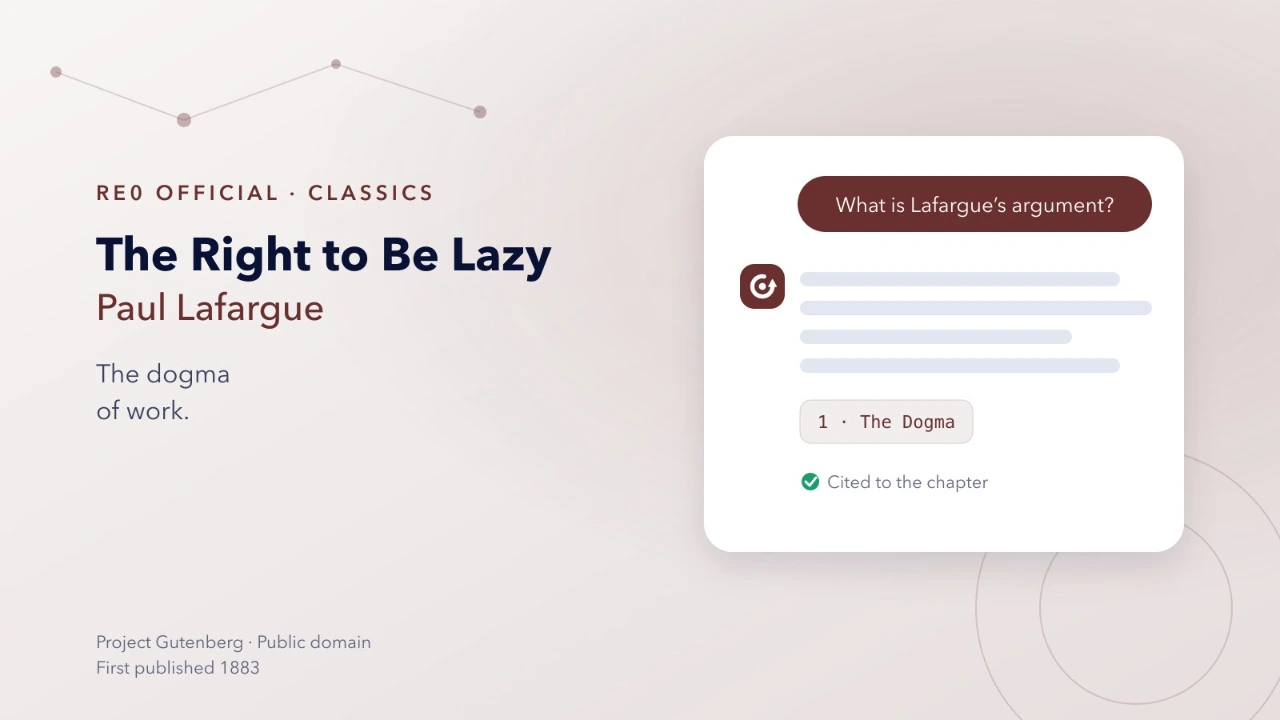 Right to Be Lazy Assistant
Answers questions on Paul Lafargue's The Right to Be Lazy (1883): his satirical attack on the dogma of work, over-production, and other essays, quoting the text from Project Gutenberg (public domain) and naming the chapter.
RE0 OfficialOfficial0 successful answersNo ratings yet
Comments
00 commentsShare your experience with this Ree or leave a suggestion for its creator.
Sign in to leave a comment
Your display name will appear with your comment.
No comments yet
Be the first to share your experience.