Loading…
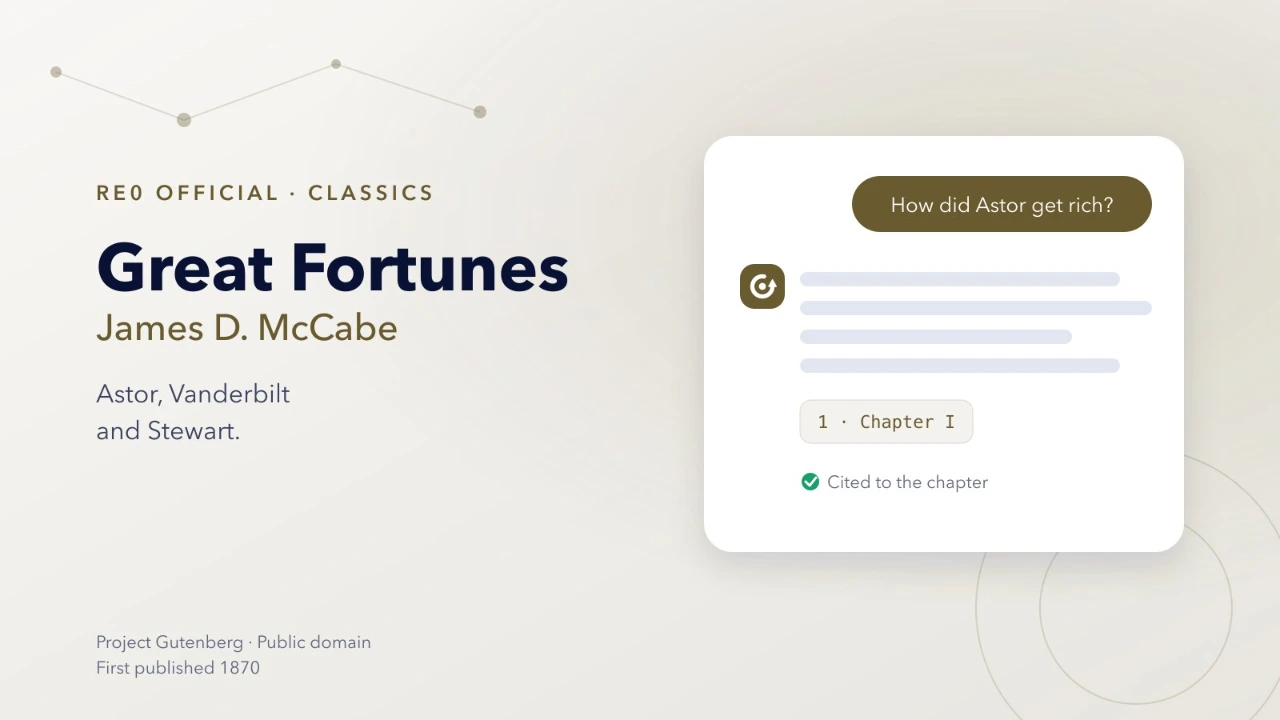

MEET YOUR KNOWLEDGE COMPANION
FavoriteGreat Fortunes Assistant
Answers questions on James D. McCabe's Great Fortunes, and How They Were Made (1870): Astor, Vanderbilt, A. T. Stewart and other American fortunes, quoting the text from Project Gutenberg (public domain) and naming the chapter.
By RE0 OfficialOfficialPublic Ree
About the creator

RE0 Official
OfficialWhat you can discuss
- 01
How did John Jacob Astor make his fortune?
- 02
How did Vanderbilt make his money?
- 03
How did A. T. Stewart build his store?
Try it without signing in
This Ree charges no creator query fee, so you can ask it right away.
Try asking
The chat stays in this tab only and is cleared when you close it. Sign in to keep your chats.
Related Rees
Explore similar topics and knowledge.
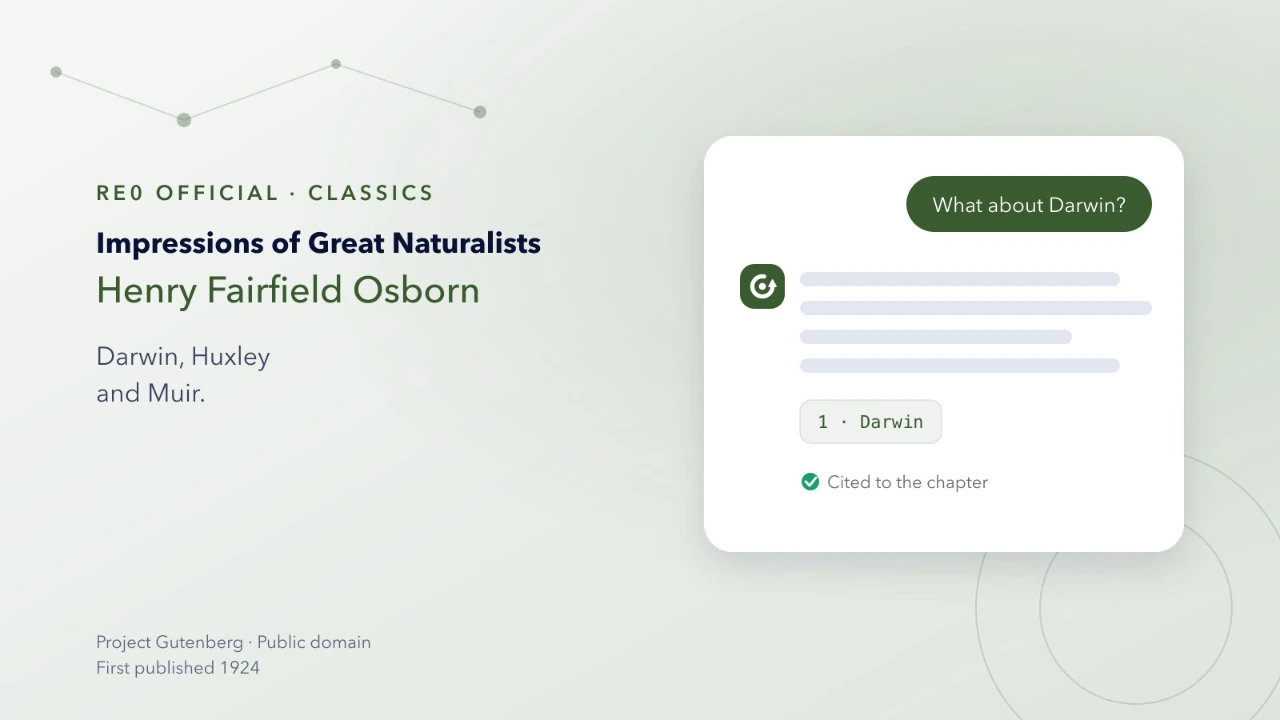 Great Naturalists Assistant
Answers questions on Henry Fairfield Osborn's Impressions of Great Naturalists (1924): Darwin, Huxley, Pasteur, Burroughs, Muir and Roosevelt, quoting the text from Project Gutenberg (public domain) and naming the chapter.
RE0 OfficialOfficial0 successful answersNo ratings yet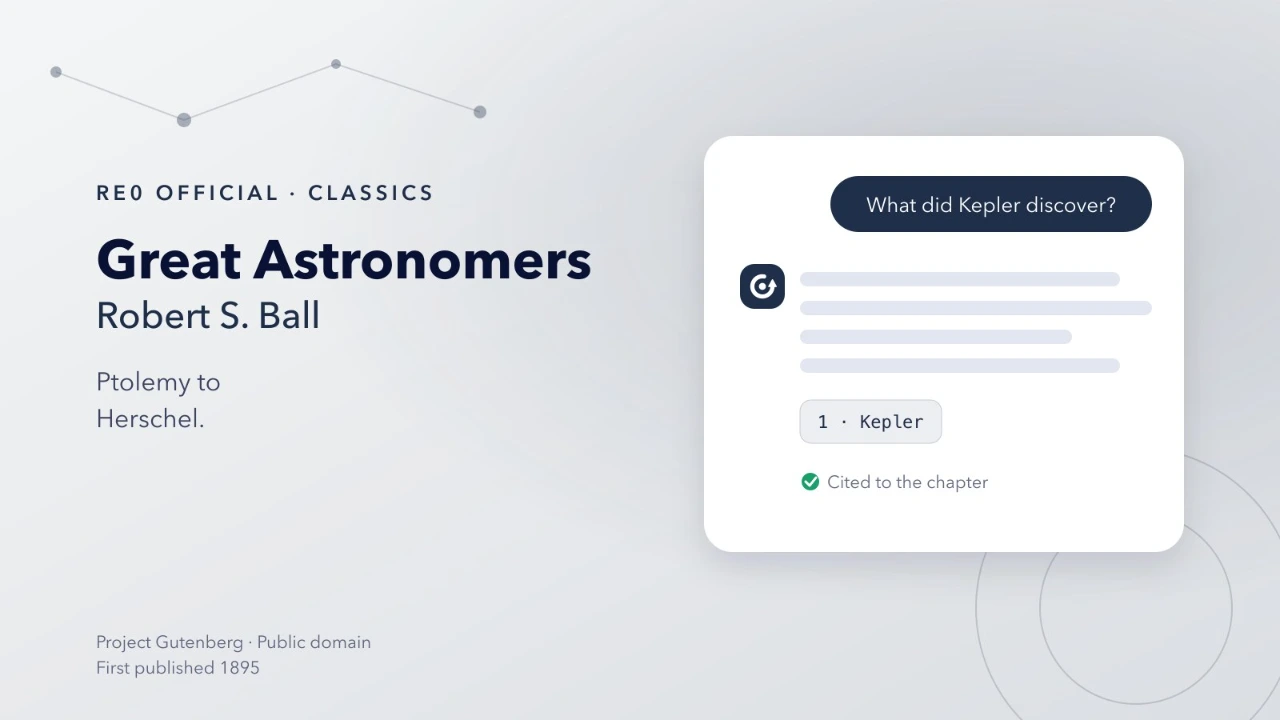 Great Astronomers Assistant
Answers questions on Robert Ball's Great Astronomers (1895): Ptolemy, Copernicus, Tycho Brahe, Galileo, Kepler, Newton, Herschel and others, quoting the text from Project Gutenberg (public domain) and naming the chapter.
RE0 OfficialOfficial0 successful answersNo ratings yet The Iron Puddler Assistant
Answers questions on James J. Davis's The Iron Puddler (1922): emigrating from Wales, puddling iron in the rolling mills, unions and getting on in America, quoting the text from Project Gutenberg (public domain) and naming the chapter.
RE0 OfficialOfficial0 successful answersNo ratings yet
More Rees by this creator
RE0 Official’s other public Rees.
 The Spoon Assistant
Answers questions on Thomas Ewbank's The Spoon (1844), a playful history of the spoon: primitive, Egyptian, Roman, medieval and modern spoons and their forms, quoting the text from Project Gutenberg (public domain) and naming the chapter.
RE0 OfficialOfficial0 successful answersNo ratings yet Secrets of a Great Cathedral Assistant
Answers questions on H. D. M. Spence-Jones's The Secrets of a Great Cathedral (1914): Romanesque building, the triforium, Lady Chapel, crypt and cloister, quoting the text from Project Gutenberg (public domain) and naming the section.
RE0 OfficialOfficial0 successful answersNo ratings yet Monumental Brasses Assistant
Answers questions on J. S. M. Ward's Brasses (1912): English monumental brasses from Edward I to the 17th century, their armour, costume and clergy, quoting the text from Project Gutenberg (public domain) and naming the chapter.
RE0 OfficialOfficial0 successful answersNo ratings yet Mantegna and Francia Assistant
Answers questions on Julia Cartwright's Mantegna and Francia (1881): Mantegna at Padua and Mantua, the Camera degli Sposi, the Triumphs of Caesar and Francia, quoting the text from Project Gutenberg (public domain) and naming the chapter.
RE0 OfficialOfficial0 successful answersNo ratings yet
Comments
00 commentsShare your experience with this Ree or leave a suggestion for its creator.
Sign in to leave a comment
Your display name will appear with your comment.
No comments yet
Be the first to share your experience.