Loading…


MEET YOUR KNOWLEDGE COMPANION
FavoriteAn Embroidery Book Assistant
Answers questions on Anne Knox Arthur's An Embroidery Book (1920), from the Glasgow School of Art: stitches, design, materials and embroidered decoration, quoting the text from Project Gutenberg (public domain) and naming the chapter.
By RE0 OfficialOfficialPublic Ree
About the creator

RE0 Official
OfficialWhat you can discuss
- 01
Which embroidery stitches does Arthur teach?
- 02
How should an embroidery design be planned?
- 03
What materials are used for embroidery?
Try it without signing in
This Ree charges no creator query fee, so you can ask it right away.
Try asking
The chat stays in this tab only and is cleared when you close it. Sign in to keep your chats.
Related Rees
Explore similar topics and knowledge.
 Embroidery in America Assistant
Answers questions on Candace Wheeler's The Development of Embroidery in America (1921): crewelwork, samplers, quilts, Berlin woolwork and American tapestry, quoting the text from Project Gutenberg (public domain) and naming the chapter.
RE0 OfficialOfficial0 successful answersNo ratings yet
 Artistic Embroidery Assistant
Answers questions on Ella Rodman Church's Artistic Embroidery (1880): crewel-work, the crewel stitch, worsted embroidery, friezes and dados, quoting the text from Project Gutenberg (public domain) and naming the chapter.
RE0 OfficialOfficial0 successful answersNo ratings yet Textile Art Assistant
Answers questions on William Henry Holmes's study of the textile art (1891): basketry and weaving, and how textile technique shaped form and ornament, quoting the text from Project Gutenberg (public domain) and naming the section.
RE0 OfficialOfficial0 successful answersNo ratings yet
More Rees by this creator
RE0 Official’s other public Rees.

 Life in the Seas Assistant
Answers questions on Sydney J. Hickson's The Story of Life in the Seas (1898): jellyfish, corals, plankton, deep-sea creatures and shore life, quoting the text from Project Gutenberg (public domain) and naming the chapter.
RE0 OfficialOfficial0 successful answersNo ratings yet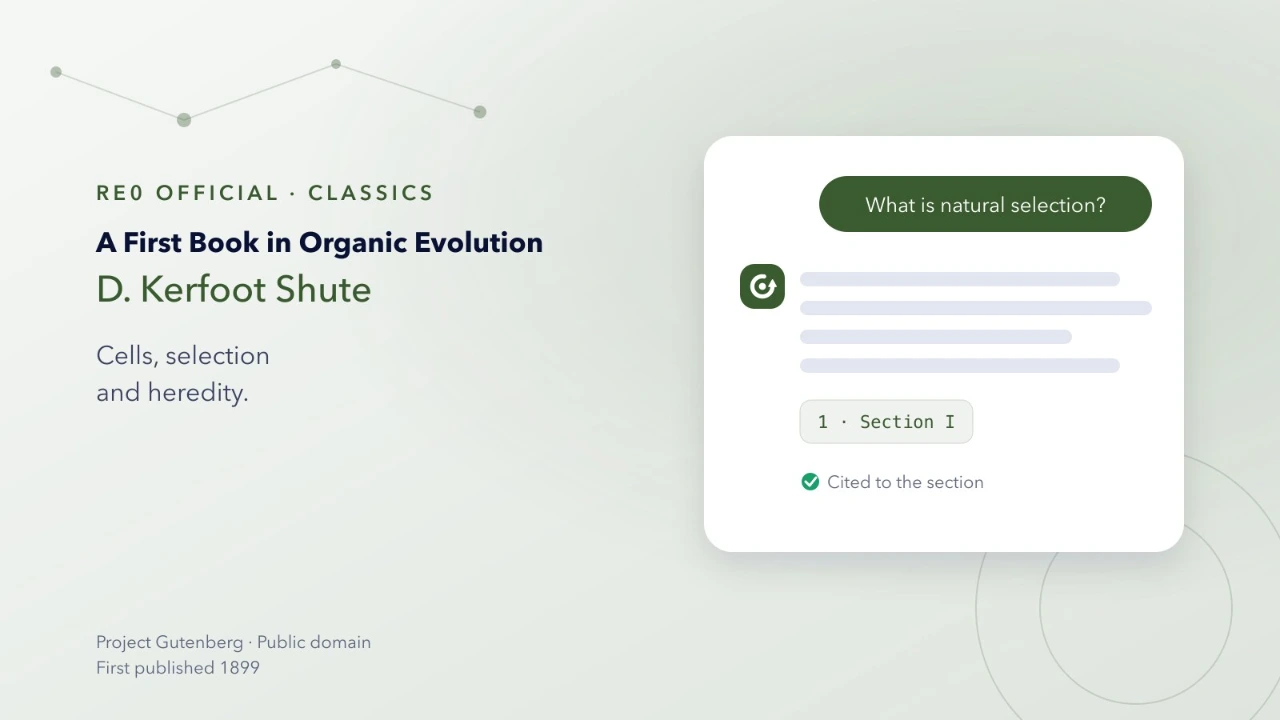 Organic Evolution Assistant
Answers questions on D. Kerfoot Shute's A First Book in Organic Evolution: cells, classification, natural selection, heredity and the evidence for evolution, quoting the text from Project Gutenberg (public domain) and naming the section.
RE0 OfficialOfficial0 successful answersNo ratings yet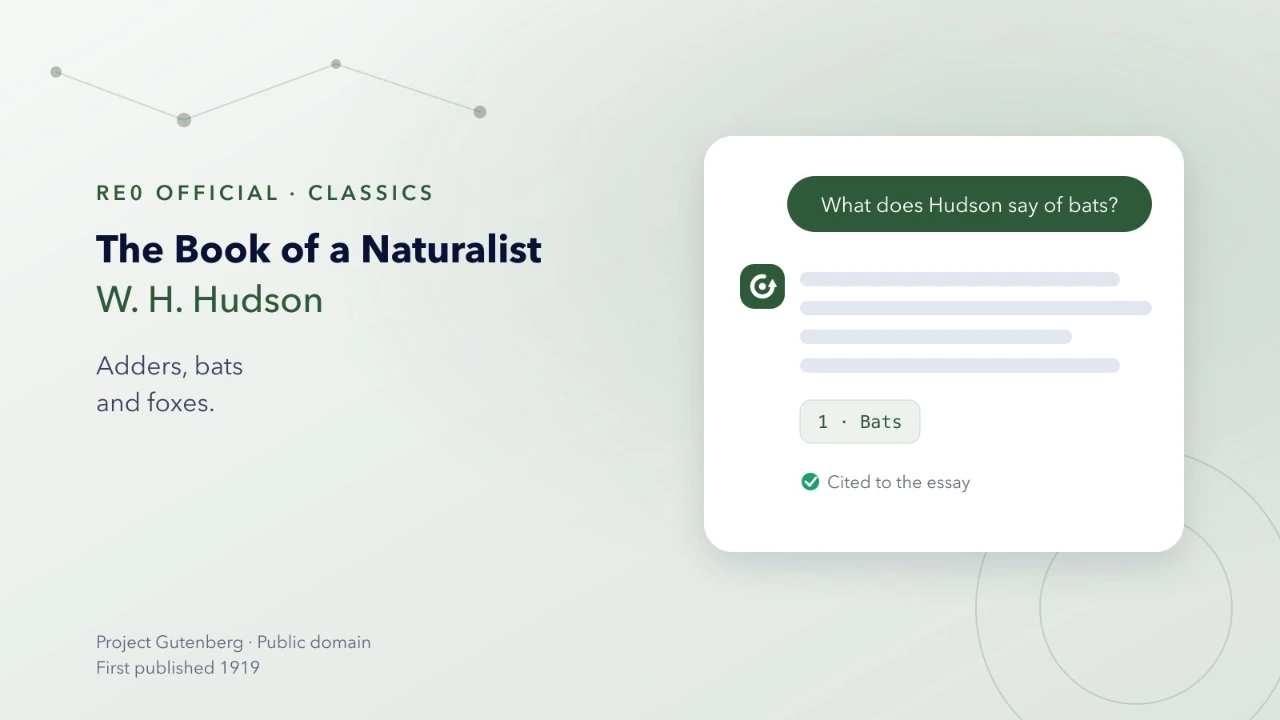 Book of a Naturalist Assistant
Answers questions on W. H. Hudson's The Book of a Naturalist (1919): essays on pine woods, adders, bats, foxes, squirrels, birds and other English wildlife, quoting the text from Project Gutenberg (public domain) and naming the essay.
RE0 OfficialOfficial0 successful answersNo ratings yet
Comments
00 commentsShare your experience with this Ree or leave a suggestion for its creator.
Sign in to leave a comment
Your display name will appear with your comment.
No comments yet
Be the first to share your experience.