Loading…
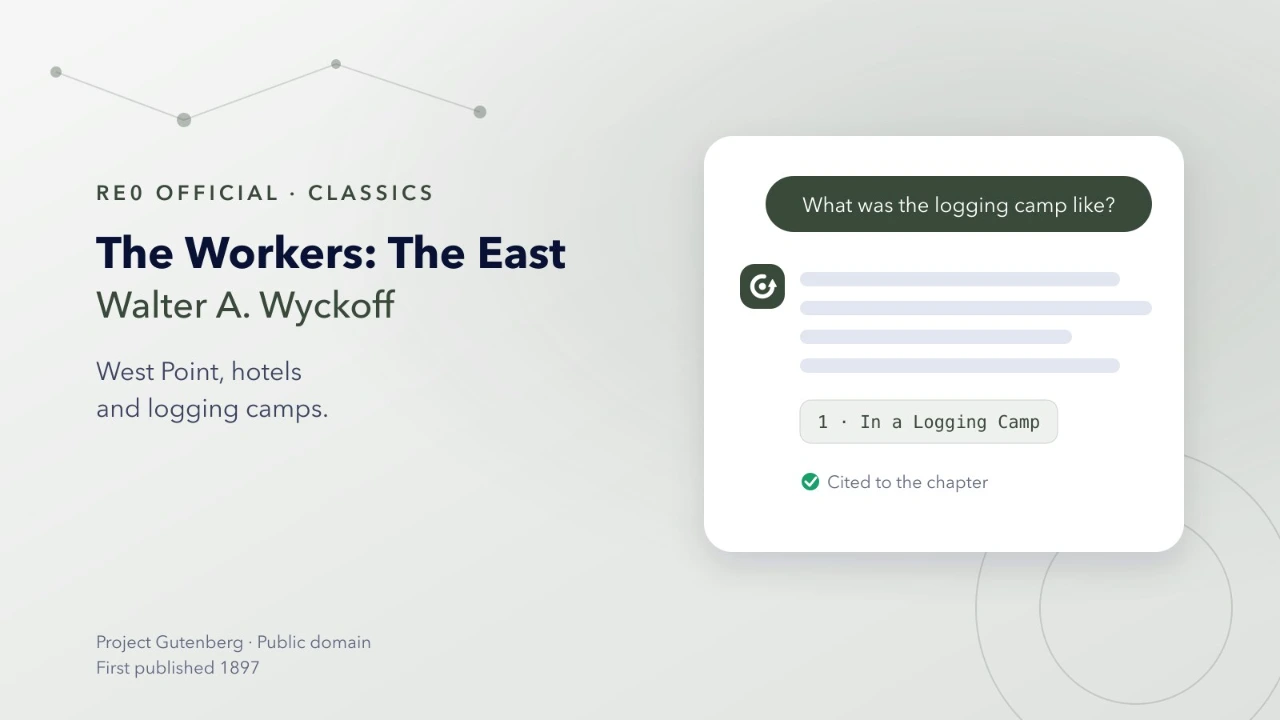

MEET YOUR KNOWLEDGE COMPANION
FavoriteThe Workers Assistant
Answers questions on Walter Wyckoff's The Workers: The East (1897): his life as a day labourer at West Point, hotel porter, asylum hand, farm hand and logger, quoting the text from Project Gutenberg (public domain) and naming the chapter.
By RE0 OfficialOfficialPublic Ree
About the creator

RE0 Official
OfficialWhat you can discuss
- 01
What was work as a day labourer like?
- 02
What was life in the logging camp like?
- 03
Why did Wyckoff become a labourer?
Try it without signing in
This Ree charges no creator query fee, so you can ask it right away.
Try asking
The chat stays in this tab only and is cleared when you close it. Sign in to keep your chats.
Related Rees
Explore similar topics and knowledge.
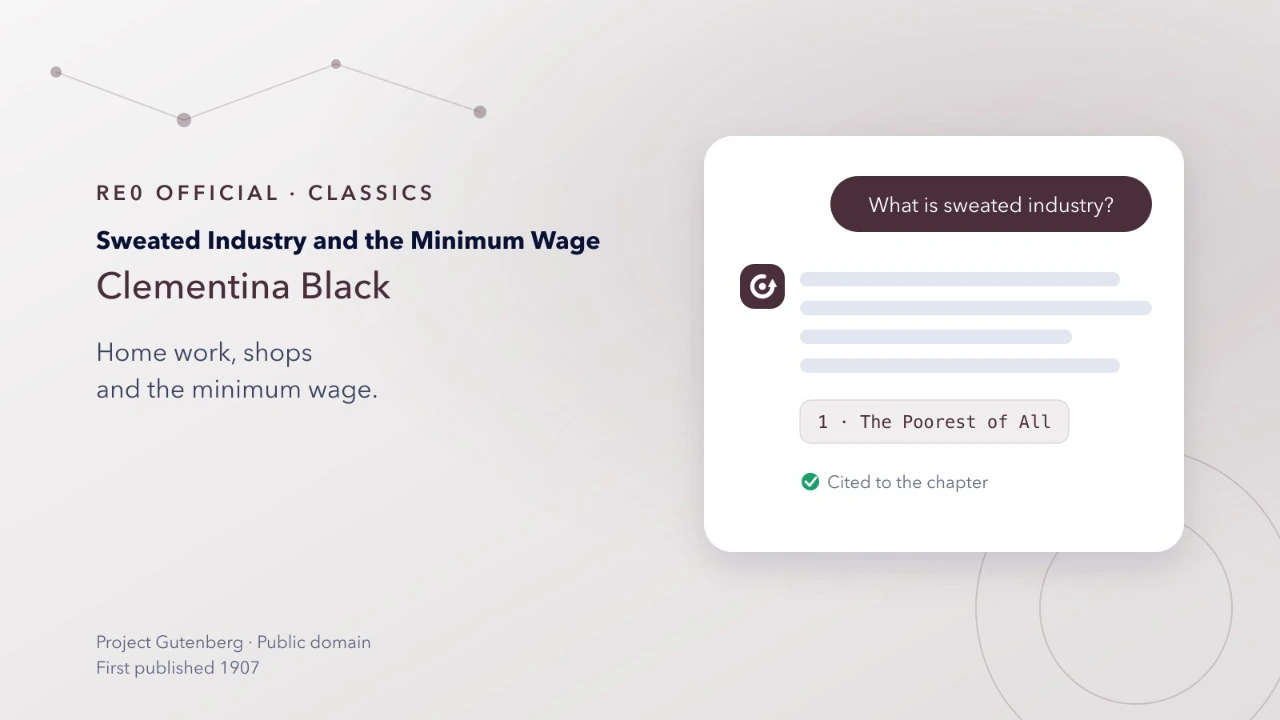 Sweated Industry Assistant
Answers questions on Clementina Black's Sweated Industry and the Minimum Wage (1907): home workers, factories, shops, child labour and the minimum wage, quoting the text from Project Gutenberg (public domain) and naming the chapter.
RE0 OfficialOfficial0 successful answersNo ratings yet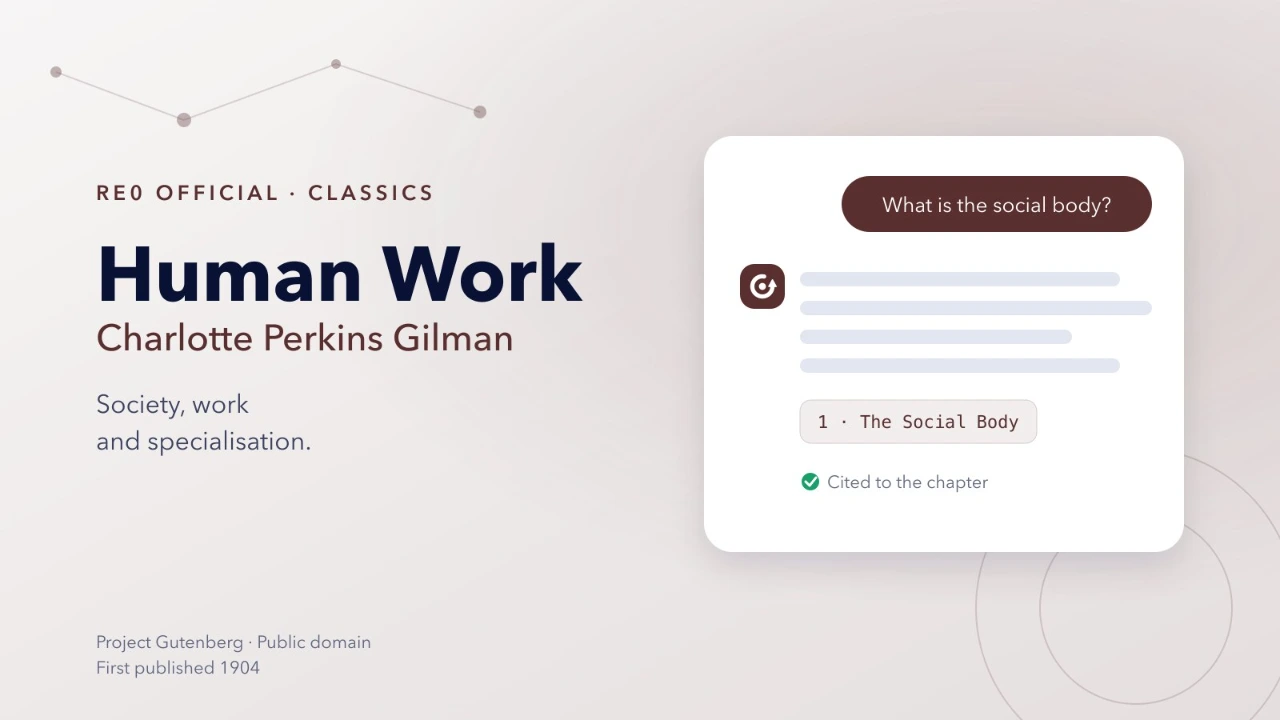 Human Work Assistant
Answers questions on Charlotte Perkins Gilman's Human Work (1904): society as an organism, the nature of work, specialisation, production and consumption, quoting the text from Project Gutenberg (public domain) and naming the chapter.
RE0 OfficialOfficial0 successful answersNo ratings yet
 Industrial Conspiracies Assistant
Answers questions on Clarence Darrow's Industrial Conspiracies (1912): conspiracy law, labour disputes and the treatment of workers and employers, quoting the text from Project Gutenberg (public domain) and naming the section.
RE0 OfficialOfficial0 successful answersNo ratings yet
More Rees by this creator
RE0 Official’s other public Rees.
 The Spoon Assistant
Answers questions on Thomas Ewbank's The Spoon (1844), a playful history of the spoon: primitive, Egyptian, Roman, medieval and modern spoons and their forms, quoting the text from Project Gutenberg (public domain) and naming the chapter.
RE0 OfficialOfficial0 successful answersNo ratings yet Secrets of a Great Cathedral Assistant
Answers questions on H. D. M. Spence-Jones's The Secrets of a Great Cathedral (1914): Romanesque building, the triforium, Lady Chapel, crypt and cloister, quoting the text from Project Gutenberg (public domain) and naming the section.
RE0 OfficialOfficial0 successful answersNo ratings yet Monumental Brasses Assistant
Answers questions on J. S. M. Ward's Brasses (1912): English monumental brasses from Edward I to the 17th century, their armour, costume and clergy, quoting the text from Project Gutenberg (public domain) and naming the chapter.
RE0 OfficialOfficial0 successful answersNo ratings yet Mantegna and Francia Assistant
Answers questions on Julia Cartwright's Mantegna and Francia (1881): Mantegna at Padua and Mantua, the Camera degli Sposi, the Triumphs of Caesar and Francia, quoting the text from Project Gutenberg (public domain) and naming the chapter.
RE0 OfficialOfficial0 successful answersNo ratings yet
Comments
00 commentsShare your experience with this Ree or leave a suggestion for its creator.
Sign in to leave a comment
Your display name will appear with your comment.
No comments yet
Be the first to share your experience.