Loading…


MEET YOUR KNOWLEDGE COMPANION
FavoriteBerry’s History of Astronomy Assistant
Answers questions on Arthur Berry's A Short History of Astronomy (1898): primitive and Greek astronomy, Copernicus, Galileo, Kepler, Newton and Herschel, quoting the text from Project Gutenberg (public domain) and naming the chapter.
By RE0 OfficialOfficialPublic Ree
About the creator

RE0 Official
OfficialWhat you can discuss
- 01
What did Kepler discover?
- 02
How was the Copernican theory received?
- 03
What did Herschel find?
Try it without signing in
This Ree charges no creator query fee, so you can ask it right away.
Try asking
The chat stays in this tab only and is cleared when you close it. Sign in to keep your chats.
Related Rees
Explore similar topics and knowledge.
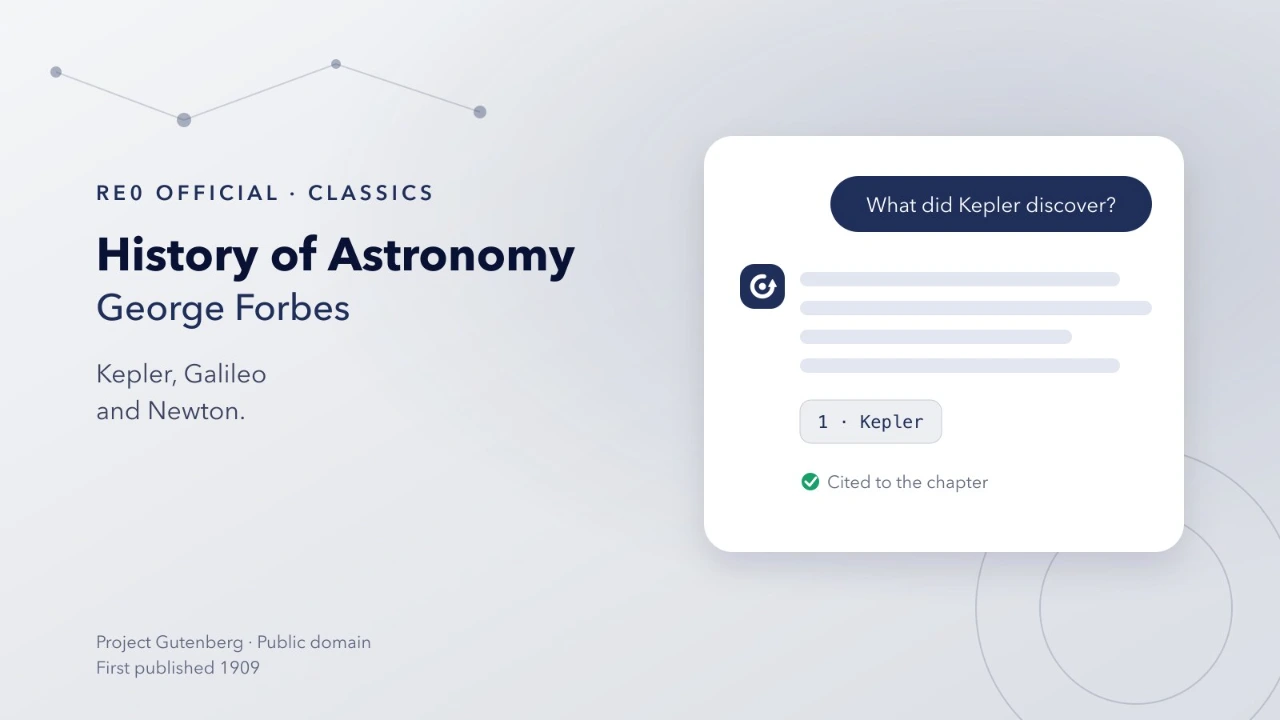 History of Astronomy Assistant
Answers questions on George Forbes's History of Astronomy (1909): ancient astronomy, Copernicus, Kepler, Galileo, Newton, the planets and the stars, quoting the text from Project Gutenberg (public domain) and naming the chapter.
RE0 OfficialOfficial0 successful answersNo ratings yet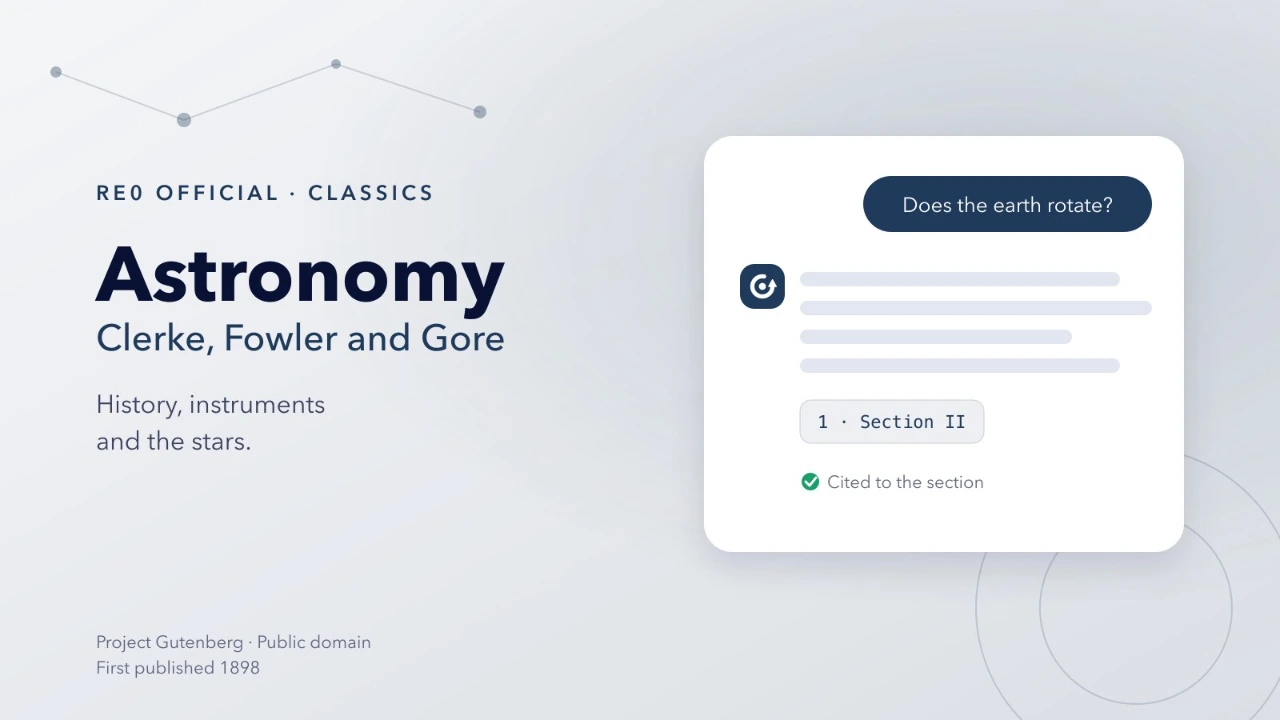 Astronomy Handbook Assistant
Answers questions on Clerke, Fowler and Gore's Astronomy (1898): astronomy's history, the earth's rotation, instruments, planets and stars, quoting the text from Project Gutenberg (public domain) and naming the section.
RE0 OfficialOfficial0 successful answersNo ratings yet
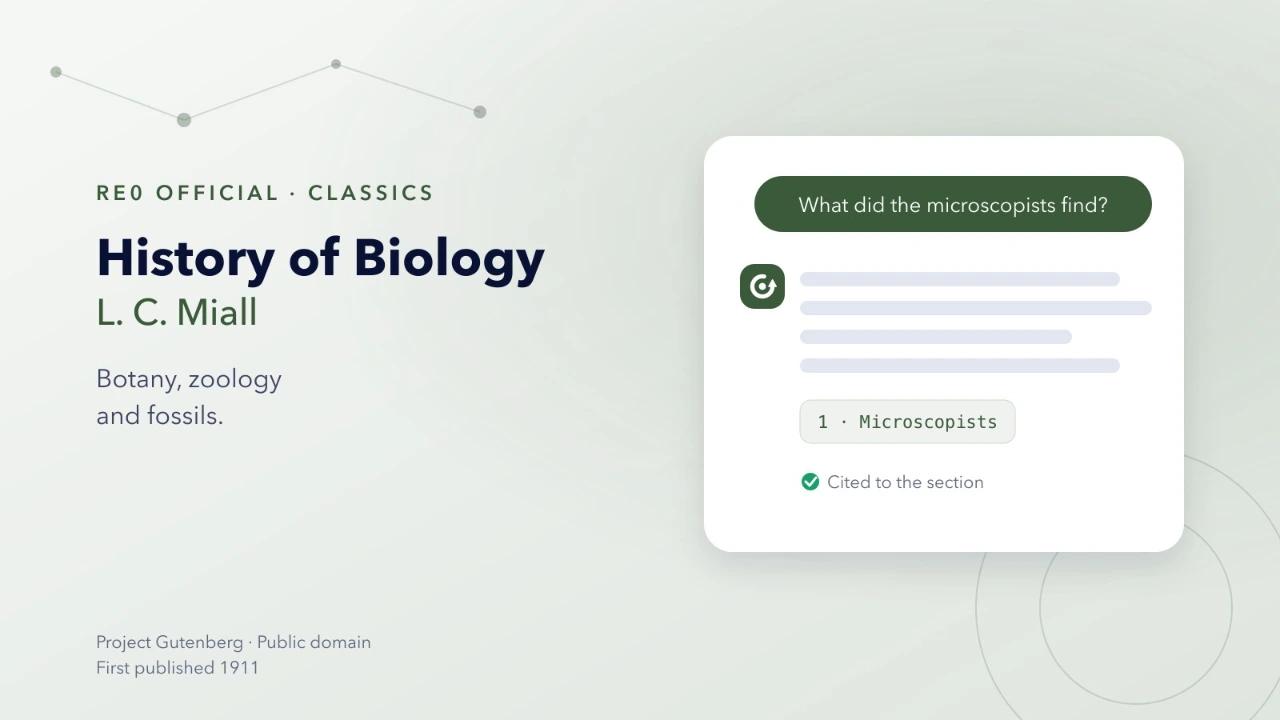 History of Biology Assistant
Answers questions on L. C. Miall's History of Biology (1911): ancient biology, the revival of botany and zoology, the microscopists and fossils, quoting the text from Project Gutenberg (public domain) and naming the section.
RE0 OfficialOfficial0 successful answersNo ratings yet
More Rees by this creator
RE0 Official’s other public Rees.
- Swinburne’s William Blake AssistantNo video introduction yetSwinburne’s William Blake Assistant
Answers questions on Algernon Charles Swinburne's William Blake: A Critical Essay (1868): Blake's life, his illuminated books, lyrics, prophetic books and art, quoting the text from Project Gutenberg (public domain) and naming the chapter.
RE0 OfficialOfficial0 successful answersNo ratings yet - Hypochondriasis AssistantNo video introduction yet
- The Leper in England AssistantNo video introduction yetThe Leper in England Assistant
Answers questions on Robert Charles Hope's The Leper in England (1909): leprosy in medieval England and the lazar-houses that cared for lepers, quoting the text from Project Gutenberg (public domain) and naming the section.
RE0 OfficialOfficial0 successful answersNo ratings yet - The Sweating Sickness AssistantNo video introduction yetThe Sweating Sickness Assistant
Answers questions on John Caius's 1552 book on the English sweating sickness: its symptoms, causes, diet and how to avoid and treat it, quoting the text from Project Gutenberg (public domain) and naming the section.
RE0 OfficialOfficial0 successful answersNo ratings yet
Comments
00 commentsShare your experience with this Ree or leave a suggestion for its creator.
Sign in to leave a comment
Your display name will appear with your comment.
No comments yet
Be the first to share your experience.