Loading…

MEET YOUR KNOWLEDGE COMPANION
FavoriteTime and Clocks Assistant
Answers questions on Henry Cunynghame's Time and Clocks (1906): sundials, water clocks, escapements, pendulums and how mechanical clocks work, quoting the text from Project Gutenberg (public domain) and naming the chapter.
By RE0 OfficialOfficialPublic Ree
About the creator

RE0 Official
OfficialWhat you can discuss
- 01
How does a clock escapement work?
- 02
How does a pendulum keep time?
- 03
How were sundials used?
Try it without signing in
This Ree charges no creator query fee, so you can ask it right away.
Try asking
The chat stays in this tab only and is cleared when you close it. Sign in to keep your chats.
Related Rees
Explore similar topics and knowledge.
 Chats on Old Clocks Assistant
Answers questions on Arthur Hayden's Chats on Old Clocks (1905): lantern clocks, long-case clocks, bracket clocks, makers and how to judge an old clock, quoting the text from Project Gutenberg (public domain) and naming the chapter.
RE0 OfficialOfficial0 successful answersNo ratings yet American Clock Business Assistant
Answers questions on Chauncey Jerome's History of the American Clock Business (1860): Connecticut clockmaking, brass clocks and his own business, quoting the text from Project Gutenberg (public domain) and naming the chapter.
RE0 OfficialOfficial0 successful answersNo ratings yet Watchmakers’ Handbook Assistant
Answers questions on Claudius Saunier's The Watchmaker's Hand-Book: arithmetic and drawing for watchmakers, materials, tools, escapements, springs and repairs, quoting the text from Project Gutenberg (public domain) and naming the section.
RE0 OfficialOfficial0 successful answersNo ratings yet Old Time Wall Papers Assistant
Answers questions on Kate Sanborn's Old Time Wall Papers (1905): early and scenic wallpapers, papers in historic American homes and their revival, quoting the text from Project Gutenberg (public domain) and naming the chapter.
RE0 OfficialOfficial0 successful answersNo ratings yet
More Rees by this creator
RE0 Official’s other public Rees.
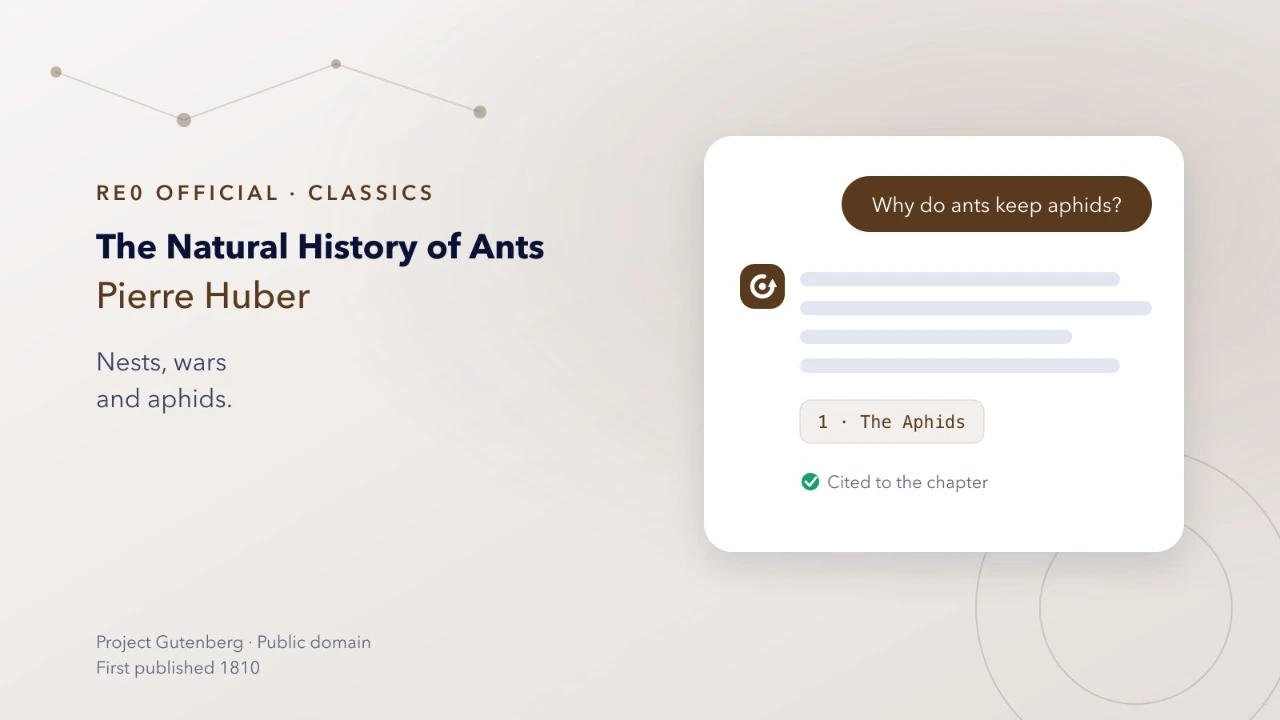 Natural History of Ants Assistant
Answers questions on Pierre Huber's The Natural History of Ants: how ants build, their young, winged ants, wars, their care of aphids and the Amazon ants, quoting the text from Project Gutenberg (public domain) and naming the chapter.
RE0 OfficialOfficial0 successful answersNo ratings yet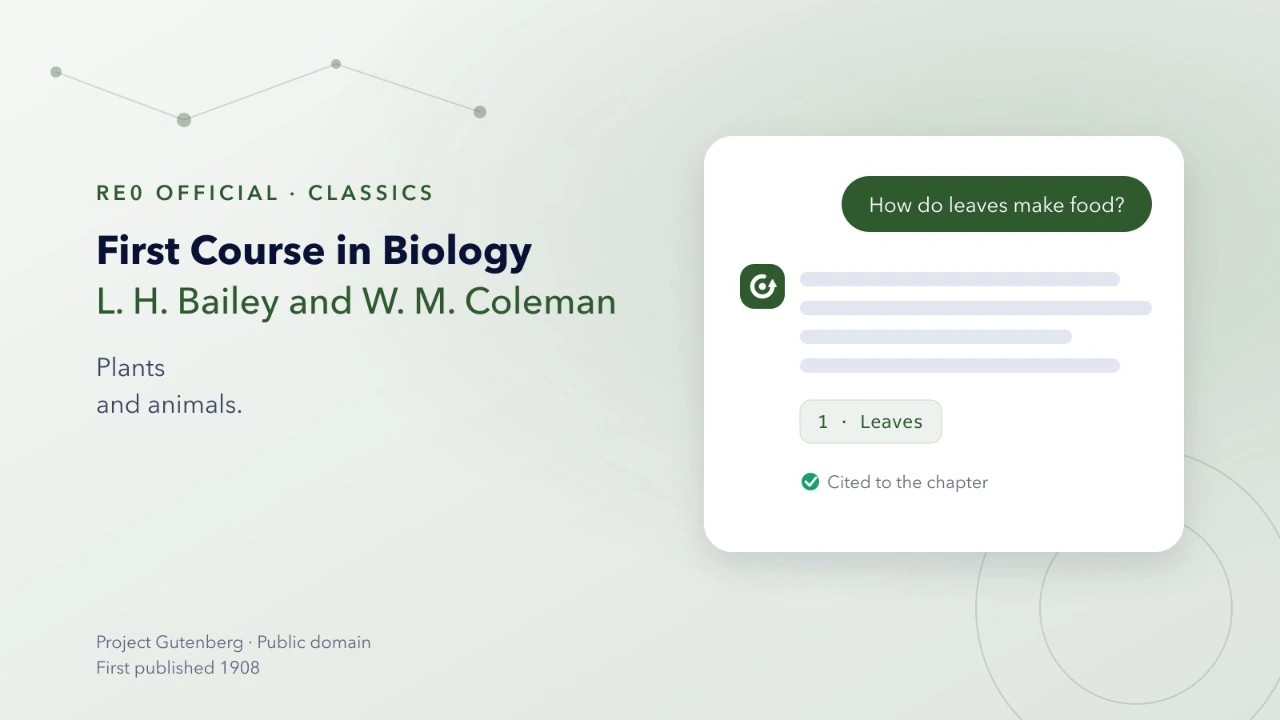 First Course in Biology Assistant
Answers questions on Bailey and Coleman's First Course in Biology (1908): plants and how they work, flowers and seeds, and animals from protozoa to insects, quoting the text from Project Gutenberg (public domain) and naming the chapter.
RE0 OfficialOfficial0 successful answersNo ratings yet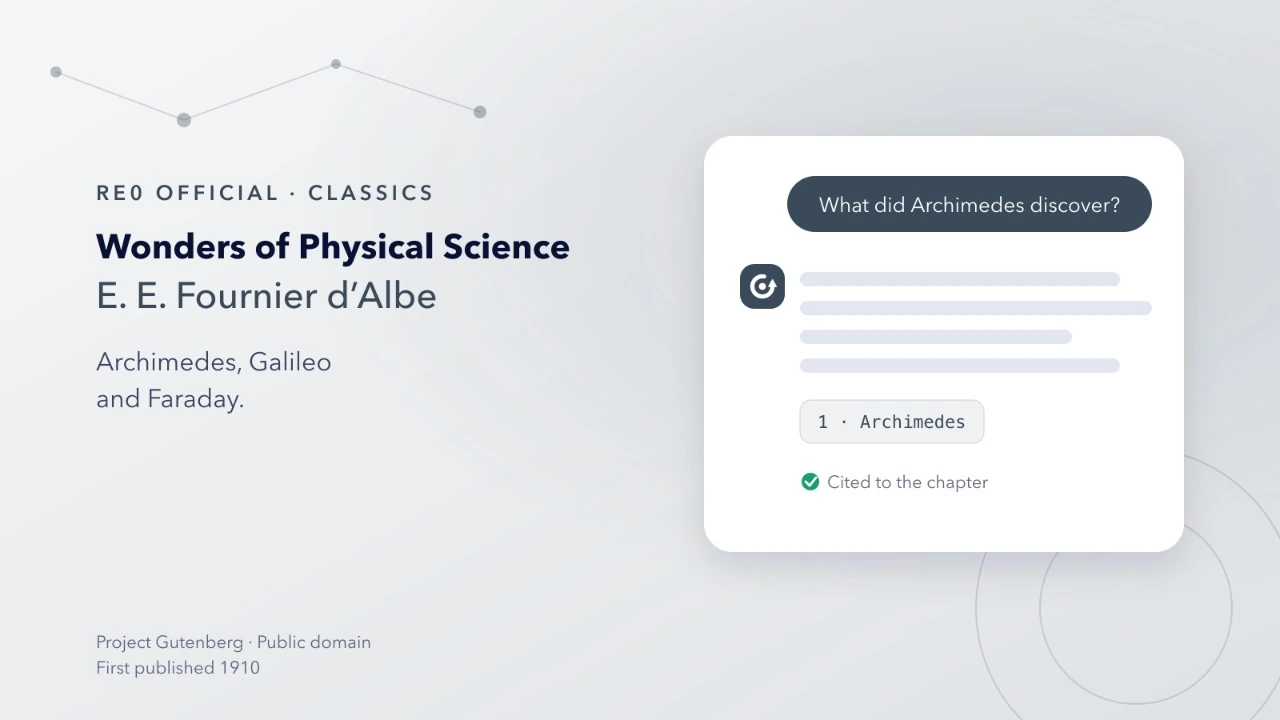 Wonders of Physical Science Assistant
Answers questions on E. E. Fournier d'Albe's Wonders of Physical Science (1910): Archimedes, Galileo, the barometer, the steam engine, electricity and X-rays, quoting the text from Project Gutenberg (public domain) and naming the chapter.
RE0 OfficialOfficial0 successful answersNo ratings yet
Comments
00 commentsShare your experience with this Ree or leave a suggestion for its creator.
Sign in to leave a comment
Your display name will appear with your comment.
No comments yet
Be the first to share your experience.