Loading…

MEET YOUR KNOWLEDGE COMPANION
FavoriteGothic Church Architecture Assistant
Answers questions on M. H. Bloxam's Principles of Gothic Ecclesiastical Architecture: arches and the Norman, Early English, Decorated and Perpendicular styles, quoting the text from Project Gutenberg (public domain) and naming the chapter.
By RE0 OfficialOfficialPublic Ree
About the creator

RE0 Official
OfficialWhat you can discuss
- 01
What is the Early English style?
- 02
How did the Norman style differ from the Anglo-Saxon?
- 03
What is the Perpendicular style?
Try it without signing in
This Ree charges no creator query fee, so you can ask it right away.
Try asking
The chat stays in this tab only and is cleared when you close it. Sign in to keep your chats.
Related Rees
Explore similar topics and knowledge.
 ABC of Gothic Architecture Assistant
Answers questions on John Henry Parker's A B C of Gothic Architecture: Norman, Early English, Decorated and Perpendicular styles, windows, doorways and vaults, quoting the text from Project Gutenberg (public domain) and naming the chapter.
RE0 OfficialOfficial0 successful answersNo ratings yet English Architecture Periods Assistant
Answers questions on Edmund Sharpe's The Seven Periods of English Architecture (1851): from the Saxon and Norman to the Curvilinear and Rectilinear periods, quoting the text from Project Gutenberg (public domain) and naming the chapter.
RE0 OfficialOfficial0 successful answersNo ratings yet
More Rees by this creator
RE0 Official’s other public Rees.
 Omnibuses and Cabs Assistant
Answers questions on Henry Charles Moore's Omnibuses and Cabs (1902): the first London omnibuses, hackney coaches, cabs, fares, drivers and companies, quoting the text from Project Gutenberg (public domain) and naming the chapter.
RE0 OfficialOfficial0 successful answersNo ratings yet Petty’s Treatise of Taxes Assistant
Answers questions on Sir William Petty's A Treatise of Taxes and Contributions (1662): public charges, customs, poll money, lotteries, tithes and excise, quoting the text from Project Gutenberg (public domain) and naming the chapter.
RE0 OfficialOfficial0 successful answersNo ratings yet Post-Office Packet Service Assistant
Answers questions on Arthur H. Norway's History of the Post-Office Packet Service, 1793–1815: the Falmouth packets, abuses, wartime voyages and the mutiny, quoting the text from Project Gutenberg (public domain) and naming the chapter.
RE0 OfficialOfficial0 successful answersNo ratings yet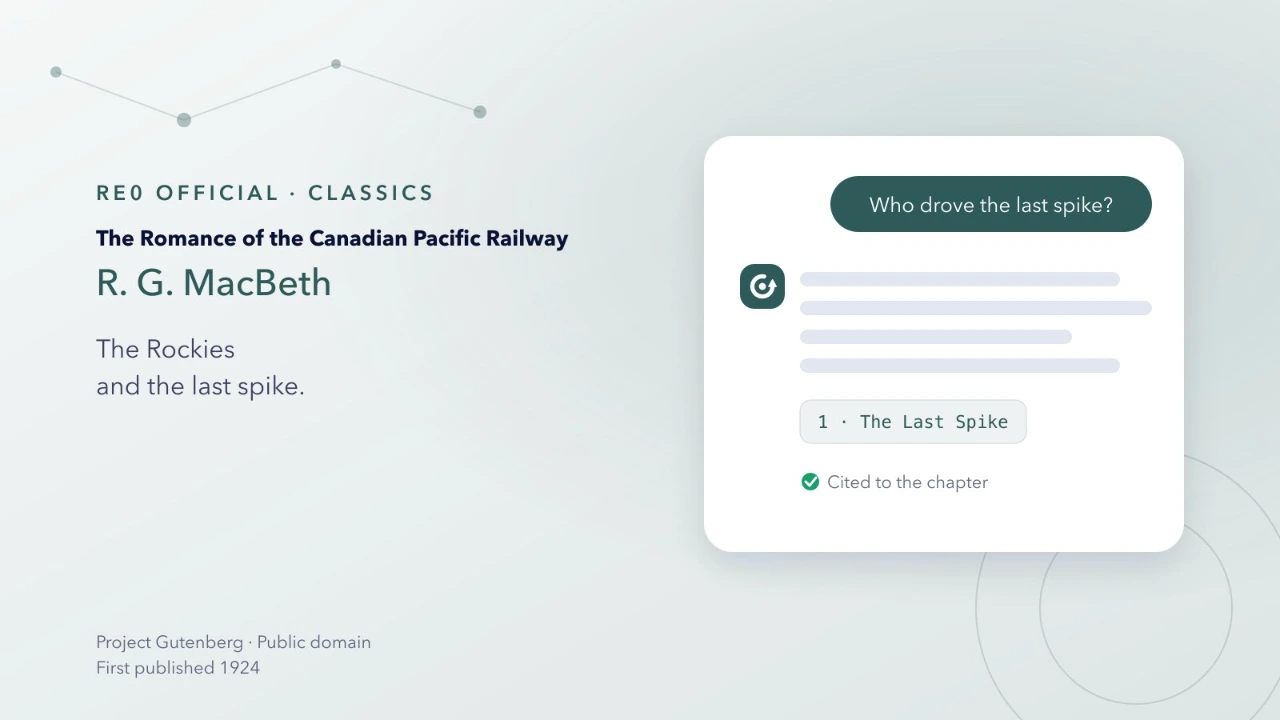 Canadian Pacific Railway Assistant
Answers questions on R. G. MacBeth's The Romance of the Canadian Pacific Railway (1924): why it was built, its builders, the mountains and the last spike, quoting the text from Project Gutenberg (public domain) and naming the chapter.
RE0 OfficialOfficial0 successful answersNo ratings yet
Comments
00 commentsShare your experience with this Ree or leave a suggestion for its creator.
Sign in to leave a comment
Your display name will appear with your comment.
No comments yet
Be the first to share your experience.