Loading…

MEET YOUR KNOWLEDGE COMPANION
FavoriteNeedlework as Art Assistant
Answers questions on Lady Marian Alford's Needlework as Art (1886): the history of embroidery, stitches and materials, from antiquity to England, quoting the text from Project Gutenberg (public domain) and naming the chapter.
By RE0 OfficialOfficialPublic Ree
About the creator

RE0 Official
OfficialWhat you can discuss
- 01
What is the history of embroidery?
- 02
What stitches does Alford describe?
- 03
What was Opus Anglicanum?
Try it without signing in
This Ree charges no creator query fee, so you can ask it right away.
Try asking
The chat stays in this tab only and is cleared when you close it. Sign in to keep your chats.
Related Rees
Explore similar topics and knowledge.
 Encyclopedia of Needlework Assistant
Answers questions on Thérèse de Dillmont's Encyclopedia of Needlework: plain sewing, embroidery, cross-stitch, knitting, crochet, tatting, lace and macramé, quoting the text from Project Gutenberg (public domain) and naming the chapter.
RE0 OfficialOfficial0 successful answersNo ratings yet Artistic Embroidery Assistant
Answers questions on Ella Rodman Church's Artistic Embroidery (1880): crewel-work, the crewel stitch, worsted embroidery, friezes and dados, quoting the text from Project Gutenberg (public domain) and naming the chapter.
RE0 OfficialOfficial0 successful answersNo ratings yet An Embroidery Book Assistant
Answers questions on Anne Knox Arthur's An Embroidery Book (1920), from the Glasgow School of Art: stitches, design, materials and embroidered decoration, quoting the text from Project Gutenberg (public domain) and naming the chapter.
RE0 OfficialOfficial0 successful answersNo ratings yet Embroidery in America Assistant
Answers questions on Candace Wheeler's The Development of Embroidery in America (1921): crewelwork, samplers, quilts, Berlin woolwork and American tapestry, quoting the text from Project Gutenberg (public domain) and naming the chapter.
RE0 OfficialOfficial0 successful answersNo ratings yet
More Rees by this creator
RE0 Official’s other public Rees.
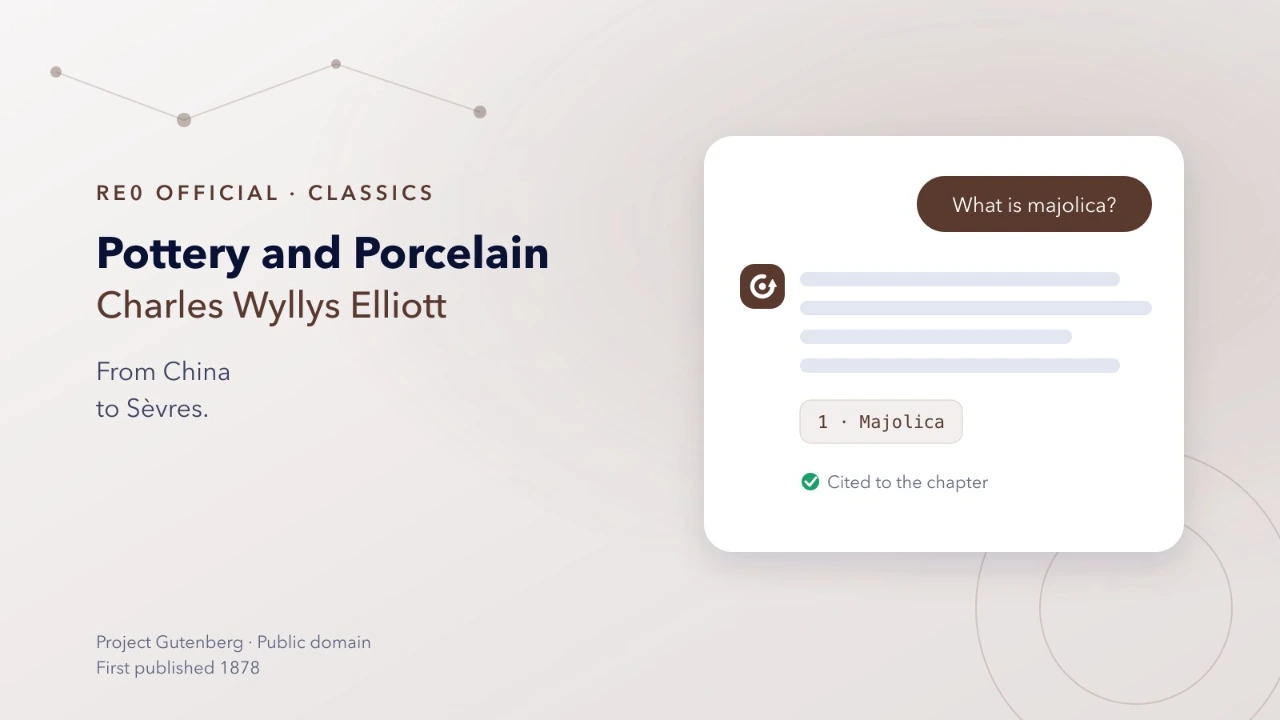 Pottery and Porcelain Assistant
Answers questions on Charles Wyllys Elliott's Pottery and Porcelain (1878): ancient and Asian pottery, and European porcelain to the 1876 exhibition, quoting the text from Project Gutenberg (public domain) and naming the chapter.
RE0 OfficialOfficial0 successful answersNo ratings yet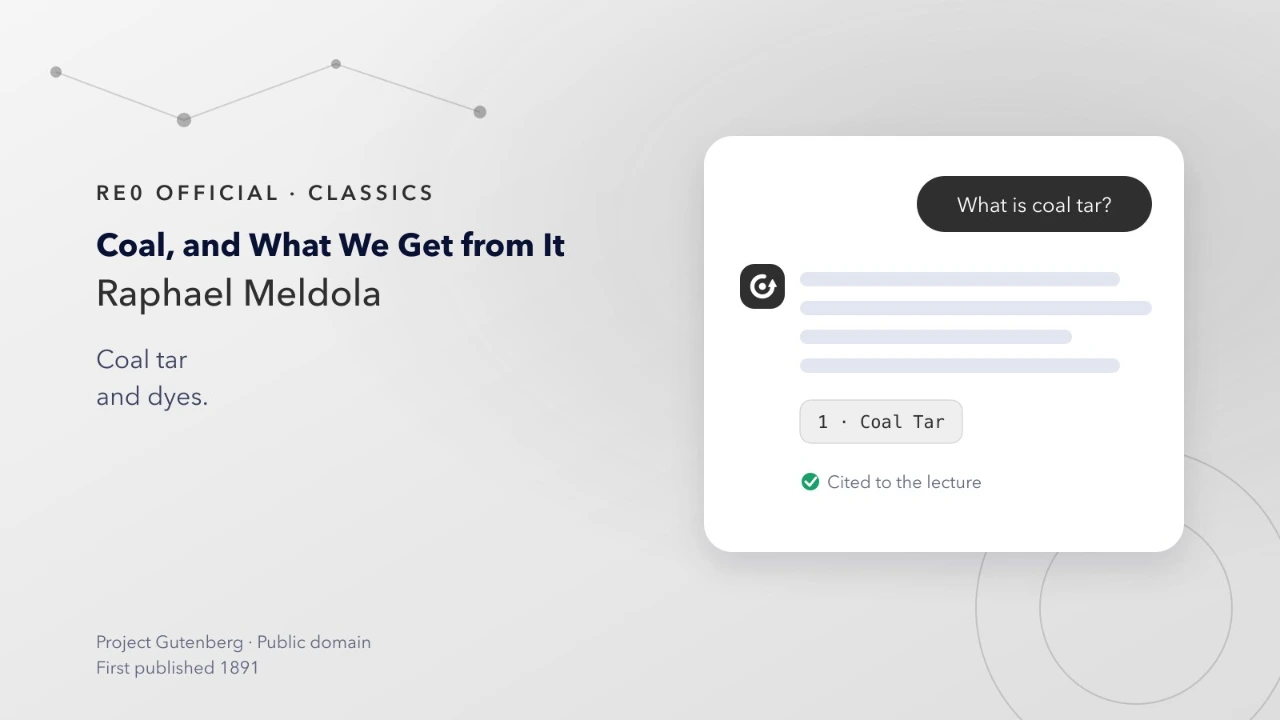 Coal and What We Get from It Assistant
Answers questions on Raphael Meldola's Coal, and What We Get from It (1891): coal gas, coal tar, and the dyes, drugs and chemicals made from them, quoting the text from Project Gutenberg (public domain) and naming the lecture.
RE0 OfficialOfficial0 successful answersNo ratings yet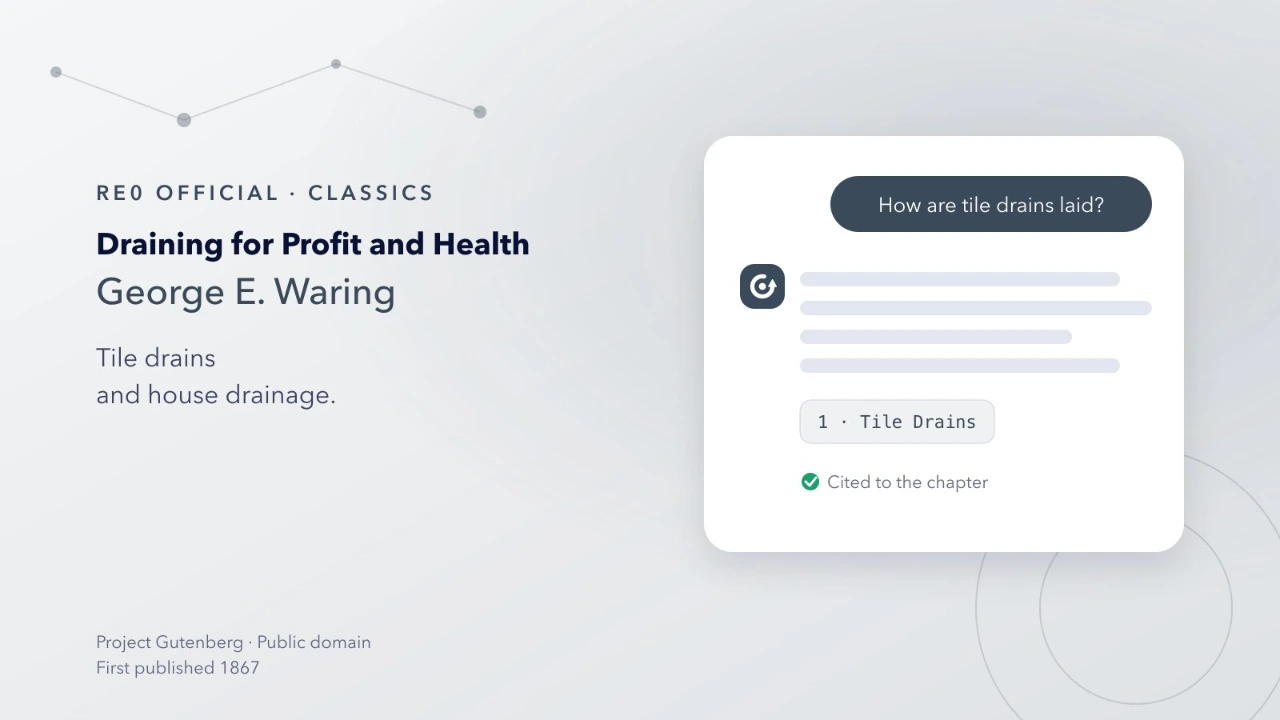 Draining for Profit Assistant
Answers questions on George E. Waring's Draining for Profit, and Draining for Health (1867): why land needs draining, tile drains and house drainage, quoting the text from Project Gutenberg (public domain) and naming the chapter.
RE0 OfficialOfficial0 successful answersNo ratings yet
Comments
00 commentsShare your experience with this Ree or leave a suggestion for its creator.
Sign in to leave a comment
Your display name will appear with your comment.
No comments yet
Be the first to share your experience.