Loading…
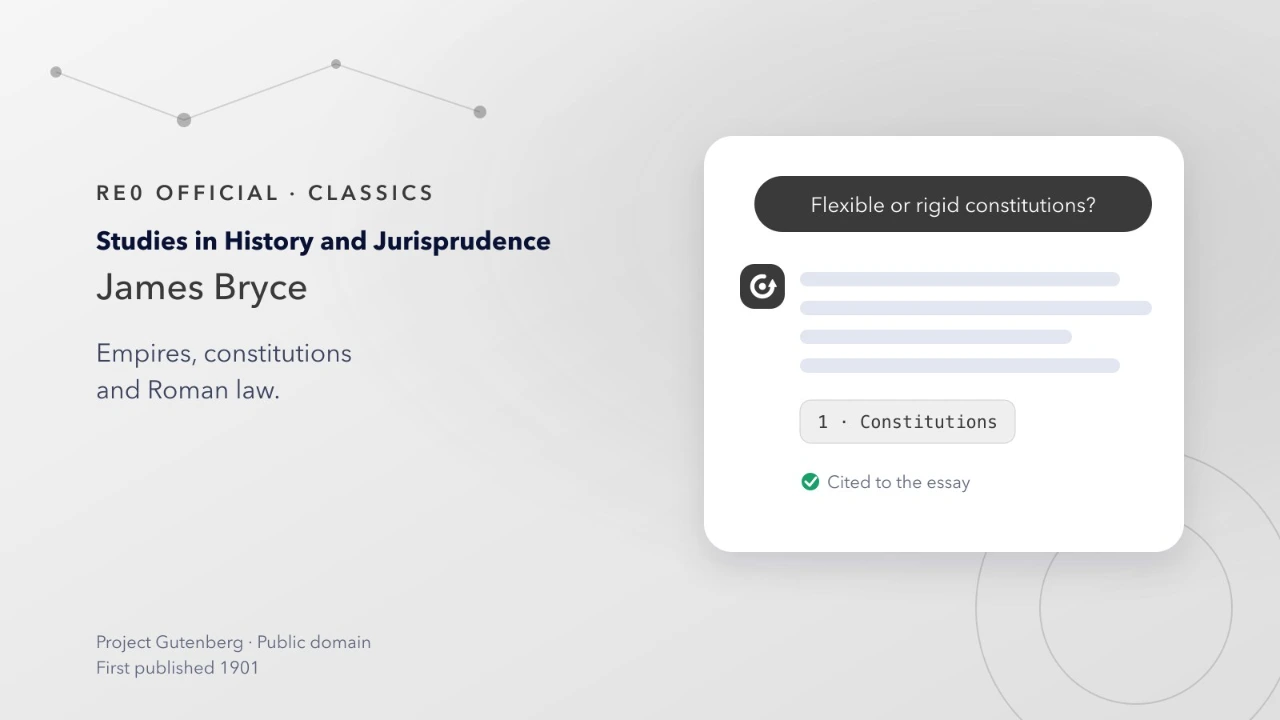

MEET YOUR KNOWLEDGE COMPANION
FavoriteBryce Jurisprudence Assistant
Answers questions on James Bryce's Studies in History and Jurisprudence, volume 1: the Roman and British empires, flexible and rigid constitutions and Roman law, quoting the text from Project Gutenberg (public domain) and naming the essay.
By RE0 OfficialOfficialPublic Ree
About the creator

RE0 Official
OfficialWhat you can discuss
- 01
What is the difference between flexible and rigid constitutions?
- 02
How did Roman law spread?
- 03
How does Bryce compare the Roman and British empires?
Try it without signing in
This Ree charges no creator query fee, so you can ask it right away.
Try asking
The chat stays in this tab only and is cleared when you close it. Sign in to keep your chats.
Related Rees
Explore similar topics and knowledge.
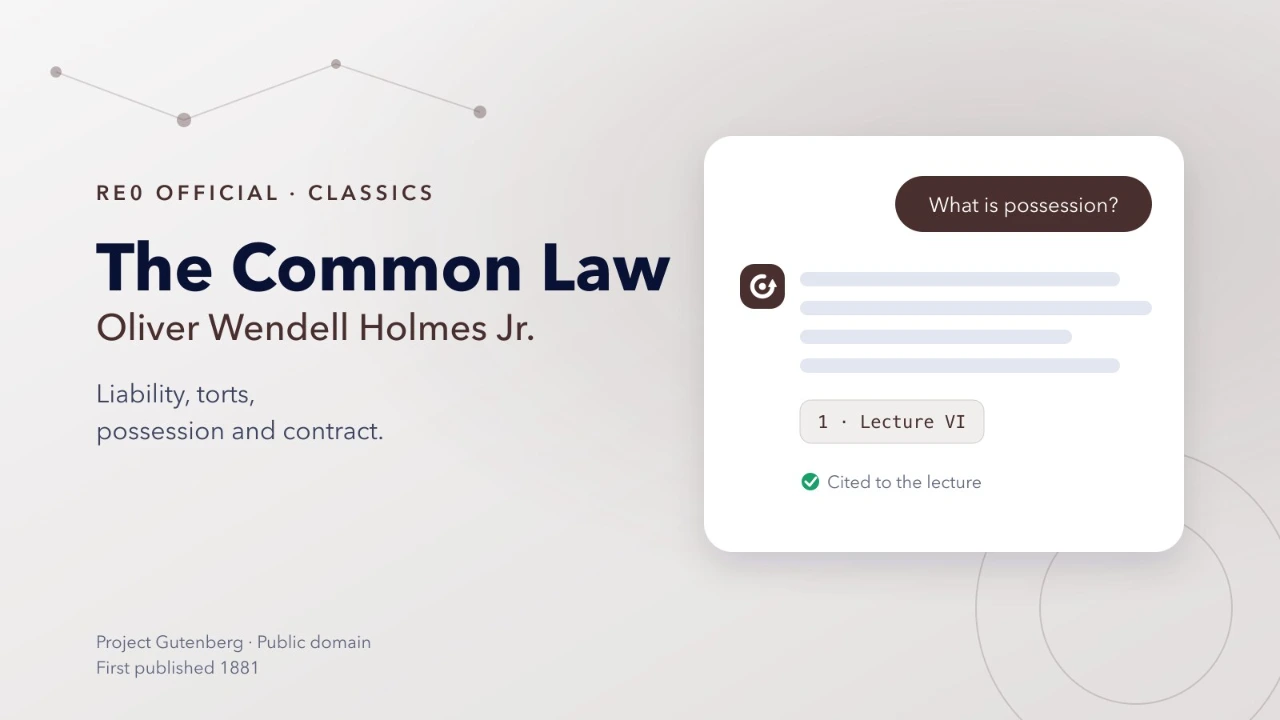 The Common Law Assistant
Answers questions on Oliver Wendell Holmes Jr.'s The Common Law (1881): early forms of liability, criminal law, torts, possession and contract, quoting the text from Project Gutenberg (public domain) and naming the lecture.
RE0 OfficialOfficial0 successful answersNo ratings yet
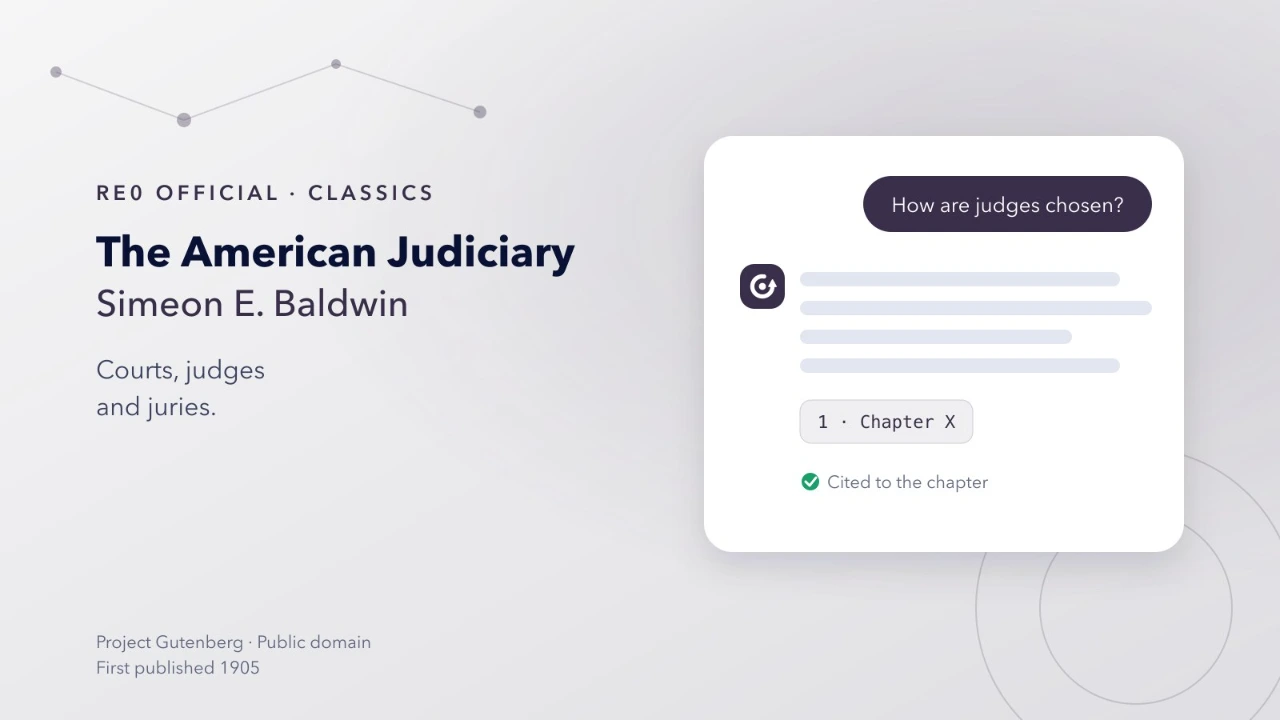 The American Judiciary Assistant
Answers questions on Simeon E. Baldwin's The American Judiciary (1905): the Supreme Court, federal and state courts, judges, juries and judicial review, quoting the text from Project Gutenberg (public domain) and naming the chapter.
RE0 OfficialOfficial0 successful answersNo ratings yet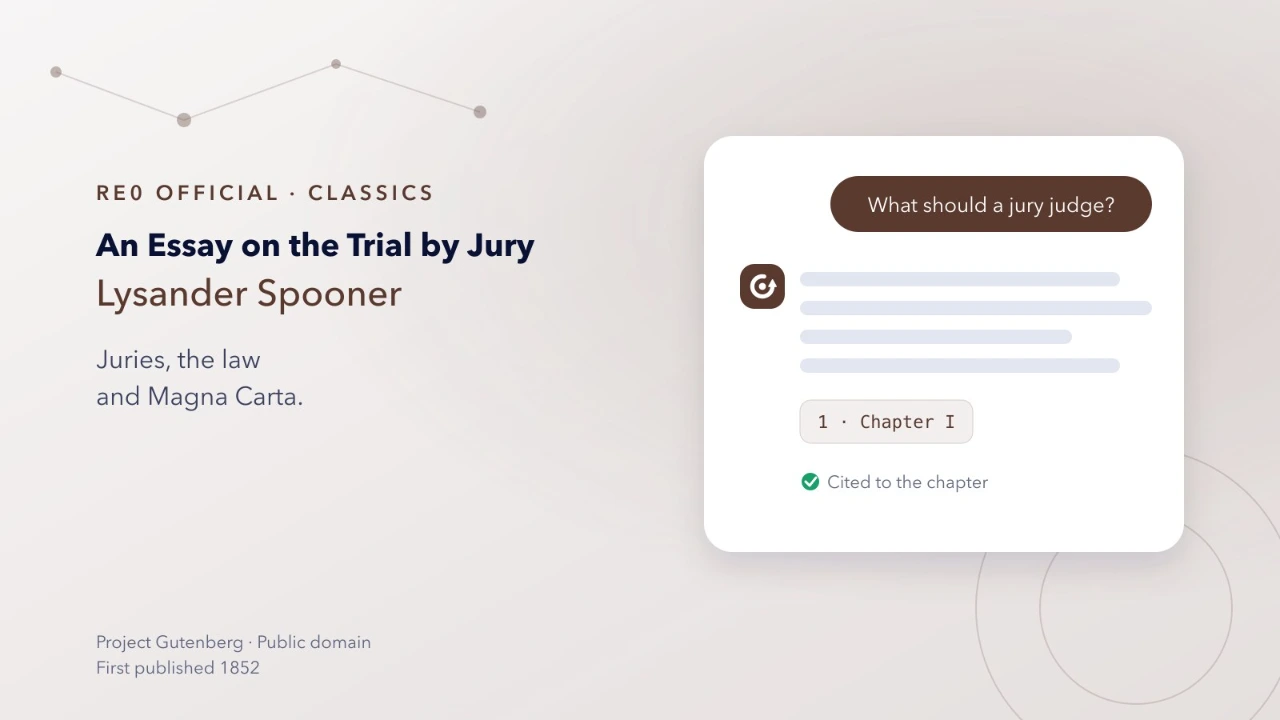 Trial by Jury Assistant
Answers questions on Lysander Spooner's An Essay on the Trial by Jury (1852): the jury's right to judge the law, Magna Carta and the history of the jury, quoting the text from Project Gutenberg (public domain) and naming the chapter.
RE0 OfficialOfficial0 successful answersNo ratings yet
More Rees by this creator
RE0 Official’s other public Rees.
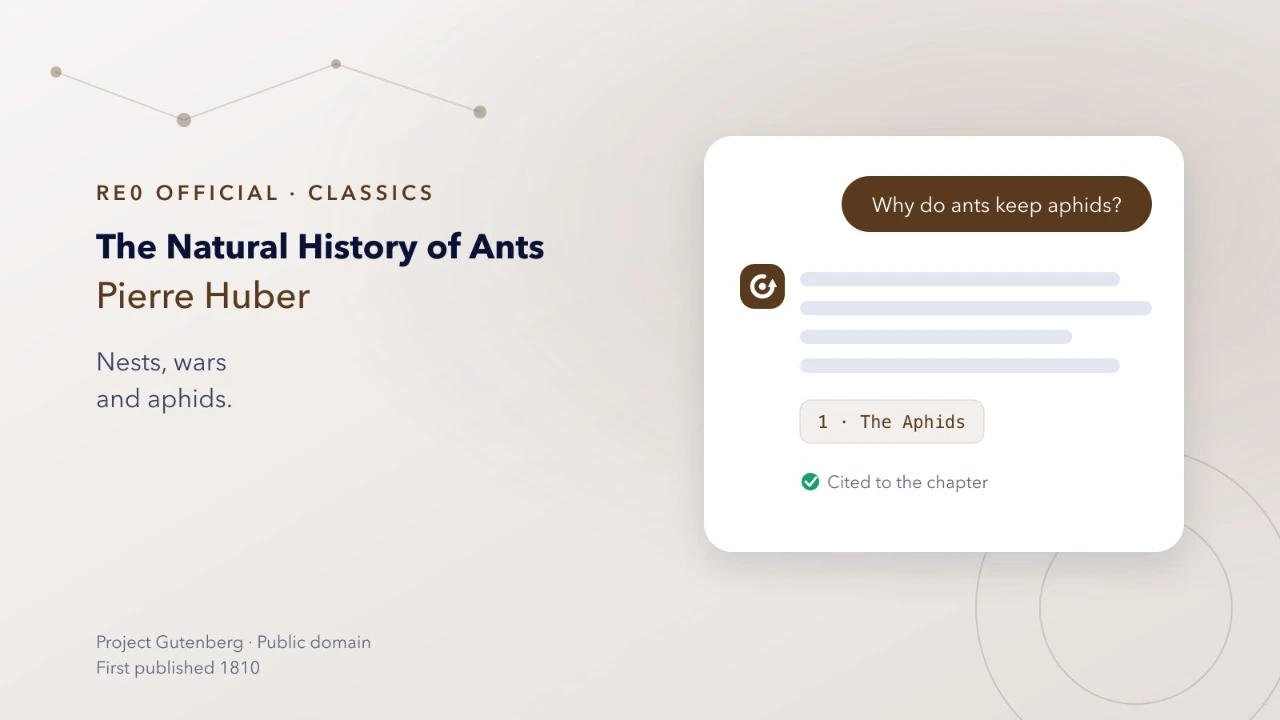 Natural History of Ants Assistant
Answers questions on Pierre Huber's The Natural History of Ants: how ants build, their young, winged ants, wars, their care of aphids and the Amazon ants, quoting the text from Project Gutenberg (public domain) and naming the chapter.
RE0 OfficialOfficial0 successful answersNo ratings yet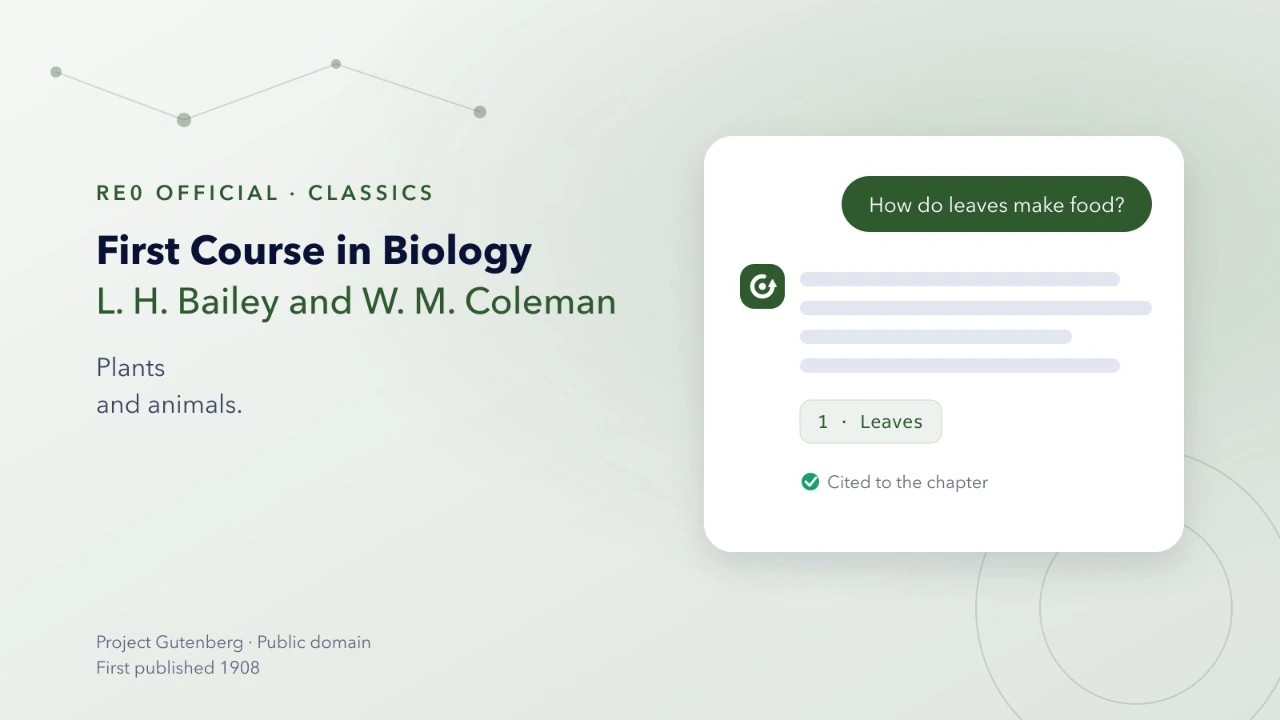 First Course in Biology Assistant
Answers questions on Bailey and Coleman's First Course in Biology (1908): plants and how they work, flowers and seeds, and animals from protozoa to insects, quoting the text from Project Gutenberg (public domain) and naming the chapter.
RE0 OfficialOfficial0 successful answersNo ratings yet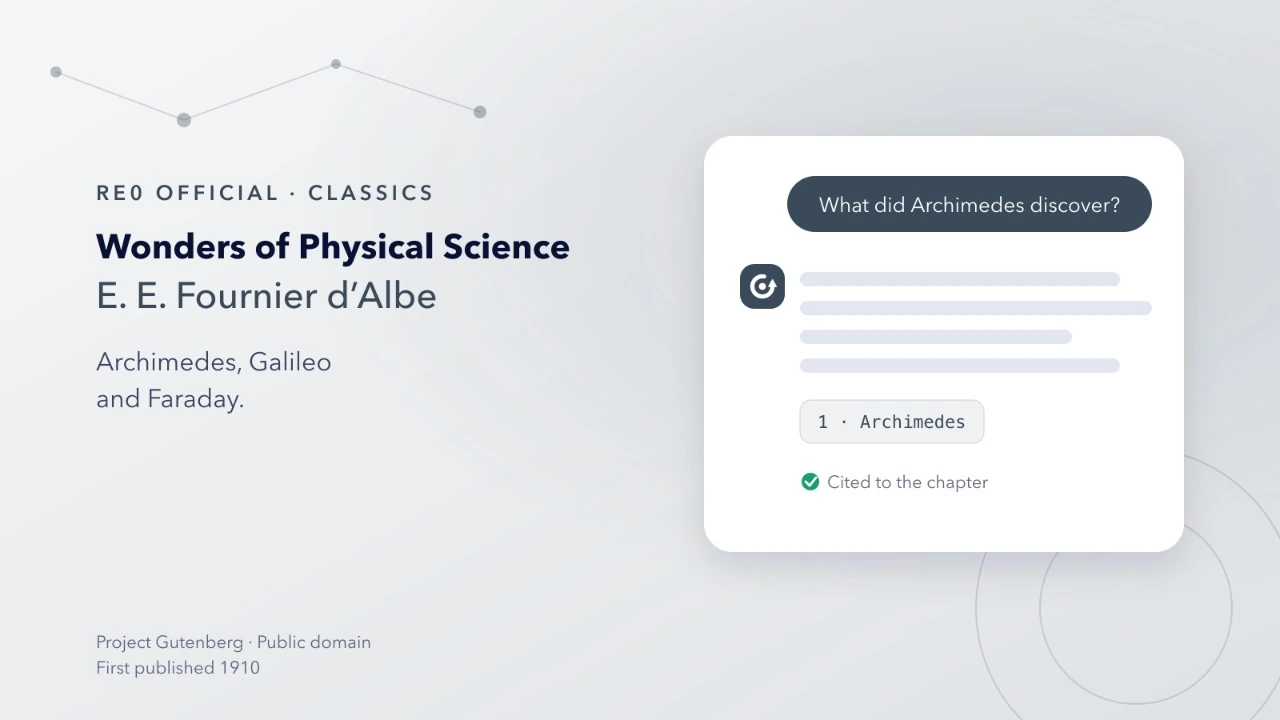 Wonders of Physical Science Assistant
Answers questions on E. E. Fournier d'Albe's Wonders of Physical Science (1910): Archimedes, Galileo, the barometer, the steam engine, electricity and X-rays, quoting the text from Project Gutenberg (public domain) and naming the chapter.
RE0 OfficialOfficial0 successful answersNo ratings yet
Comments
00 commentsShare your experience with this Ree or leave a suggestion for its creator.
Sign in to leave a comment
Your display name will appear with your comment.
No comments yet
Be the first to share your experience.