Loading…

MEET YOUR KNOWLEDGE COMPANION
FavoriteOur Railroads To-Morrow Assistant
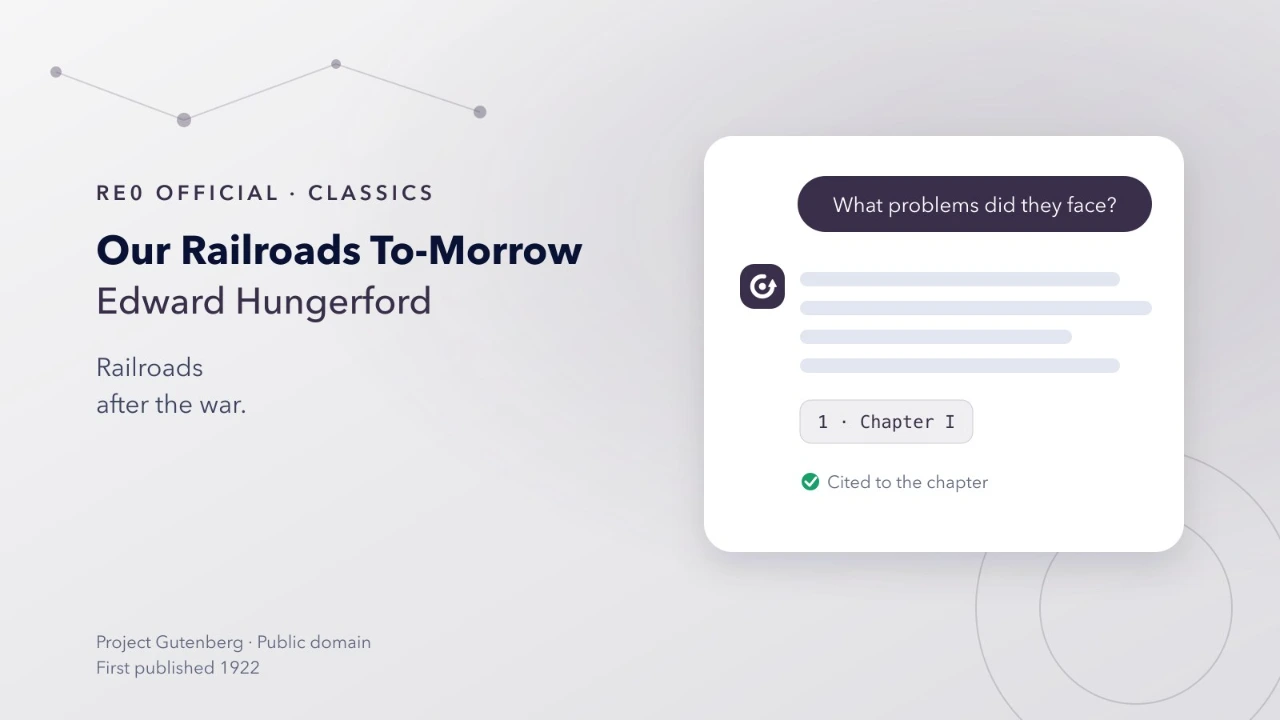
Answers questions on Edward Hungerford's Our Railroads To-Morrow (1922): the American railroads after the First World War, their finances, labour and future, quoting the text from Project Gutenberg (public domain) and naming the chapter.
By RE0 OfficialOfficialPublic Ree
About the creator

RE0 Official
OfficialWhat you can discuss
- 01
What problems did American railroads face after the war?
- 02
What does Hungerford say about railroad labour?
- 03
How should railroads be run?
Try it without signing in
This Ree charges no creator query fee, so you can ask it right away.
Try asking
The chat stays in this tab only and is cleared when you close it. Sign in to keep your chats.
Related Rees
Explore similar topics and knowledge.
 Great Fortunes from Railroads Assistant
Answers questions on Gustavus Myers's Great Fortunes from Railroads (1912): how the Vanderbilt, Gould and other railroad fortunes were made, quoting the text from Project Gutenberg (public domain) and naming the chapter.
RE0 OfficialOfficial0 successful answersNo ratings yet
 The American Railway Assistant
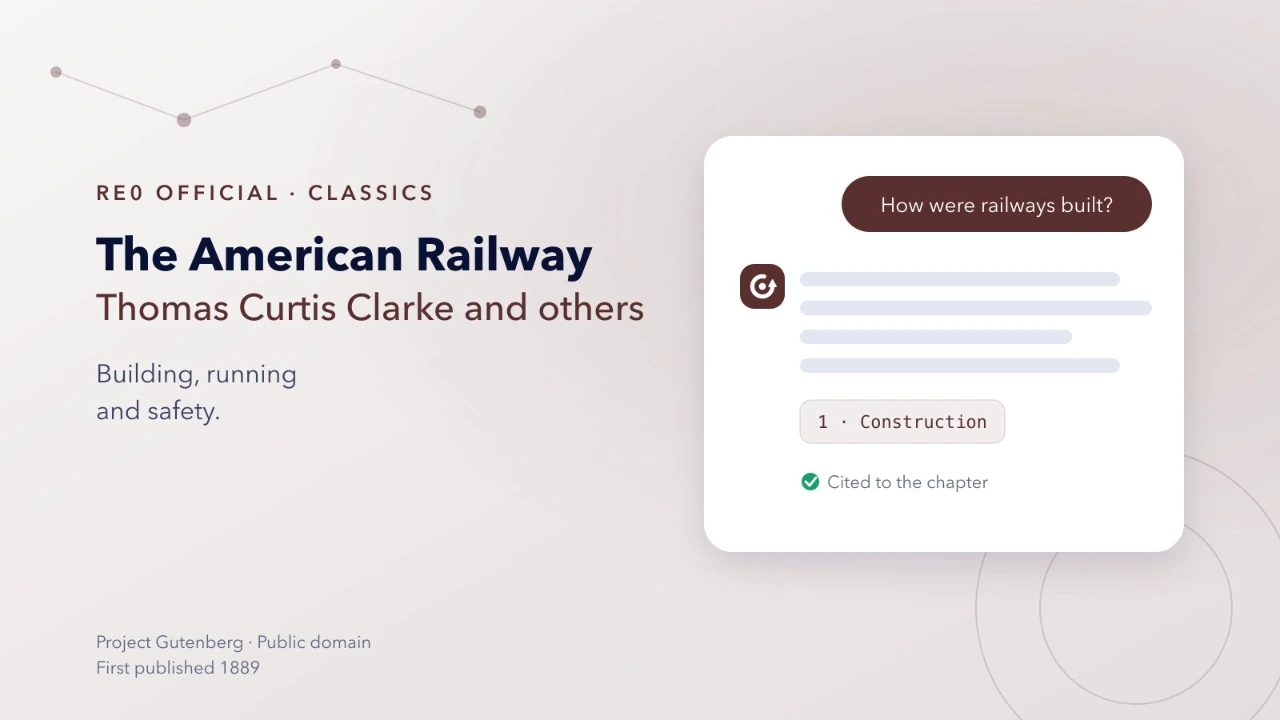
Answers questions on The American Railway (1889): building and running American railways, locomotives, passenger travel, mail and railway safety, quoting the text from Project Gutenberg (public domain) and naming the chapter.
RE0 OfficialOfficial0 successful answersNo ratings yet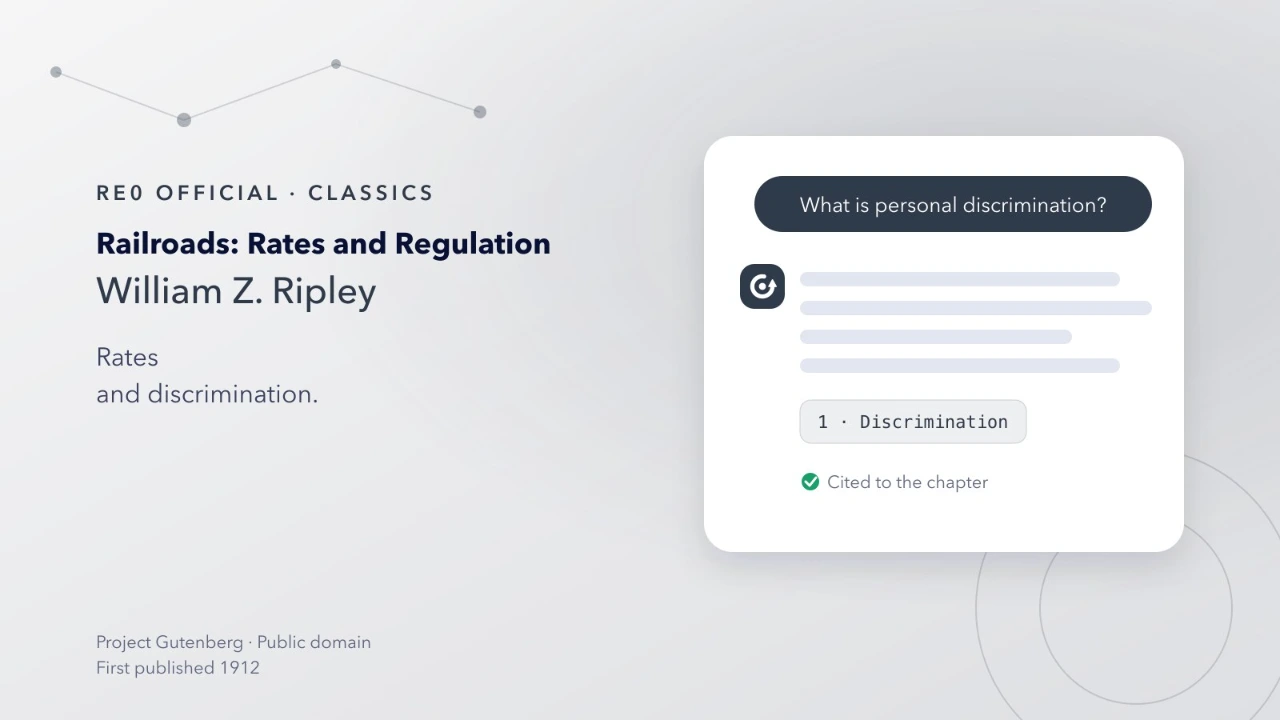 Railroad Rates Assistant
Answers questions on William Z. Ripley's Railroads: Rates and Regulation (1912): the theory of rates, rate making, discrimination, routing and regulation, quoting the text from Project Gutenberg (public domain) and naming the chapter.
RE0 OfficialOfficial0 successful answersNo ratings yet
More Rees by this creator
RE0 Official’s other public Rees.
 Right to Be Lazy Assistant
Answers questions on Paul Lafargue's The Right to Be Lazy (1883): his satirical attack on the dogma of work, over-production, and other essays, quoting the text from Project Gutenberg (public domain) and naming the chapter.
RE0 OfficialOfficial0 successful answersNo ratings yet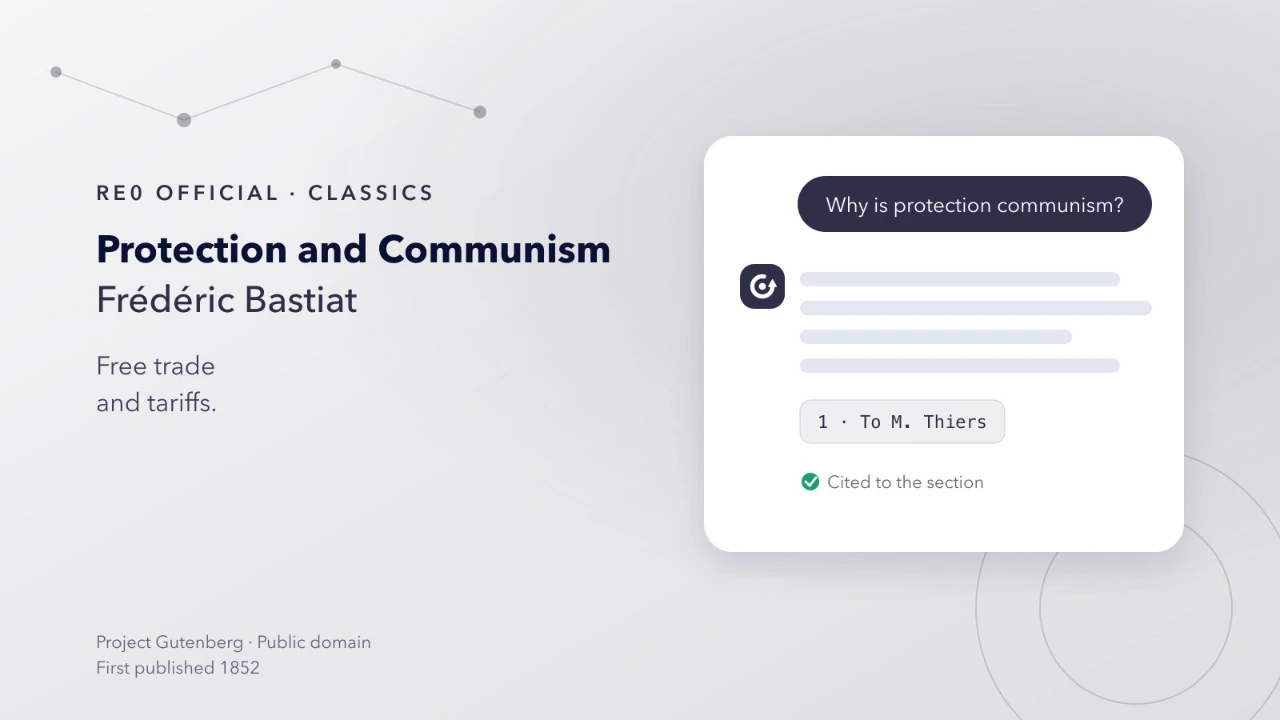 Protection and Communism Assistant
Answers questions on Frédéric Bastiat's Protection and Communism: his letter to Thiers arguing that tariff protection rests on the same principle as communism, quoting the text from Project Gutenberg (public domain) and naming the section.
RE0 OfficialOfficial0 successful answersNo ratings yet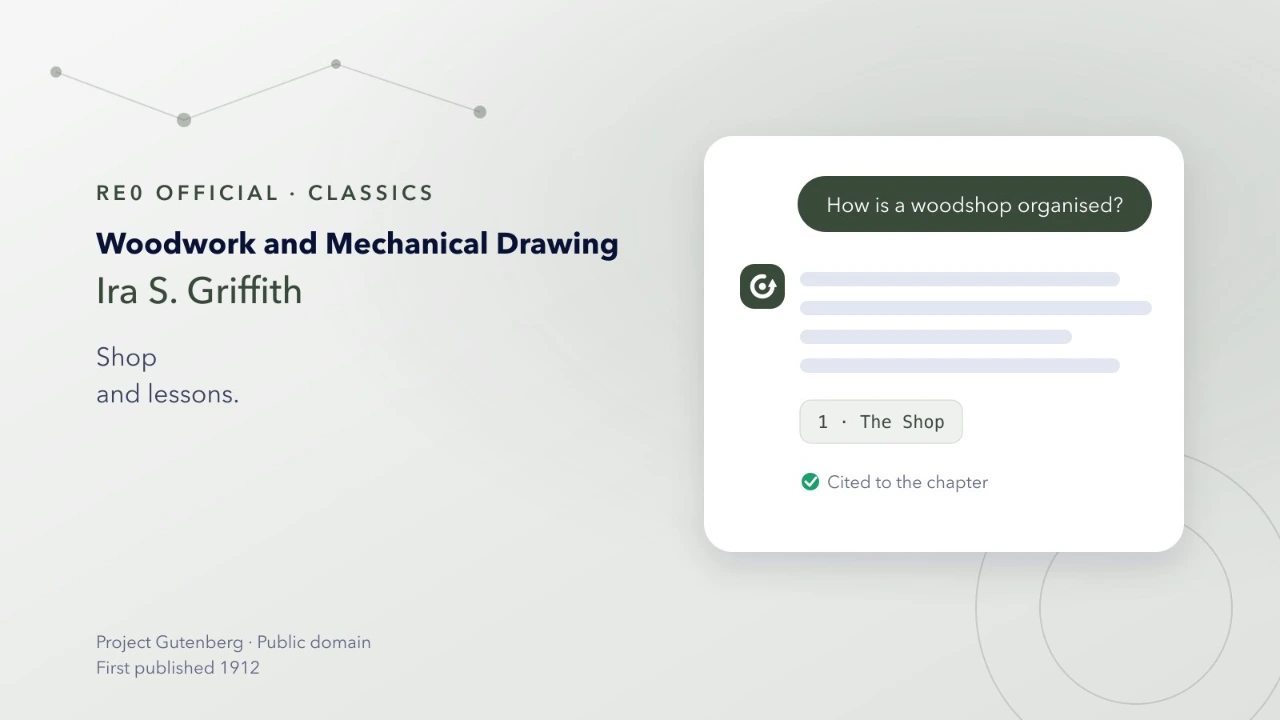 Woodwork and Drawing Courses Assistant
Answers questions on Ira S. Griffith's Correlated Courses in Woodwork and Mechanical Drawing (1912): aims, tools, shop organisation and lesson outlines, quoting the text from Project Gutenberg (public domain) and naming the chapter.
RE0 OfficialOfficial0 successful answersNo ratings yet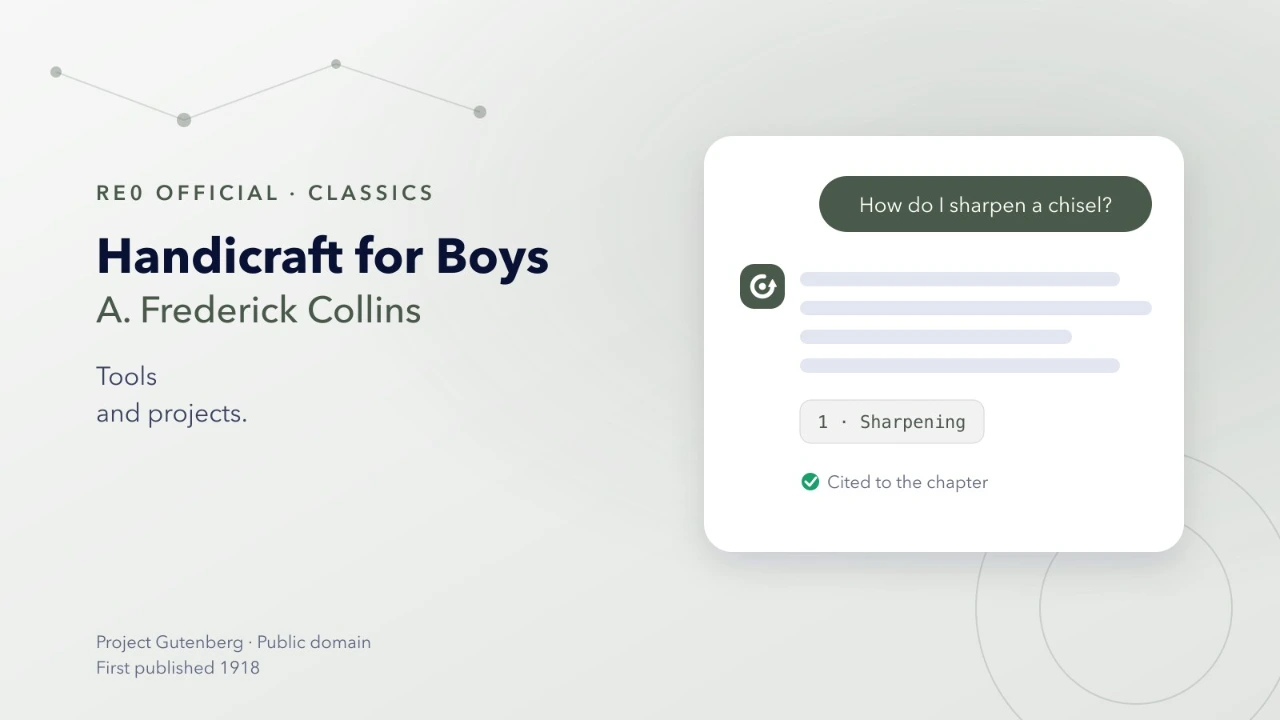 Handicraft for Boys Assistant
Answers questions on A. Frederick Collins's Handicraft for Boys (1918): carpentry tools, sharpening, cabinet making and other projects for young makers, quoting the text from Project Gutenberg (public domain) and naming the chapter.
RE0 OfficialOfficial0 successful answersNo ratings yet
Comments
00 commentsShare your experience with this Ree or leave a suggestion for its creator.
Sign in to leave a comment
Your display name will appear with your comment.
No comments yet
Be the first to share your experience.