Loading…

MEET YOUR KNOWLEDGE COMPANION
FavoriteFetter’s Economics Assistant
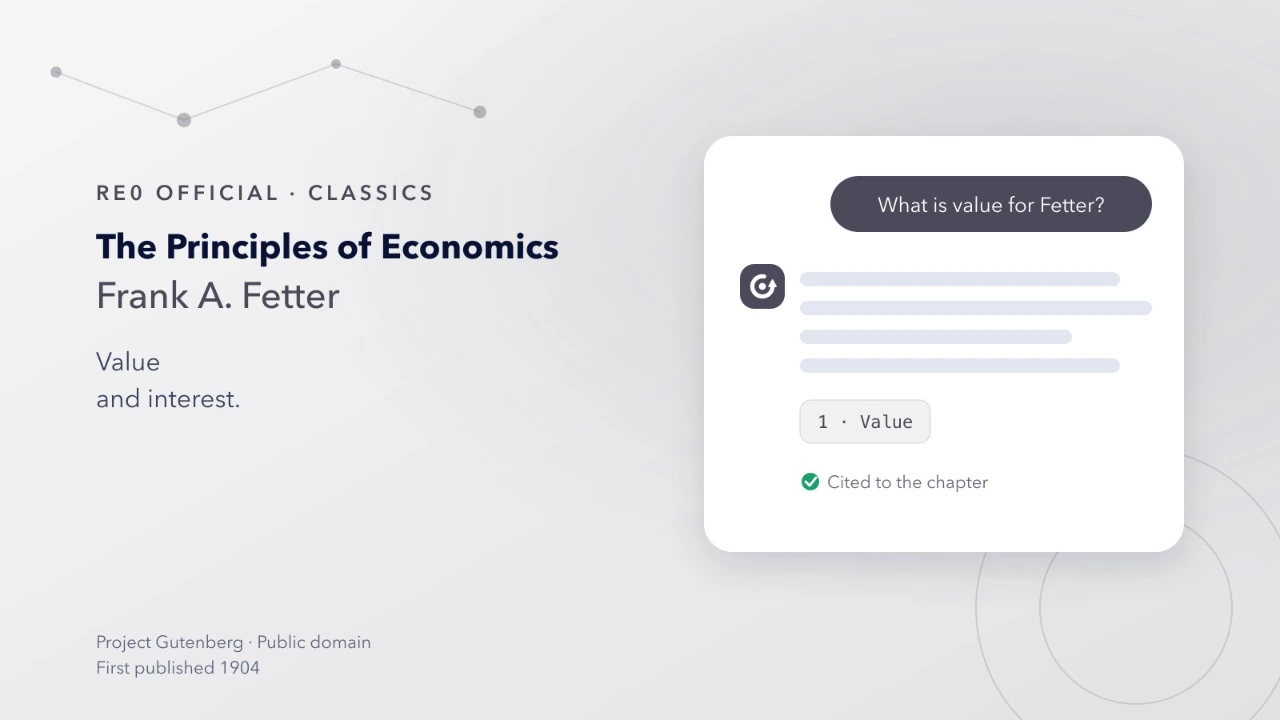
Answers questions on Frank A. Fetter's The Principles of Economics (1904): value, wants, rent, capital, interest, wages, money and banking, quoting the text from Project Gutenberg (public domain) and naming the chapter.
By RE0 OfficialOfficialPublic Ree
About the creator

RE0 Official
OfficialWhat you can discuss
- 01
What is value for Fetter?
- 02
How is interest explained?
- 03
What sets wages?
Try it without signing in
This Ree charges no creator query fee, so you can ask it right away.
Try asking
The chat stays in this tab only and is cleared when you close it. Sign in to keep your chats.
Related Rees
Explore similar topics and knowledge.
- Perry’s Political Economy AssistantNo video introduction yetPerry’s Political Economy Assistant
Answers questions on Arthur Latham Perry's Principles of Political Economy: value, exchange, money, credit, labour, capital and the case for free trade, quoting the text from Project Gutenberg (public domain) and naming the chapter.
RE0 OfficialOfficial0 successful answersNo ratings yet - Theory of Value AssistantNo video introduction yetTheory of Value Assistant
Answers questions on William Smart's An Introduction to the Theory of Value: utility, marginal utility, the scale of value and complementary goods, quoting the text from Project Gutenberg (public domain) and naming the chapter.
RE0 OfficialOfficial0 successful answersNo ratings yet - Economics for Helen AssistantNo video introduction yetEconomics for Helen Assistant
Answers questions on Hilaire Belloc's Economics for Helen (1924): wealth, production, rent, interest, wages, money, exchange and trade explained simply, quoting the text from Project Gutenberg (public domain) and naming the chapter.
RE0 OfficialOfficial0 successful answersNo ratings yet 
More Rees by this creator
RE0 Official’s other public Rees.
- Chesterton’s William Blake AssistantNo video introduction yetChesterton’s William Blake Assistant
Answers questions on G. K. Chesterton's William Blake (1910): Blake's life, his art and mysticism, and Chesterton's view of his genius, quoting the text from Project Gutenberg (public domain) and naming the chapter.
RE0 OfficialOfficial0 successful answersNo ratings yet - Parturition Without Pain AssistantNo video introduction yetParturition Without Pain Assistant
Answers questions on James Townley's Parturition Without Pain (19th century): early use of chloroform and ether in childbirth and its safety, quoting the text from Project Gutenberg (public domain) and naming the section.
RE0 OfficialOfficial0 successful answersNo ratings yet - Tin Foil for Filling Teeth AssistantNo video introduction yetTin Foil for Filling Teeth Assistant
Answers questions on Henry L. Ambler's Tin Foil and Its Combinations for Filling Teeth (1897): the history and technique of tin fillings in dentistry, quoting the text from Project Gutenberg (public domain) and naming the chapter.
RE0 OfficialOfficial0 successful answersNo ratings yet - Electricity for Boys AssistantNo video introduction yetElectricity for Boys Assistant
Answers questions on J. S. Zerbe's Electricity for Boys: magnets, batteries, dynamos, motors, telegraphs, telephones and simple electrical projects, quoting the text from Project Gutenberg (public domain) and naming the chapter.
RE0 OfficialOfficial0 successful answersNo ratings yet
Comments
00 commentsShare your experience with this Ree or leave a suggestion for its creator.
Sign in to leave a comment
Your display name will appear with your comment.
No comments yet
Be the first to share your experience.