Start with a question. Find knowledge that understands.
“Peasants” · 10 ReesMatched against knowledge: the 10 most relevant. Excerpts come from the matching passage.
Ask the top 3 Rees togetherRussian Village Economics Assistant · The Factory Assistant · Engels Working Class Assistant — Start a conversation that sends this question to all of them. Once two or more answer, synthesize their answers in one click.
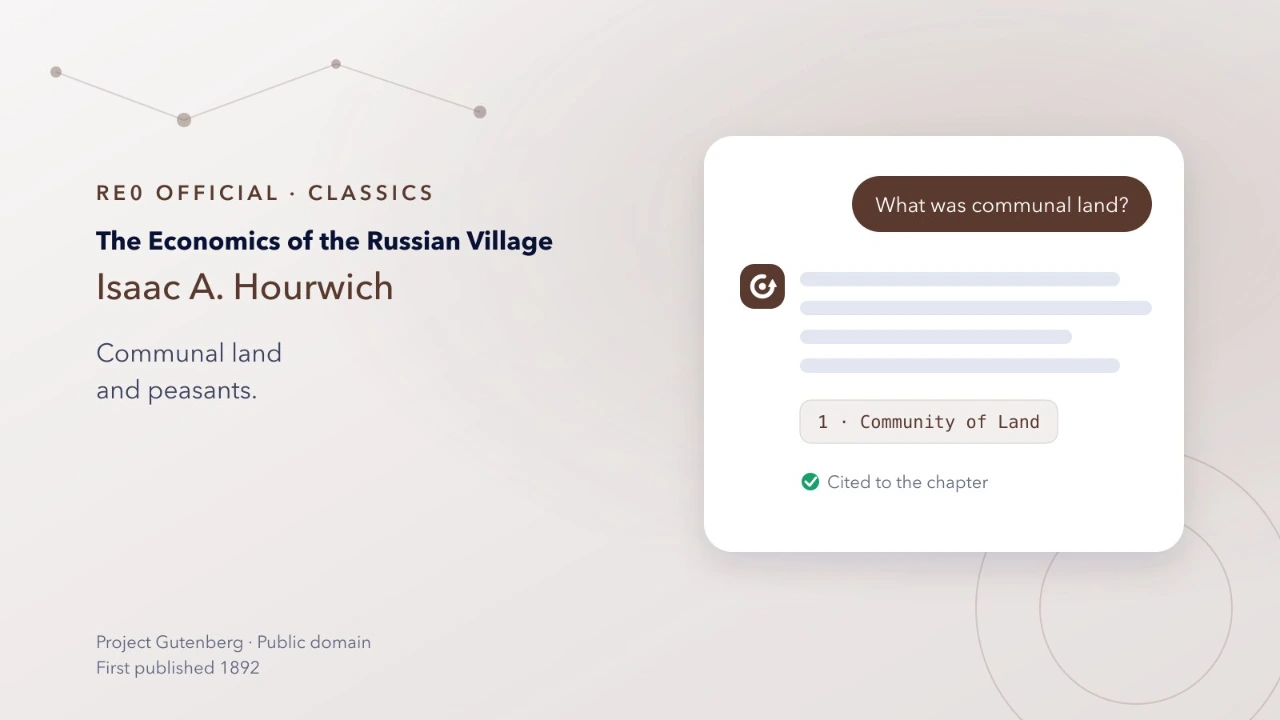
Answers questions on Isaac A. Hourwich's The Economics of the Russian Village (1892): communal land, peasant taxation, small holdings and rural wages, quoting the text from Project Gutenberg (public domain) and naming the chapter.
“…ass in question[113] is formed of those peasants whom it did not pay to work on their farms, in view of the scarcity of the same. Nearly one-half of the class a…”
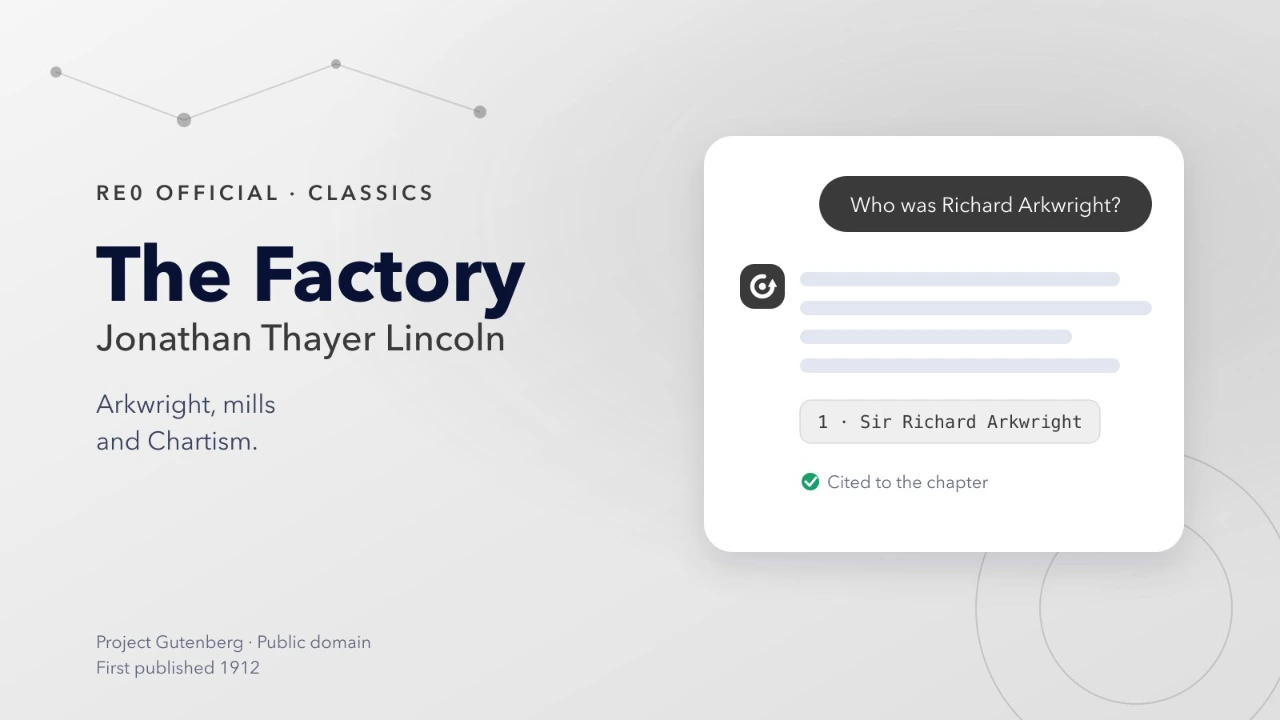
Answers questions on Jonathan Thayer Lincoln's The Factory (1912): the Industrial Revolution, Arkwright, mechanical inventions, the factory system and Chartism, quoting the text from Project Gutenberg (public domain) and naming the chapter.
“The great body of the peasantry was composed, first, of persons who rented small farms, and who paid their rent either in kind or in agricultural labor; and sec…”
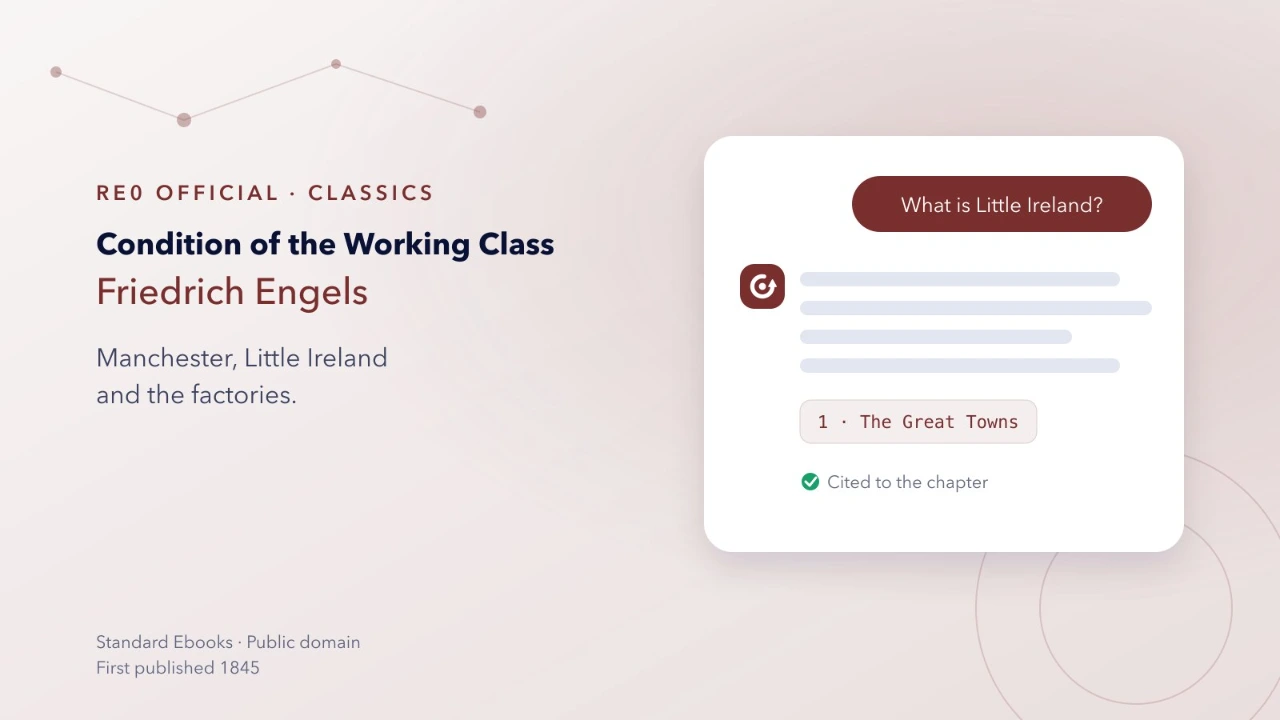
Answers questions on Engels's The Condition of the Working Class in England: Manchester, Little Ireland and factory work, quoting Florence Kelley Wischnewetzky's translation from Standard Ebooks (public domain) and naming the chapter.
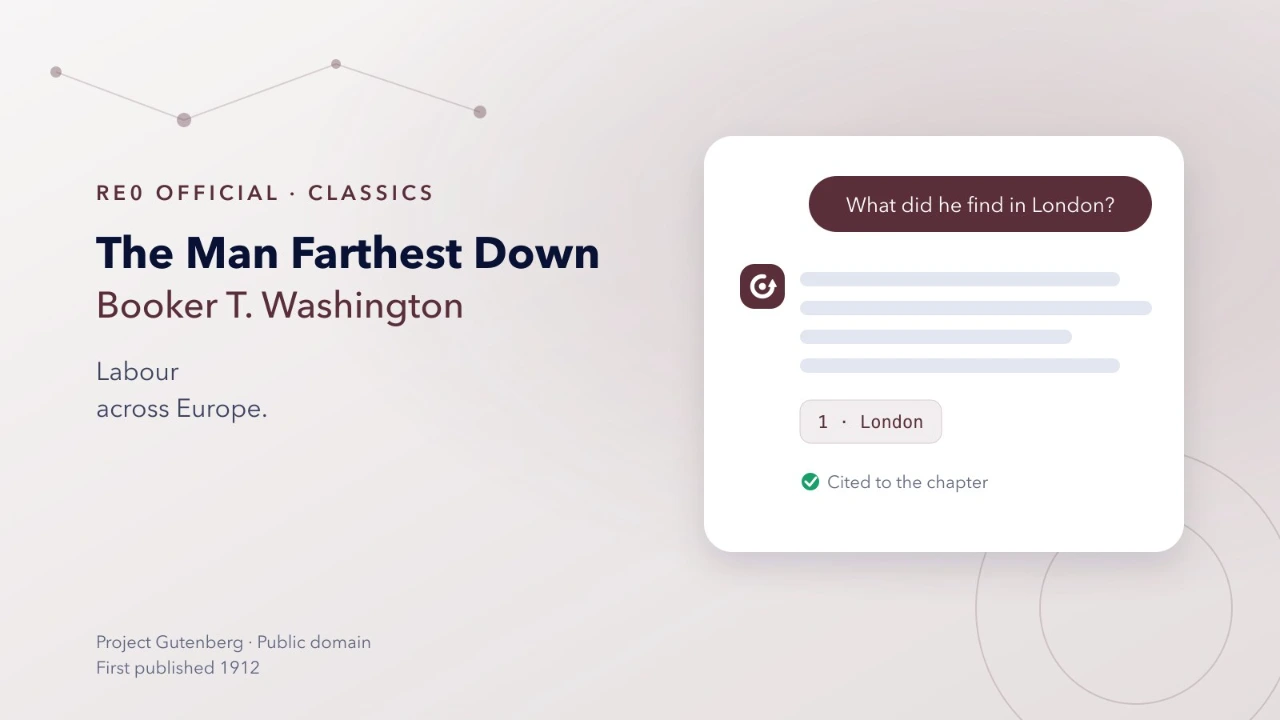
Answers questions on Booker T. Washington's The Man Farthest Down (1912): labour and poverty in London, Italy, Sicily, Austria-Hungary, Poland and Denmark, quoting the text from Project Gutenberg (public domain) and naming the chapter.
“… however, this man has come to his own. Peasants already own a majority of the land. Three fourths of the farms are in their hands and the number of small farms…”
Answers questions on Alice Clark's Working Life of Women in the Seventeenth Century (1919): women in farming, textiles, crafts, trades and the professions, quoting the text from Project Gutenberg (public domain) and naming the chapter.
“### B. *Husbandmen.* Husbandmen were probably the most numerous class in the village community. Possessed of a small holding at a fixed customary rent and with …”
Answers questions on George W. Daniels's The Early English Cotton Industry (1920): Samuel Crompton and the mule, early mills and the organisation of the trade, quoting the text from Project Gutenberg (public domain) and naming the chapter.
“Clearly, the members of this second class correspond to Radcliffe’s small farmers, and the members of the third to his cottagers. According to Gaskell, the yeom…”
Answers questions on Peter Kropotkin's The Conquest of Bread: well-being for all, expropriation, food, dwellings, clothing and agriculture, quoting the text from Standard Ebooks (public domain) and naming the chapter.
“… multiplying as the wretchedness of the peasants increases. That is how these things happened in the Middle Ages. And today is it not still the same thing? If t…”
Answers questions on Peter Kropotkin's Mutual Aid: cooperation among animals, in tribes and village communities, in the medieval city and its guilds, and today, quoting the text from Standard Ebooks (public domain) and naming the chapter.
“…ials and serf-owners used to compel the peasants to introduce the communal culture of small plots of the village lands, in order to refill the communal storehou…”
Answers questions on Richard Jefferies's The Toilers of the Field (1892): the farmer at home, the labourer's day, field-faring women and allotments, quoting the text from Project Gutenberg (public domain) and naming the essay.
“The agricultural women are certainly not handsome; I know no peasantry so entirely uninviting. Occasionally there is a girl whose nut-brown complexion and sloe-…”
Answers questions on Adam Smith's The Wealth of Nations: division of labour, markets, prices, wages and trade, quoting the text from Project Gutenberg (public domain) and naming the book and chapter.
“There still subsists, in many parts of Scotland, a set of people called cottars or cottagers, though they were more frequent some years ago than they are now. T…”
1 knowledge sourcesRE0 OfficialOfficial
20credits / answer
0Successful answersNo ratings yetPositive ratings
Your knowledge deserves a Ree of its own.
Start with a source. Turn experience into a conversation.