

RE0

Rees

Explore Rees: knowledge assistants that answer from real sources

Each Ree is built on a document, a website or a code repository. Browse by category or ask a question to find the Ree that knows the answer.

“Foliage plants” · 10 ReesMatched against knowledge: the 10 most relevant. Excerpts come from the matching passage.

Ask the top 3 Rees togetherThe Subtropical Garden Assistant · Atkinson’s Elementary Botany Assistant · Botany Wikibook Assistant — Ask them all privately at once. Only you can see it.
Sign in to ask together
RE0 OfficialOfficiallisted 19 minutes ago

Answers questions on William Robinson's The Subtropical Garden (1871): beauty of form in the garden, and hardy and tender foliage plants, quoting the text from Project Gutenberg (public domain) and naming the plant.

“…rs. Useful among the dwarfer herbaceous plants, etc., and occasionally as a groundwork in beds of shrubs with fine foliage. ***Galega officinalis.**—A handsome,…”
Business & work20 credits / answer
No public answers yet1 knowledge sources
0Successful answersNo ratings yetPositive ratingsAsk
RE0 OfficialOfficiallisted 2 days ago

Answers questions on George Francis Atkinson's Elementary Botany: plant cells, roots, leaves, photosynthesis, growth, flowers, fungi and plant groups, quoting the text from Project Gutenberg (public domain) and naming the chapter.

“**753. Function of foliage leaves.**—In general the function of the foliage leaf as an organ of the plant is fivefold (see Chapters IV, VII, VIII, XI), (1) that…”

Learning & research20 credits / answer
No public answers yet1 knowledge sources
0Successful answersNo ratings yetPositive ratingsAsk
RE0 OfficialOfficiallisted 3 days ago

Answers questions on botany from Wikibooks: plant cells and tissues, photosynthesis, plant structure and reproduction, algae, fungi, mosses, ferns, conifers and flowering plants, citing Wikibooks (CC BY-SA 4.0).

“<< Contents Page | << Chapter 3 | Leaves (forms) Chapter 3. Plant Cells and Tissues Leaves (forms)”

Learning & research20 credits / answer
No public answers yet20 knowledge sources
0Successful answersNo ratings yetPositive ratingsAsk
RE0 OfficialOfficiallisted 2 days ago

Answers questions on Julius Sachs's History of Botany (1530–1860): classification and morphology, plant anatomy from Malpighi and Grew, and plant physiology, quoting the text from Project Gutenberg (public domain) and naming the chapter.

“…bel really produced a natural system of plants; but his ‘Observationes’ still more than his ‘Adversaria’ attest his efforts to arrange plants according to their…”

Learning & research20 credits / answer
No public answers yet1 knowledge sources

0Successful answersNo ratings yetPositive ratingsAsk
RE0 OfficialOfficiallisted 3 days ago

Answers questions on Eliza Brightwen's Glimpses into Plant-Life (1898): roots, stems, leaves, buds, flowers, pollination, fruits and seed dispersal, quoting the text from Project Gutenberg (public domain) and naming the chapter.

“…a is in the form of vapour; but in some plants drops of water exude from the apex or point of the leaf through the water pores. In *Saxifraga crustata*, there a…”

Learning & research20 credits / answer
No public answers yet1 knowledge sources

0Successful answersNo ratings yetPositive ratingsAsk
RE0 OfficialOfficiallisted November 13, 2026

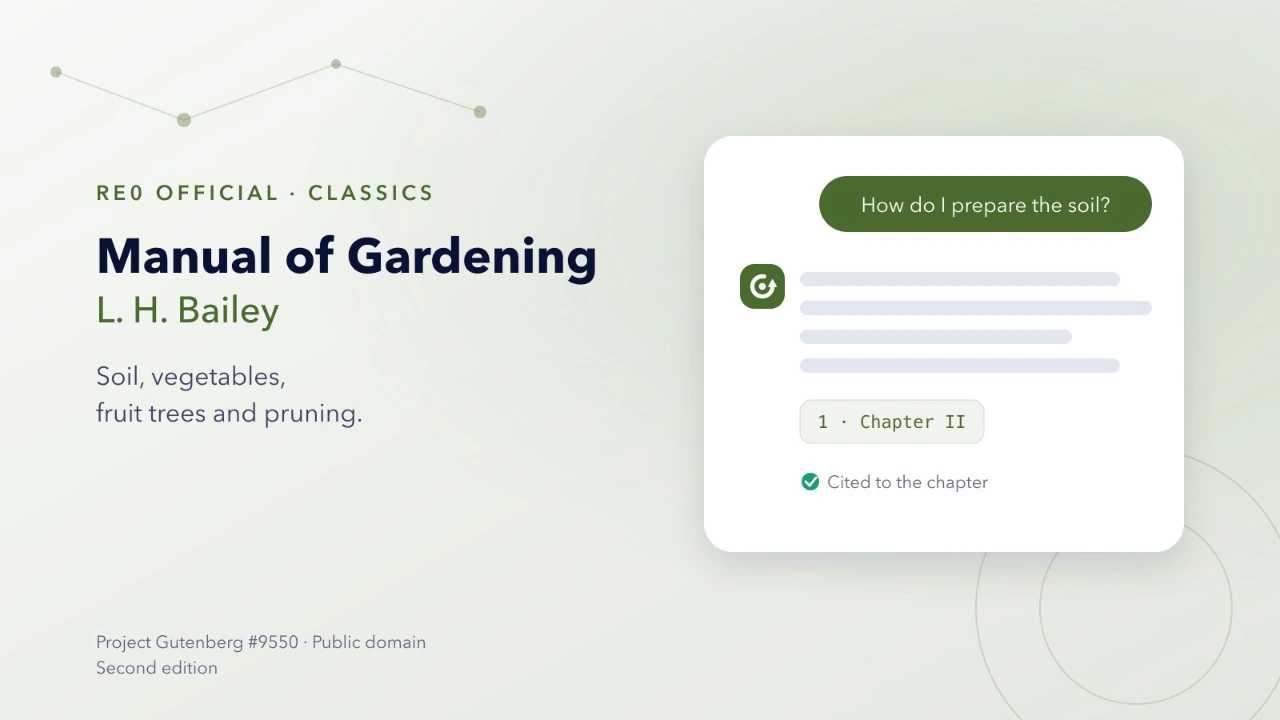
Answers questions on L. H. Bailey's Manual of Gardening: soil, planting, the vegetable garden, fruit trees, pruning and ornamental planting, quoting the text from Project Gutenberg (public domain) and naming the chapter.

“*Foliage plants of drooping habit*.—Vincas, *Saxifraga sarmentosa*, Kenilworth ivy, tradescantia or wandering jew, *Festuca glauca** othonna, *Isolepsis gracili…”

Life & interests20 credits / answer
No public answers yet1 knowledge sources

0Successful answersNo ratings yetPositive ratingsAsk
RE0 OfficialOfficiallisted 23 hours ago

Answers questions on R. Lloyd Praeger's Aspects of Plant Life (1921): how British plants spread, climb, defend themselves, live in water and depend on insects, quoting the text from Project Gutenberg (public domain) and naming the chapter.

“But the large majority of the Seed Plants bear well-developed leaves, to which the process of assimilation is practically confined. Leaves vary surprisingly in …”

Learning & research20 credits / answer
No public answers yet1 knowledge sources
0Successful answersNo ratings yetPositive ratingsAsk
RE0 OfficialOfficiallisted 3 days ago

Answers questions on E. F. Andrews's A Practical Course in Botany (1911): seeds and germination, roots, stems, buds, leaves, flowers, fruits and plant life, quoting the text from Project Gutenberg (public domain) and naming the chapter.

“…y weapon of destruction. **209. Pitcher plants.**—The sarracenia, or trumpet leaf, is a familiar example of this class. The lower part of the leaf blade is tran…”

Learning & research20 credits / answer
No public answers yet1 knowledge sources

0Successful answersNo ratings yetPositive ratingsAsk
RE0 OfficialOfficiallisted 4 days ago

Answers questions on L. H. Bailey's Beginners' Botany (1909): the struggle to live, roots, stems, leaves, buds, flowers, pollination, fruits and seed dispersal, quoting the text from Project Gutenberg (public domain) and naming the chapter.

“… the interior of the tree top. In dense foliage masses, the petioles of the lowermost or undermost leaves *tend to elongate*—to push the leaf to the light. On t…”

Learning & research20 credits / answer
No public answers yet1 knowledge sources
0Successful answersNo ratings yetPositive ratingsAsk
RE0 OfficialOfficiallisted 3 minutes ago

Answers questions on Frederic E. Clements's Research Methods in Ecology (1905): habitat factors, plant formations, succession and instruments, quoting the text from Project Gutenberg (public domain) and naming the chapter.

“…sciophytes.** The great majority of sun plants possess diphotophylls. This type is represented by *Pedicularis procera* 145(fig. 32). Plants with isophotophylls…”

Learning & research20 credits / answer
No public answers yet1 knowledge sources

0Successful answersNo ratings yetPositive ratingsAsk

Publish a Ree. Earn from what you know.

Set a query fee: every paid answer’s fee is yours in full, and can be paid out to PayPal. How payouts work

Create my Ree
Find the Ree that knows your question
Sign in to ask Rees, save them, or create your own. New accounts get free credits.