Answers questions on SQL from the Wikibooks Structured Query Language: SELECT, joins, grouping, subqueries, INSERT and UPDATE, data types, indexes and window functions, citing Wikibooks (CC BY-SA 4.0).
Answers questions on statistics from the Wikibooks book: types of data, averages, displaying data, probability, distributions and hypothesis testing, citing Wikibooks (CC BY-SA 4.0).
Answers questions on the ONS Design System: foundations, components like autosuggest and mutually exclusive checkboxes, patterns and the prototype kit, citing service-manual.ons.gov.uk (Open Government Licence v3.0).
Answers questions on data structures from the Wikibooks Data Structures: asymptotic notation, arrays, lists, stacks and queues, trees, heaps, graphs and hash tables, citing Wikibooks (CC BY-SA 4.0).
Answers questions on data visualisation from the ONS service manual: choosing a chart type, colours, axes, annotations, uncertainty and dashboards, citing service-manual.ons.gov.uk (Open Government Licence v3.0).
“#### Irregular data Use data markers to indicate individual data points when intervals are irregular. This will help users understand the frequency.”
Answers questions on B2B sales at GitLab from its Handbook: Command of the Message, discovery, account planning, commercial sales and customer success, citing handbook.gitlab.com (CC BY-SA 4.0).
Answers questions on Go from the go.dev documentation: Effective Go, the tutorials, modules, database access, the FAQ, generics and the garbage collector, citing go.dev (CC BY 4.0).
Answers questions on people operations at GitLab from its Handbook: onboarding, feedback, talent reviews, promotions, offboarding and learning programmes, citing handbook.gitlab.com (CC BY-SA 4.0).
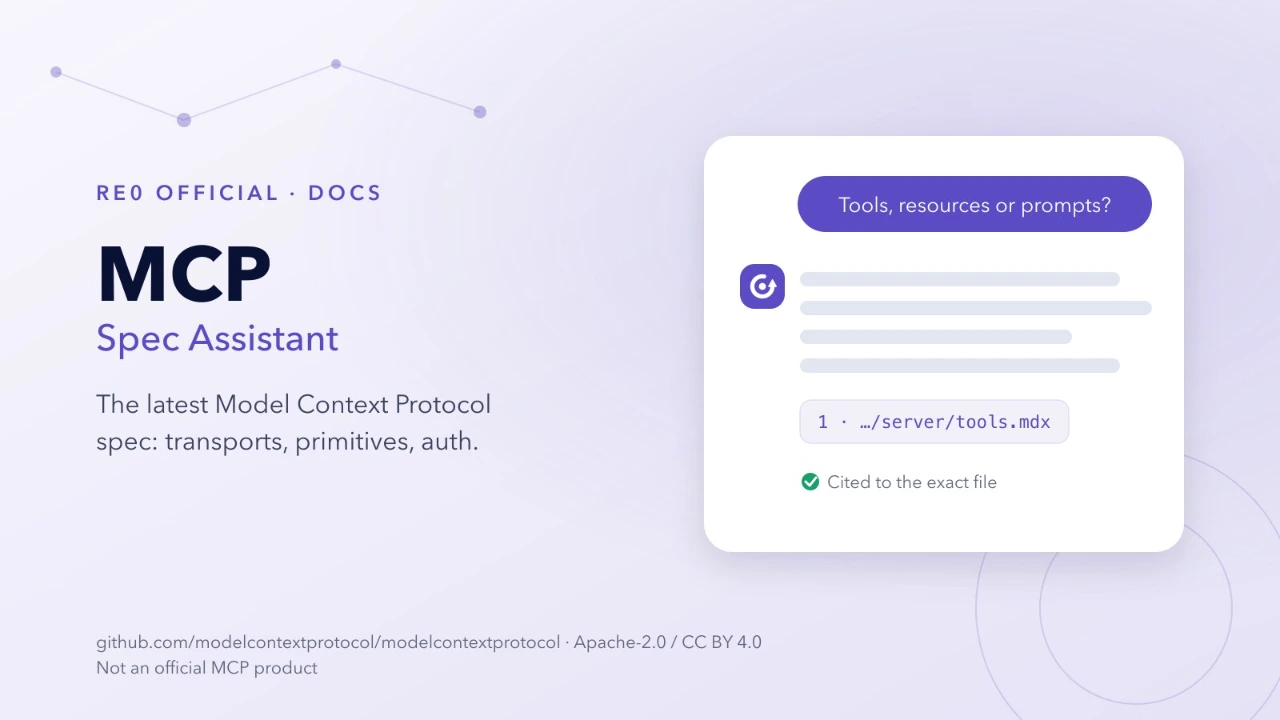
Answers questions on the latest Model Context Protocol spec: transports, primitives and authorization, citing the exact file in modelcontextprotocol/modelcontextprotocol (Apache-2.0 / CC BY 4.0). Not an official MCP product.
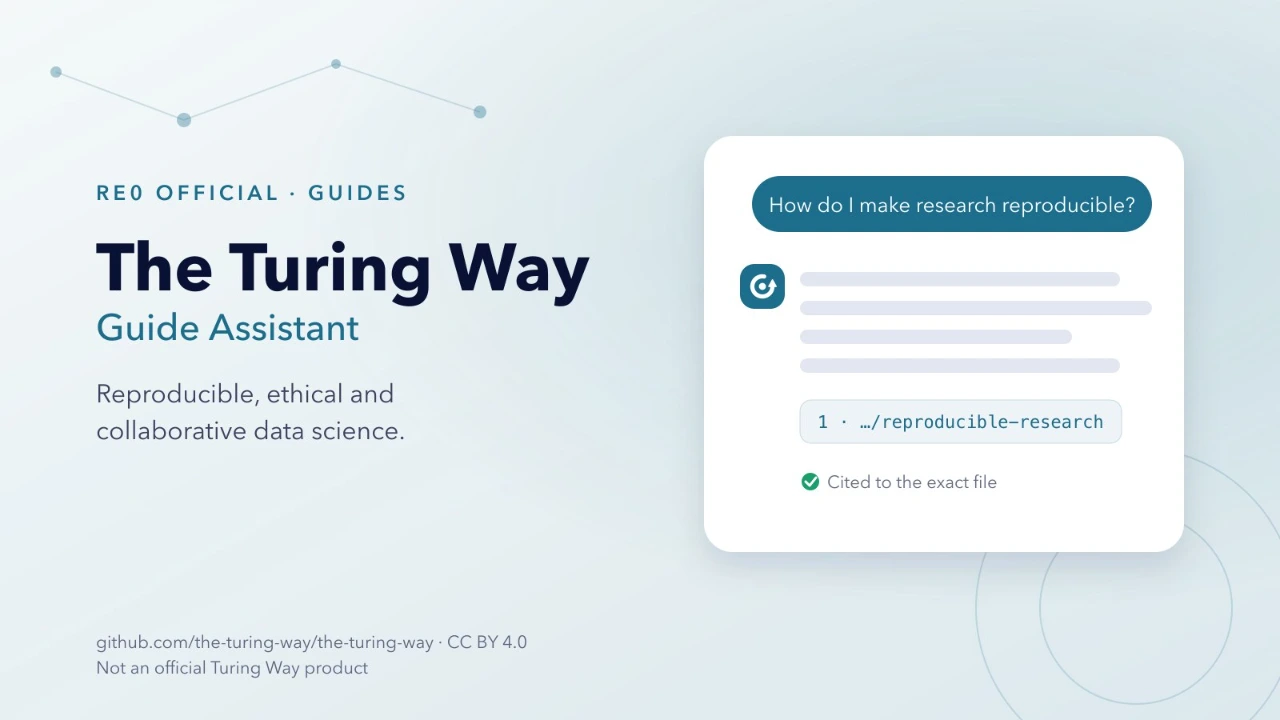
Answers questions on reproducible, ethical and collaborative data science from The Turing Way handbook, citing the exact chapter in the GitHub repo the-turing-way/the-turing-way (CC BY 4.0). Not an official Turing Way product.
“## What is Data? Data are objects that you use and produce during your research life cycle, encompassing datasets, software, code, workflow, models, figures, ta…”